Best Delay Reverb Combo Pedal for Guitarists: 2026 Guide
When you’re shopping for a delay and reverb combo, you want reliable, versatile effects that are easy to use on stage or in the studio. This guide highlights five top options suited for different playing styles and setups. Whether you need simple dual effects, studio-like ambient textures, or live-friendly presets, the picks below help you choose the right pedal for your tone goals and rig constraints.
Summary of chosen products:
| Product | Best For | Key Benefit | Notes |
|---|---|---|---|
| SONICAKE Delay Reverb 2 in 1 | Beginners to mid-level players | Two effects in one with Tap Tempo | Compact and affordable |
| FLAMMA FS22 Stereo Delay & Reverb | Ambient players and live rigs | Three combo settings with Freeze/Tempo | Power supply considerations |
| Source Audio Collider | Studio tones and versatile presets | Multiple reverb and delay types | Rich, expansive palette |
| Donner Guitar Reverb & Delay Pedal | Presets lovers and gigging players | Nine combinations with two tap modes | Presets simplify switching sounds |
| Keeley Caverns V2 | Connoisseurs of classic modulated verbs | 650ms delay with modulation and trails | Premium build and feel |
SONICAKE Delay Reverb 2 in 1 Guitar Effects Pedal Digital Levitate

Two effects in one compact unit: a programmable delay up to 2000 ms and a large, schedulable reverb decay. This pedal also includes a Trail function and Tap Tempo for live performances. Best for players who want a simple, affordable all-in-one solution on smaller boards or for practice rigs.
Who it’s best for: players seeking an all-in-one, budget-friendly delay and reverb with straightforward controls. Why selected: its dual-function design reduces pedal count without sacrificing scope. Caution: gear tone can vary when used with high-output pickups; ensure proper level matching to avoid noise or clipping.
FLAMMA FS22 Stereo Delay & Reverb Combo
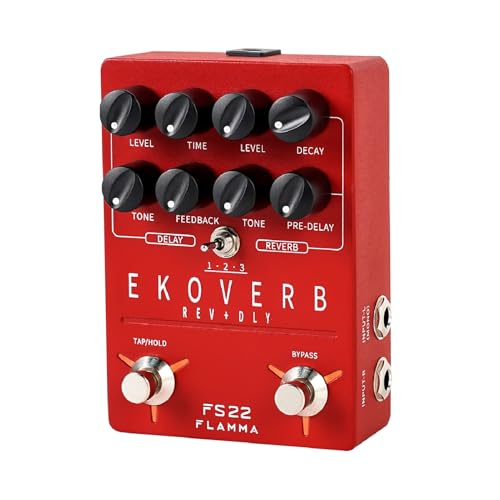
The FLAMMA FS22 integrates three combined delay/reverb presets with a dedicated Tap Tempo and Freeze function for infinite sustain. Its three distinct combinations offer wide ambient textures, from Reverse Delay to Shimmer Reverb, making it well-suited for players exploring evolving soundscapes. Best for effects-forward players and live rigs that benefit from quick tonal shifts.
Who it’s best for: ambient players and live performers who value varied, theme-colored effects. Why selected: the three combo modes expand tonal possibilities without swapping pedals. Caution: it uses a 9V DC center-negative supply; isolated power is recommended to minimize noise when sharing a power chain.
Source Audio Collider Stereo Delay+Reverb

The Collider offers separate reverb and delay paths with multiple types for each, including universal bypass switching and a broad selection of delay and reverb types. This setup is ideal for studio-minded players who want flexible routing and depth in their effects chain. Best for players building complex textures and performing precise sound design.
Who it’s best for: tone sculptors needing a broad palette. Why selected: its combination of seven reverb types and five delay types enables advanced sound shaping. Caution: learning the full library may require time, especially for real-time presets and routing options.
Donner Guitar Reverb & Delay Pedal

Donner combines three delay modes (Echo, Digital, Vintage) with three reverb modes (Hall, Room, Plate) for nine distinct effects. It also provides two tap modes and three user-storable presets, supporting quick transitions during live shows. Best for gigging players who need reliable, on-the-fly sound recall.
Who it’s best for: players who value quick presets and distinct combination tones. Why selected: flexible mode pairing and two tap modes support both studio and stage workflows. Caution: interface can feel busy at first; take time to map desired presets before performance.
Keeley Caverns V2 Reverb and Delay Pedal

The Caverns V2 pairs a 650 ms delay with modulation and both Spring and Shimmer reverbs, offering Trails or True Bypass. This pedal emphasizes high-quality modulated verbs and a classic feel, making it a premium choice for players chasing a refined, vintage-inspired tone. Best for tone purists who want premium, expressive reverb control.
Who it’s best for: players who prioritize lush, classic reverb textures. Why selected: its strong modulation options and true vintage vibe. Caution: higher price point; consider whether the premium build matches your needs and budget.
Caline CP-80 Ragnarok Digital Reverb & Analog Delay

The Ragnarok pairs a digital delay with a lush analog-style reverb in one unit and uses separate controls for each side. It provides up to 600 ms delay time and room for creating atmospheric textures through dual-signal paths. Best for players who want an affordable, dual-voice engine for experimental tones.
Who it’s best for: budget-conscious players seeking both delay and reverb in one pedal. Why selected: a solid value with clear, separate control layouts. Caution: the aluminum casing, while sturdy, may pick up hum in crowded pedalboards if not properly grounded.
Buying Guide
- What tone are you chasing? If you want lush, expansive ambient textures, look for multi-mode or shimmer reverbs and longer delay times. For punchy slapback or short repeats, prioritize quicker delay modes with clean trails.
- How many footswitches and presets do you need? Studio use benefits from multiple modes per pedal and ability to save presets. Live players often prefer dedicated Tap Tempo and easy preset recall.
- Power and noise considerations—check supply requirements and whether isolated power is recommended. Sharing a power supply can introduce noise into sensitive analog stages.
- RAM and processing depth—digital delays offer longer times and more repeat modes. If you need vintage warmth, look for analog-inspired algorithms or modulation options.
- Rigs and signal flow—positioning of delay and reverb in your chain affects mix and wash. Some players place reverb after delay to create more natural decay; others stack differently for a modulated, built-in ambience.
- Durability and build—pedals with sturdy enclosures and reliable footswitches perform best on road and in crowded pedalboards.
FAQ
- What does a delay and reverb combo pedal do best? It combines delay timing and reverb tail in a single unit, simplifying pedal setups while offering ambient and rhythmic textures.
- Should I choose a multi-mode pedal or two separate pedals? A multi-mode pedal can save space and cost, while separate pedals can provide deeper, dedicated controls for each effect.
- Is Tap Tempo essential for live use? Tap Tempo helps lock delay and modulation tempo to your performance, which is valuable for keeping time with a band or backing tracks.
- Can I use these pedals with a singer-songwriter setup? Yes. They add space and atmosphere to chords and melodies without requiring a large rig.
- Do these pedals work well with bass or only guitar? Most units are designed for guitar but can work with bass depending on input sensitivity and output headroom. Verify compatibility with your bass rig if needed.
- What should I consider when buying online? Check return policy, read user questions, and verify the pedal’s input/output compatibility with your current rig.