
Best Delta Blues Resonator Guitars for Blues Players
Delta blues resonator guitars deliver the bright, cutting tone that defined early blues players. This guide surfaces five solid options, explaining who each is best for and why. Whether you’re a beginner sliding into blues, a stage performer needing projection, or a collector chasing vintage-inspired tone, these picks cover a range of budgets and playstyles. Read on to compare bodies, cones, and setups to match your sound goals.
| Product | Best For | Key Feature |
|---|---|---|
| Regal RD-40N Studio Series Roundneck | Traditional blues players seeking authentic looks | Spruce top, quarter-sawn mahogany back/sides, US-made aluminum cone |
| Resophonic Resonator Acoustic Electric Guitar Kit (Pyle) | All-in-one kit for learners and gigging players | Built-in preamp with tone controls, complete starter kit |
| Gretsch G9200 Boxcar Round-Neck | Stage players needing reliable rhythm blues sound | Mahogany body, Padauk fingerboard, traditional resonator cone |
| Gretsch G9210 Boxcar Square-Neck | Slide players and lap-steel blues enthusiasts | Square neck, Padauk fingerboard, hand-spun cone |
| Gosila Resonator Electric Guitar | Players wanting an electric-resonator hybrid option | Built-in preamp, Sapele body, metallic resonator |
Regal RD-40N Studio Series Roundneck Resophonic Guitar
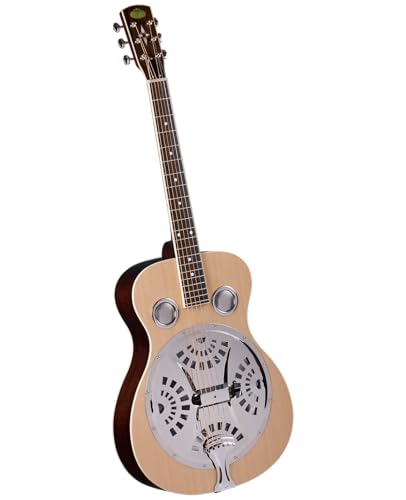
The Regal RD-40N combines a Spruce top with quarter-sawn mahogany back and sides to evoke the classic look and sound of the 1930s. A low-profile round mahogany neck offers a comfortable feel for blues players who anticipate long practice sessions or stage sets. The Golden Gate spider and US-made aluminum cone provide crisp, projecting resonance ideal for blues and slide work. Best for traditionalists who value vintage construction and a bright, punchy resonance. Caution: neck profile may feel fuller for players with very small hands.
Resophonic Resonator Acoustic Electric Guitar Kit (Pyle)

This 6-string round-neck resonator kit is aimed at beginners and players who want an all-in-one package. It includes a travel bag, strap, tuner, spare strings, and picks, plus a built-in preamp for amplified playing. The traditional metal resonator cone delivers a brighter, louder blues tone suitable for country and slide work. Best for learners and intermediate players who want immediate practice-ready setup. Caution: this model is a purely acoustic instrument with no dedicated battery-powered pickup if you’re planning regular amplification without a PA system.
Gretsch G9200 Boxcar Round-Neck

The Gretsch G9200 offers a round-neck, mahogany body with a Padauk fingerboard and an Eastern European hand-spun cone. This build emphasizes a balanced, resonant voice with solid sustain—great for traditional delta blues and fingerpicked blues styles. Best for players who want a reliable, stage-ready resonator with a classic look. Caution: round-neck design can be less comfortable for players who prefer a slim neck or higher action.
Gretsch G9210 Boxcar Square-Neck

Designed for slide players and lap-steel blues enthusiasts, the G9210 is a square-neck instrument with a Padauk fingerboard and hand-spun cone. The square neck favors harsh blues slide textures and string bending with lower action. Best for slide blues and traditional blues lap style. Caution: square-neck shape may feel unusual for players accustomed to standard round-neck guitars.
Gosila Resonator Electric Guitar

The Gosila model blends acoustic resonance with built-in preamp electronics, offering an option for players seeking an electric-resonator hybrid. A Sapele body paired with a metallic resonator cone yields a warm, projecting blues tone with adjustable directivity. Best for players who want to perform unplugged and amplified without changing instruments. Caution: as a newer entrant, it may have a different long-term setup profile compared to established resonator brands.
Buying Guide: Delta Blues Resonator Guitars
- Wood and cone: Spruce tops with mahogany back/sides produce bright projection and warmth. In round-neck designs, neck comfort matters for fingerstyle blues.
- Resonator type: Single-metal resonator cones deliver crisper, louder tone; multiple holes or special cones can alter sustain and projection. Consider how you’ll use live versus studio settings.
- Neck profile: Round-neck vs. square-neck changes playing style. Round neck favors standard fretting and chord shapes; square neck excels for slide and lap playing.
- Electronics: Built-in preamps help when amplifying, but note if the guitar is purely acoustic with no pickup. Decide whether you need onboard EQ, volume control, or a simple mic-level signal.
- Kit contents: Some models include gig bags, tuners, strings, and picks. For learners, a complete kit provides ready-to-play value.
- Intonation and setup: Look for tuners and hardware that maintain tuning stability through performance or practice sessions. Stability matters for blues bends and slides.
- Price versus demand: Higher-priced models often reflect vintage-inspired construction and premium cones; consider your budget and goals.
FAQ
- What makes a resonator guitar good for delta blues?
– A resonator’s bright, projecting tone with clear attack helps cut through a mix typical of blues ensembles, particularly for slide and fingerpicked blues. - Should I choose round-neck or square-neck for delta blues?
– Round-neck is generally easier for standard fretting and chords; square-neck is preferred for slide and lap-style blues, offering different ergonomics and intonation. - Do all resonator guitars require amplification?
– No. Some are purely acoustic, while others include built-in preamps for easy amplification on stage. - Is a complete starter kit better than a bare guitar?
– For beginners and learners, a complete kit provides essential accessories, saving time and upfront costs. - What is the advantage of a hand-spun cone?
– Hand-spun cones can offer a nuanced, vintage-toned projection with distinctive harmonics beneficial for blues textures. - Can I use a resonator guitar for studio blues recordings?
– Yes. Many players use resonators in studio settings for their unique bite and raw blues character, especially on clean and minimal-mic tracks.