Best Desktop Amplifier With Subwoofer Output for Crisp Bass and Clean Power
For desk setups, gaming rigs, or compact home theaters, a desktop amplifier with a dedicated subwoofer output can dramatically improve low-end impact while keeping overall sound tight and distortion-free. The following hand-picked selections offer built‑in bass controls, versatile inputs, and reliable Class‑D power to drive bookshelf or tower speakers with comfortable headroom. Each option emphasizes solid build quality, clear midrange, and adjustable subwoofer handling suitable for desktop listening rooms and compact living spaces.
| Product | Brand | Key Benefit |
|---|---|---|
| BT30D Pro 2.1 Channel Subwoofer Amplifier | Fosi Audio | High power, two sub outputs, precise bass controls |
| ZA3 Balanced Stereo Amplifier | Fosi Audio | Flexible stereo/mono modes, balanced I/O, strong SINAD |
| BT30D Bluetooth 5.0 Receiver Amplifier | Fosi Audio | Bluetooth input with RCA, sub control, solid 2.1 core power |
| A300 HiFi Power Amplifier | S.M.S.L | BTL, 165W per channel, reliable digital amplification |
| DTA-100LF Desktop Low-Frequency Amplifier | Dayton Audio | Low-pass and subsonic filtering for precise bass |
Note: Each model below includes a subwoofer-friendly design with dedicated controls or compatible outputs, making them suitable choices for desktop listening setups that require solid bass response without sacrificing midrange clarity.
BT30D Pro 2.1 Channel Subwoofer Amp

The BT30D Pro integrates two Class-D TI TPA3255 chips, delivering up to 165W x 2 channels and 350W to a passive subwoofer. It includes two sets of passive speaker outputs and a dedicated passive subwoofer output for 2.1 configurations. Sub frequency and volume knobs allow precise bass shaping from 0 to 300 Hz, enabling users to tailor the low end for music, gaming, or movie audio. This model suits desktop shelves or small media cabinets where space is at a premium and bass control is essential.
ZA3 Balanced Stereo Amplifier

The ZA3 offers dual-mode operation: stereo up to 180W or mono up to 235W. It supports balanced XLR/1/4″ TRS inputs and includes a 12V trigger-in for seamless integration with other gear. With premium components (Japanese capacitors, WIMA inductors) and a SINAD up to 89dB, it delivers clean, low-noise performance ideal for desktop systems that demand high fidelity and flexibility, including driving a subwoofer in a bi-amped setup.
BT30D Bluetooth 5.0 2.1 Channel Receiver
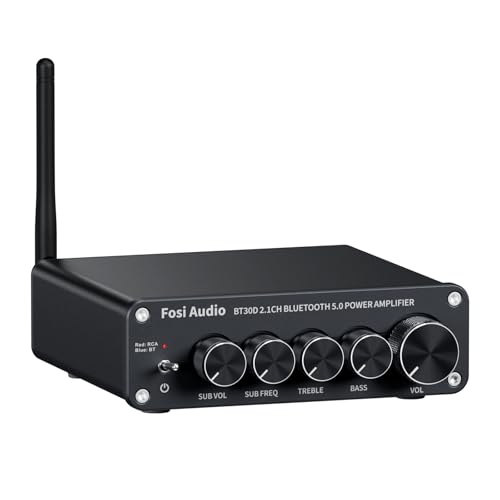
This 2.1 channel amp merges Bluetooth 5.0 with RCA inputs, enabling flexible connections to a wide array of desktop devices. It provides adjustable SUB volume and frequency along with bass and treble controls, so you can shape the overall tonal balance. The dual TI TPA3116D2 power chips help achieve up to 200W total output, suitable for driving compact bookshelves and a powered or passive sub for desktop use.
A300 HiFi Power Amplifier

The SMSL A300 uses a modern digital high-power chip (MA5332MS) with BTL stereo and strong efficiency. It delivers up to 165W per channel into 4Ω, or 85W per channel into 8Ω, depending on load. Bluetooth, USB, RCA, and other inputs ensure flexibility for desktop setups. In addition to high fidelity amplification, the A300 emphasizes clean output with low distortion, making it a solid option when pairing with a subwoofer for a compact system.
Dayton Audio DTA-100LF Desktop Subwoofer Amp

The Dayton DTA-100LF is a compact bottom-end dedicated amplifier that focuses on low-frequency control. Its built-in EQ and subsonic filter help shape bass with a single-band EQ and adjustable phase. While primarily a subwoofer amplifier, its low-profile design fits neatly on desks and shelves, delivering steady bass that integrates well with small speaker mounts and compact desktop setups.
Buying Guide: Key Considerations For Choosing A Desktop Amplifier With Subwoofer Output
- Power and headroom: Look for models with ample wattage per channel and to the subwoofer, especially if you plan to drive larger bookshelf or small tower speakers. More power generally means cleaner dynamics at higher volumes.
- Subwoofer integration: Prioritize products with dedicated subwoofer outputs or precise sub control (frequency and level). A good sub crossover helps blend bass with the main speakers without muddiness.
- Inputs and connectivity: Bluetooth, RCA, and balanced inputs (XLR/TRS) widen compatibility with computers, gaming consoles, and media players. Trigger inputs can automate on/off synchronization with other gear.
- Tone controls and filtering: Bass/treble adjustments, subsonic filters, and low-pass filters let you tailor the overall tonal balance and bass footprint to your room.
- Build quality and heat management: Desktop amplifiers should stay cool under typical use. Look for well-ventilated chassis and reputable components, especially with Class-D designs.
- Size and placement: Consider desk or shelf space. Some units offer compact footprints with robust outputs, while others include more extensive control panels or remote operation.
- Sound signature vs. room acoustics: In smaller rooms, a tight, controlled bass is often preferable to booming low end. If possible, audition or read objective reviews focusing on bass control and noise floor.
- Future expandability: If you might add a second pair of speakers or a higher-end sub later, choose models supporting bi-amping or additional outputs and compatibility with your existing components.
These considerations help ensure you select a desktop amplifier that matches your listening goals—whether it’s precise gaming bass, movie immersion, or music fidelity—while staying compatible with your desk or entertainment setup.