
Best DI Box for Recording: Clear, Hum-Free Instrument Connection Options
Direct box (DI) boxes are essential for connecting guitars, basses, keyboards, and other instruments to mixers or audio interfaces with clean, balanced signals. This guide highlights five reliable options suited for home studios, rehearsal rooms, and live setups. Whether you’re chasing buzz-free tone, easy grounding, or flexible input/output levels, these picks help you avoid ground loops and impedance mismatches. The best choice depends on your gear, budget, and whether you need one or two channels. The table below compares core specs and who each product suits.
| Product | ||
|---|---|---|
| Pyle Premium Direct Injection Audio Box | Guitarists and keyboard players seeking buzz/hum reduction | Impedance transformer with ground lift for clean audio |
| PYLE-PRO Premium DI Box | Live rigs needing reliable DI with hum cancellation | Buzz/hum cancellation and versatile ¼” connector |
| Whirlwind IMP 2 | Budget-friendly, compact DI for on-the-go setups | Inline transformer converts unbalanced to balanced |
| Bolanle DB1 Passive 1-Channel DI Box | Studio or stage users needing passive, no-power operation | Ground lift, hum eliminator, dual mode and attenuation |
| Bolanle DB2 Passive 2-Channel DI Box | Dual-instrument setups requiring two independent channels | Ground lift, three attenuation settings, stereo capable |
Pyle Premium Direct Injection Audio Box

This passive DI box uses a ¼” device connector to support keyboards, guitars, and outboard processors. It aims to provide clean audio with an impedance transformer and buzz/hum cancellation. Best for guitarists or keyboard players needing straightforward, reliable DI for live or studio use. Ground lift helps reduce hum from ground loops, improving signal clarity. Caution: as a passive unit, it requires proper gain staging to avoid low signal levels on quiet sources.
PYLE-PRO Premium Direct Injection Box
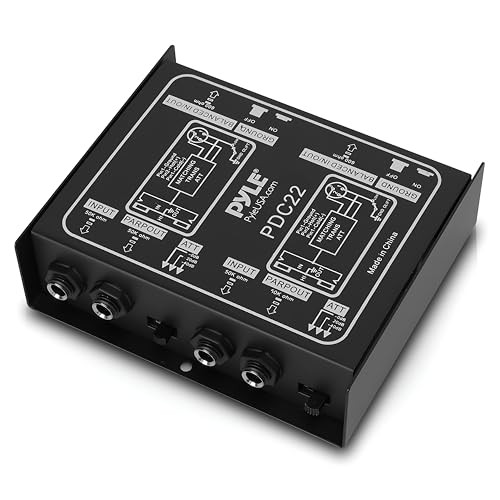
This ¼” device DI box supports a range of instruments and provides clean audio through impedance transformation. It is designed for simple connections from keyboards, guitars, and outboard gear to a main PA or recording mixer. Focused on buzz and hum suppression, it helps maintain a clear signal in busy stage or studio environments. Best for players who value an uncomplicated, reliable direct box with effective noise control. Limitation: like many passive DI boxes, it relies on adequate source strength for optimal output.
Whirlwind IMP 2 1-Channel DI Box
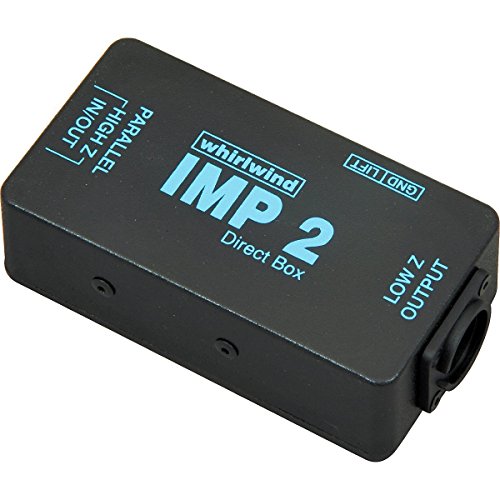
The Whirlwind IMP 2 is a compact, budget-friendly DI box that inline-converts line or instrument-level signals to a low-impedance balanced mic-level output. It’s a practical choice for simple, one-channel DI tasks where space and cost matter. Best for students, travelers, or small setups needing dependable, minimal footprint gear. Limitation: single-channel design means you’ll need another box for multi-instrument setups.
Bolanle DB1 Passive 1-Channel DI Box

This 1-channel passive DI box emphasizes high-fidelity signal conversion without a power supply. It includes a built-in hum eliminator and ground lift to address common noise issues and ground loops. Attenuation control helps prevent overload for different instruments. Best for performers who want a straightforward, power-free DI that still offers robust noise rejection. Caution: performance depends on source impedance and cable quality.
Bolanle DB2 Passive 2-Channel DI Box

The Bolanle DB2 offers two passive channels, each converting high-impedance signals to balanced XLR outputs. It includes a ground lift to reduce hum and a three-level attenuation control for instrument-level optimization. Best for guitarists or bassists needing a compact, two-channel solution on stage or in the studio. Caution: two channels mean more cable management at the front end.
Buying Guide
What is a DI Box and when do you need one?
A DI box converts instrument-level signals to balanced, line-level signals suitable for mixing consoles or audio interfaces. Use one to reduce noise, prevent signal loss, and match impedance. DI boxes are essential when recording guitars, basses, keyboards, or other electronics into a PA or interface, especially in environments with potential ground loops or EMI.
Passive vs. Active DI Boxes
Passive DI boxes require no power and are simple, durable choices ideal for straightforward signal conversion. Active DI boxes use an internal power source to provide higher output levels and can improve performance with very high-impedance sources or long cable runs. Consider your source strength and input sensitivity when choosing.
Key Features to Compare
- Number of channels: single vs. dual
- Ground lift: reduces hum from ground loops
- Attenuation controls: protect against input overload
- Impedance transformation: ensures proper signal matching
- Portability and connectivity: input/output types and enclosure
Choosing by Scenario
- Studio recording with multiple instruments: consider the Bolanle DB2 or two-channel options for flexibility.
- Live performance on a budget: Whirlwind IMP 2 provides solid, compact DI without breaking the bank.
- Guitars and keyboards in a home setup: Pyle DI boxes offer reliable hum cancellation and easy connections.
- Noise-sensitive environments: prioritize models with strong ground lift and attenuation controls.
Practical Setup Tips
- Place DI boxes close to the instrument to minimize noise pickup.
- Use balanced XLR cables for the output to the mixer/interface.
- Test signal levels with the instrument’s volume at typical playing levels to set attenuation properly.
- Label channels when using multi-channel DI boxes to simplify live or studio routing.
FAQ
- What is the main purpose of a DI box? It converts high-impedance instrument signals to balanced, low-impedance outputs suitable for mixers, reducing noise and preventing hum.
- Do I need a powered DI box? Not always. Passive DIs work well for many sources, but active DIs can improve performance with very high-impedance or long cable runs.
- Should I use a ground lift always? Use it when you detect hum caused by ground loops; otherwise, keep it off to maintain a direct ground reference.
- How many channels should I start with? If you record multiple instruments, a two-channel DI box like Bolanle DB2 can offer flexibility; for single-instrument rigs, a single-channel DI is sufficient.
- Are DI boxes necessary for keyboards? Yes, especially when connecting to PA systems or interfaces to maintain signal integrity and reduce noise.
- Can DI boxes improve live sound, too? Yes, DI boxes help deliver clean, consistent tones to the front of house and reduce stage noise.