
Best HDMI Audio Extractors for Digital Audio Out to HDMI in 2026
Looking to send high-quality digital audio from an HDMI source to your external speaker system or soundbar? These HDMI audio extractors separate audio from HDMI signals and output via optical, 3.5mm, or RCA. They’re best for home theater enthusiasts, gamers, and media streamers who need flexible audio routing without sacrificing video quality. The following five models offer a range of formats, including 2.0 or 5.1 channels, ARC support, and 4K compatibility. See the quick reference table below for a snapshot of each option.
| Product | Best For |
|---|---|
| VPFET HDMI Audio Extractor | Users needing 4K60 compatibility with 5.1 or PCM2.0 output options |
| TUOLNK HDMI to Optical Audio Adapter | TV setups upgrading to PCM 2.0 optical output with ARC limitations |
| avedio links 4K@60Hz HDMI Extractor | 4K home theaters requiring ARC-compatible output and multiple audio modes |
| J-Tech Digital HDMI Audio Extractor | Systems needing dual audio routing with RCA and Optical, plus ARC considerations |
| Avedio Links 4K@30Hz Optical & 3.5mm | Simple 4K60-capable devices needing independent audio with PCM/5.1 support |
VPFET HDMI Audio Extractor 4K HDMI To Optical 3.5mm AUX

Best for multi-channel flexibility, this extractor supports 2.0CH, 5.1CH, and a PASS mode. The 4K HDMI input supports HDMI 1.4, HDCP 1.4, and 4K@30Hz signals. Optical output handles DTS 5.1; 3.5mm handles PCM 2.0. Note: Some devices do not support ARC/eARC, and certain sources may not output 4K. Choose this if you need a straightforward, versatile audio separation that works with a broad range of receivers.
Who it’s best for: Home theater enthusiasts who want simultaneous optical and 3.5mm/PCM outputs and 4K compatibility without ARC reliance. Limitation: 7.1-channel pass-through is not supported; ensure your source and receiver expectations align with 2.0 or 5.1 configurations.
TUOLNK HDMI To Optical Audio Adapter

Best for TVs upgrading to a dedicated optical output, especially when ARC is used with a separate amplifier. This adapter delivers PCM 2.0 up to 192kHz via optical output, helping achieve clearer dialogue and enhanced sound from movies and streaming. It is positioned for setups where the TV ARC port sends audio to an external optical input. Note: Forwarded audio depends on ARC configuration and the TV’s compatibility.
Who it’s best for: TV owners who want to route HDMI audio through optical to a soundbar or receiver while limiting remote control complexity. Caution: Some configurations require PCM mode for optimal sound; check your TV’s ARC status and optical input compatibility.
avedio links 4K 60Hz HDMI Audio Extractor

This extractor supports 4K@60Hz and offers three audio outputs—HDMI-ARC, Optical SPDIF, and 3.5mm—allowing flexible connection to an audio receiver or soundbar. It handles PCM 2.0 and supports 5.1-channel output via the Optical SPDIF option. It is especially suitable for users who want to retain high video quality while routing audio separately. A caution: ARC may require manual enabling and may not work with all TVs or receivers in every setup.
Who it’s best for: Enthusiasts seeking 4K video with an easy switch between ARC-compatible and non-ARC audio paths. Better for: Systems that need optical or 3.5mm audio as primary or backup channels. Avoid this if your setup relies on consistent auto-ARC behavior across devices.
J-Tech Digital HDMI Audio Extractor With ARC
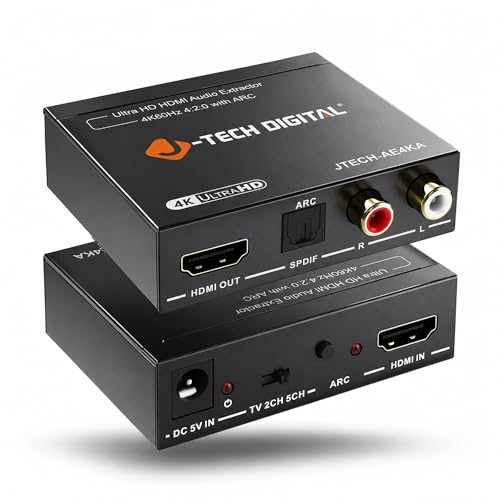
Best for dual-path audio routing, this extractor handles HDMI ARC to Optical and/or RCA outputs. It supports up to 4K@60Hz, 4K@30Hz in some configurations, and is compatible with HDMI 1.4 and HDCP 1.4. The RCA outputs offer standard 2-channel PCM; optical SPDIF supports 2-channel PCM and several multichannel formats depending on source. Note that ARC requires manual engagement on many setups.
Who it’s best for: Users who want reliable ARC extraction alongside separate RCA/Optical outputs for older receivers. Limitation: Does not support eARC; ensure your devices support standard ARC for best results.
Avedio Links 4K@30Hz Optical & 3.5mm Output

Best for straightforward audio separation at 4K@30Hz, this device passes HDMI while isolating audio for 2-channel PCM and 5.1-channel formats through optical and 3.5mm outputs. It uses HDCP 1.4 and HDMI 1.4b for broad compatibility. The lack of ARC support means it’s ideal when ARC is not required or when you want independent control of audio routing.
Who it’s best for: Home setups that prioritize clean 4K video with easy, separate audio channels. Caution: No ARC support may limit integration with TVs relying on ARC for audio return.
Buying Guide: How To Choose The Right HDMI Audio Extractor
- Video quality vs. audio routing: If you need 4K video pass-through, check resolution and refresh rate support (4K@60Hz vs 4K@30Hz) and whether ARC/eARC is available.
- Output options: Decide between optical SPDIF, 3.5mm, RCA, or a combination. Optical often supports 5.1/ DTS; 3.5mm is commonly stereo PCM.
- Audio formats: Ensure the extractor handles the formats you use (PCM, DTS, Dolby Digital, etc.). If you have a dedicated sound system, confirm compatibility with your receiver.
- ARC vs. non-ARC: ARC simplifies audio return from the TV but can complicate extraction. If you don’t rely on ARC, choose a model labeled without full ARC dependence.
- Ease of use: Manual switching vs. auto-detection; consider devices with clear mode labels (2.0, 5.1, PASS) to prevent confusion during setup.
- Compatibility notes: Some devices do not support 4K when using certain extractors; review any brand-specific limitations noted in product features.
FAQ
- What is an HDMI audio extractor used for? It separates audio from an HDMI signal to output to an external speaker system or receiver while preserving video.
- Do these devices support 4K video? Many do, but some specify 4K@30Hz; check your source and TV/monitor compatibility.
- Can I use ARC with these extractors? Some models support ARC or require manual enabling; others do not support ARC at all. Verify the product’s ARC capabilities.
- Which output is best for surround sound? Optical SPDIF often supports 5.1 formats, while RCA is typically stereo PCM. Your receiver must also support the formats.
- Will using an extractor affect lip-sync or video latency? Some adapters may introduce minor delay; review any latency notes in the product description or manuals.
- Do I need a separate power supply? Some extractors require an external USB power source or adapter for stable operation.