
Best Digital Mixer Audio Interfaces for Home Studios and Live Streams
Answering the demand for compact, USB-friendly mixers that double as audio interfaces, the options below suit different setups—from home podcasting to small-band recording. This selection prioritizes reliability, ease of use, and clear USB/Ai compatibility. Best for home studios is a single-user interface with solid preamps; better for live streaming is a mixer with mobile control and USB routing; choose this if you need versatile effects or multiple channels. The table summarizes the top picks to compare at a glance.
| Product | Best For | Key Feature |
|---|---|---|
| Yamaha MG10XU 10-Input Stereo Mixer with Effects | Small studios and home recording | Studio-grade discrete preamps with SPX effects |
| Behringer X AIR XR18 | Live rooms and mobile control | 16 MIDAS preamps, built-in Wi‑Fi for tablet control |
| XTUGA Q-12 USB Audio Interface | Budget PC recording | Low-latency USB interface with phantom power |
| Focusrite Scarlett Solo 3rd Gen | Solo vocal/guitar recording | High-headroom preamps with Air mode |
| Behringer FLOW 8 | Portable, app-controlled live mixing | Bluetooth remote control and multiple FX processors |
Yamaha MG10XU 10-Input Mixer With USB And Effects

The Yamaha MG10XU is a 10-channel mixer that also functions as an audio interface via USB. It includes SPX digital effects and studio-grade discrete preamps, with an inverted Darlington circuit for richer bass and smooth highs. 3-band EQ plus high-pass filters allow precise control and cleaner mixes. This is best for solo projects, small bands, or podcasters who want built-in effects without external gear. A limitation is the fixed effects set, which may be less flexible than software-driven options for some users.
Behringer X AIR XR18 18-Channel Digital Mixer
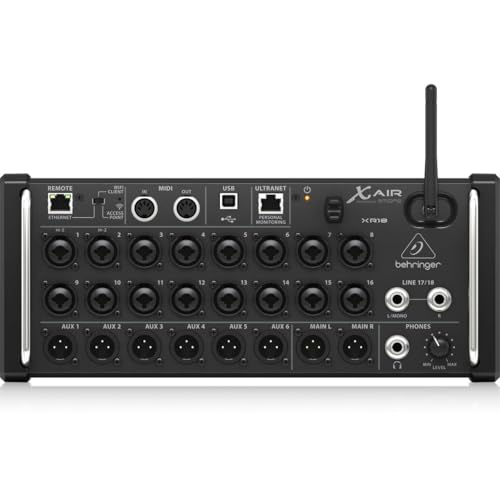
The Behringer XR18 is an 18-channel digital mixer designed for tablet control, featuring 16 MIDAS-designed mic preamps and a built-in tri-mode Wi‑Fi router. It excels in studio setups and on-stage monitoring when you want remote control via iPad or Android devices. It supports multi-channel USB audio interfaces, simplifying complex recording workflows. Best for multi-mic setups and mobile control; a potential caveat is the reliance on network stability for remote control.
XTUGA Q-12 USB Audio Interface

The XTUGA Q-12 offers simple USB audio interface functionality with 16-bit/48kHz resolution, reliable dual inputs, and plug-and-play operation for PC. It supports 48V phantom power for condenser mics and low-latency performance, making it a solid budget choice for solo vocal or instrument tracking. Best for quick, straightforward recording; avoid this if you need higher bit-depth or more nuanced preamps for a full-band setup.
Focusrite Scarlett Solo 3rd Gen USB-C Audio Interface

The Focusrite Scarlett Solo 3rd Gen provides pro-level preamps with Air mode to brighten acoustic recordings. It includes two high-headroom instrument inputs and Gain Halos to prevent clipping. It excels for solo artists and podcasters seeking clean, studio-grade recordings without a large mixer. A limitation is that it is a two-input interface, which may be insufficient for multi-mic groups or larger streaming setups.
Behringer FLOW 8 8-Input Digital Mixer

The Behringer FLOW 8 is an 8-input digital mixer with USB audio interface capability and Bluetooth control. It features 60 mm channel faders and a dedicated app for iOS/Android, enabling remote adjustments during live sessions. This model is ideal for mobile streamers and small venues needing wireless control. A potential drawback is its reliance on the app for comprehensive control; some users prefer direct hardware access for quick tweaks.
Kaschun 4-Channel Bluetooth Audio Mixer

Note: This entry is included for comparison of compact Bluetooth-enabled mixers. It provides basic 4-channel mixing with USB audio interface and built-in DSP effects. Best for small podcasts or casual streaming; may lack the professional-grade preamps found in higher-end units.
Buying Guide: How To Choose Your Digital Mixer Audio Interface
What is your primary use case? Solo recording, podcasting, or a small-band setup will steer you toward different preamp quality, number of channels, and built-in effects. For solo work, a compact interface like Scarlett Solo or XTUGA Q-12 can be ideal. For multi-person podcasts or small live performances, consider an 8–18 channel mixer with USB routing and Wi‑Fi or app control, such as XR18 or MG10XU.
Do you need built-in effects or external processing? Some models include SPX or multi-effect units (Yamaha MG10XU), while others rely on DAW plugins or external processors. If you primarily mix in software, you may prioritize preamp clarity and low latency over onboard effects.
How important is mobile control? If you perform live or stream from a tablet or phone, a mixer with remote control via app (Behringer XR18, FLOW 8) can simplify adjustments on the fly. Ensure your network setup is reliable to avoid dropouts when using these features.
What about preamps and phantom power? If you plan to use condenser mics, phantom power is essential. MIDAS/Studio-grade preamps typically provide cleaner gain and lower noise for critical vocals and acoustic instruments. For budget builds, balance price with the expected mic choice and space constraints.
What connections do you need? Check the number of XLR inputs, line inputs, and USB/IF routing options. If you require multi-channel recording to a DAW, verify the USB interface counts and compatibility with your computer’s OS.
FAQ
- What is the difference between a mixer with USB audio interface and a stand-alone audio interface?
Answer: A mixer with USB audio interface combines traditional mixer routing with USB-patched digital recording, allowing multi-channel capture and monitoring directly to your computer, often with built-in effects and-send/return paths. - Do I need built-in DSP effects for podcasting?
Answer: Not strictly necessary, but built-in effects can enhance voice tracks or provide quick room ambiance without extra gear. For most podcasts, clean preamps and proper room treatment are enough. - Is wireless control useful for live streaming?
Answer: Yes, it enables on-the-fly adjustments during performances or broadcasts without being at the mixer. Ensure your Wi‑Fi is stable to prevent control delays. - Can I use these devices with both Windows and macOS?
Answer: Most listed interfaces support both, but always verify driver compatibility and sample rate options for your recording workflow. - What’s the best choice for a beginner on a budget?
Answer: A compact USB-focused interface like XTUGA Q-12 or Scarlett Solo provides solid preamps and straightforward setup without overwhelming features.