Best Digital Mixer Multitrack Recorder for Musicians and Podcasters
Answering the search need for a reliable digital mixer with built-in multitrack recording, these models offer studio-like control in portable formats. They suit live performers, podcasters, and small studios who want flexible routing, onboard effects, and easy USB or SD recording. The top picks below balance tracks, preamps, and monitoring features so you can choose based on your band size, workspace, and preferred workflow. A quick buyer table follows to compare core specs at a glance.
| Product | Best For | Format | Tracks | Interface |
|---|---|---|---|---|
| Zoom LiveTrak L-12 | Medium bands and podcasters | SD card + USB | 14 tracks | USB 2.0 |
| Zoom LiveTrak L-20 | Large shows and studio-style setups | SD card + USB | 22 tracks | USB |
| Zoom LiveTrak L-6 | Portable recording on the go | SD card + USB | 12 tracks | USB |
| Zoom R12 | Two-person recording and podcasting | SD card + USB | 8 tracks | USB |
| Tascam Model 24 | Analog feel with digital recording | SD card + USB | 24 tracks | USB |
Zoom LiveTrak L-12 Digital Mixer & Multitrack Recorder

Best for: Musicians and podcasters needing 14-input versatility with onboard effects and a robust USB interface. This model records up to 14 tracks at 24-bit/96 kHz and mixes in 32-bit float, reducing clipping risk during complex performances. It includes high-gain, low-noise preamps with phantom power for diverse sources and a straightforward path from stage to DAW.
Why selected: The L-12 balances a wide channel count with reliable multitrack workflow. It’s well suited for live performances and home studios that require strong monitoring options and easy SD card capture. Limitation: Larger setups may benefit from additional outputs or a bigger control surface.
Zoom LiveTrak L-20 Mixer/Multitrack Recorder
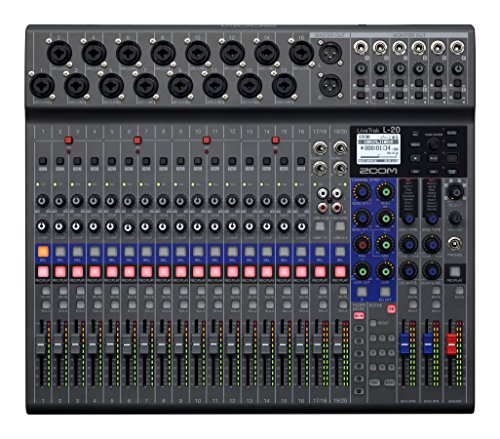
Best for: Large ensembles and professional productions needing 22 tracks with six independent monitor mixes. The L-20 records up to 22 tracks at 24-bit/96 kHz directly to SD and provides six separate headphone/monitor outputs with individualized control, making it ideal for on-stage and studio contexts where multiple performers require distinct mixes.
Why selected: It excels in scenarios with many performers and diverse listening needs. Limitation: More complex to configure than smaller models; ideal for users who want dedicated monitor control.
Zoom LiveTrak L-6 Portable 6-Channel
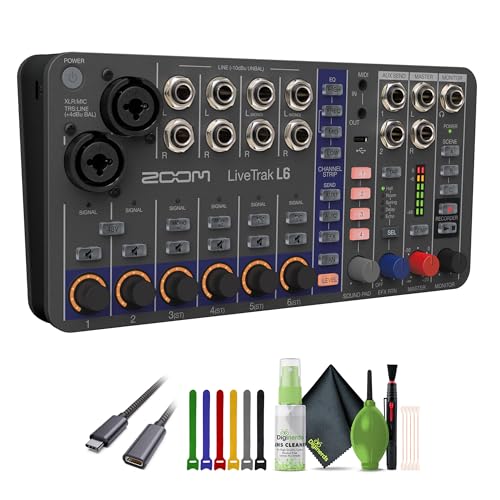
Best for: Musicians and content creators who need a compact, battery-powered solution for quick recordings. The L-6 handles two XLR-1/4″ combos plus four stereo lines, with 12-track 32-bit float recording to SD and multiple onboard effects for on-the-spot processing.
Why selected: Portability is the biggest strength for field recording and small studios. Limitation: Fewer input channels than larger models; best for smaller setups.
Zoom R12 Multi-Track Portable Recorder

Best for: Two-person podcasts or quick mobile production recording. The R12 offers eight tracks and onboard editing with touch controls, plus battery power for on-the-go use. It is designed for straightforward capture and easy sharing to DAWs via USB.
Why selected: A solid entry for portable, self-contained multitrack needs with a simple workflow. Limitation: Fewer tracks compared with larger Zoom LiveTraks; choose this if portability outweighs track count.
Tascam Model 24 24-track Multi-Track Studio

Best for: Users who want a traditional analog-style control surface with digital recording and USB interface. The Model 24 provides 24 tracks and tactile knobs, with accessible input/output access and punch-in/out capabilities for hands-on studios.
Why selected: Combines familiar mixing controls with modern multitrack recording. Limitation: Less compact than some Zoom models; best for desks with ample space.
Buying Guide: Key Considerations For Your Digital Mixer Multitrack Recorder
- Track count and multitrack capability: Match the number of simultaneous recordings to your typical band size or podcast crew. Higher track counts offer more flexibility but can add complexity.
- Preamp quality and gain: Look for high-gain, low-noise preamps with phantom power for condenser mics and diverse sources. This impacts clean capture in live or studio settings.
- Recording format and workflow: Choose SD card recording and USB audio interface if you want easy DAW compatibility. 24-bit/96 kHz gives professional fidelity.
- Monitoring and headphone mixes: Independent monitor mixes help performers hear themselves clearly. Consider how many headphone outputs you need and whether you use direct monitoring.
- Onboard effects and routing: Built-in effects (reverb, delay, compression) save post-production time. Ensure the unit supports your preferred routing for live mixes or DAW work.
- Portability vs. size: Mobile rigs benefit from battery power and compact footprints; larger models offer more inputs but require more setup space.
- Connectivity: Check USB interface compatibility with your computer or iOS devices. Ensure sufficient outputs for your monitoring and stage needs.
FAQ
- What is a digital mixer with a multitrack recorder?
– It combines live mixing with direct multitrack capture, allowing you to mix on the fly and record multiple tracks for later editing. - Do these devices work as USB audio interfaces?
– Yes, most models include USB interfaces to connect to DAWs or mobile devices for streaming and editing. - Which model is best for small live performances?
– The Zoom LiveTrak L-12 or L-6 offers a good balance of inputs, onboard effects, and portable design for small gigs. - Can I record to SD cards and also to a computer simultaneously?
– Many models support SD recording with USB audio streaming, enabling both paths in compatible configurations. - Is 32-bit float better than 24-bit?
– 32-bit float provides a wider dynamic range during mixed or recorded signals, reducing clipping in post-production. - What should I consider for podcasting versus music recording?
– For podcasts, prioritize clean preamps and separate monitor mixes; for music, focus on track count, routing, and effects.