
Best Digital to Analog Audio Decoder Converters for 2026
Looking for a reliable digital-to-analog audio converter to unlock richer sound from your TVs, Blu-ray players, or gaming consoles? This guide highlights five top options, clarifying who each product is best for and why it was selected. Whether you want 5.1-channel decoding, high-resolution 192kHz support, or simple stereo outputs, these decoders help your speakers or headphones shine. Ideal buyers include home theater installers, audiophiles on a budget, and family rooms upgrading legacy gear.
Summary table of selected products:
- OREI Digital to Analog Audio Decoder (DA34) — Best overall for versatile outputs
- PROZOR 192kHz Digital to Analog Audio Converter — Best for high-resolution stereo
- PROZOR 192Khz Optical to RCA DAC Converter — Best for 5.1 support and flexibility
- SOUTHSKY 5.1/2.1 Audio Rush — Best for older AV receivers needing 5.1 or 2.1
- Wiistar Fiber Optical Decoder — Best for simple, compact setups
OREI Digital to Analog Audio Decoder DA34
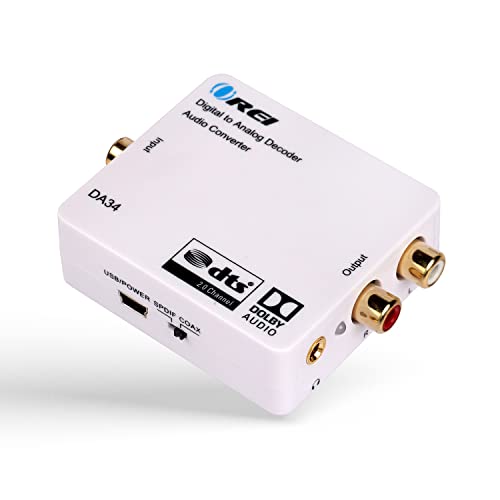
What it is: A compact DAC that decodes DTS/Dolby Digital from SPDIF or coaxial inputs and outputs analog stereo via RCA L/R and a 3.5mm headphone jack. It supports simultaneous RCA and headphone outputs and requires proper input selection and connector seating for optimal performance.
Best for: Small living rooms or setups needing both speaker-level and headphone listening options without breaking the bank.
Why it’s selected: Its dual-output design (RCA and 3.5mm) makes it convenient for shared spaces or mixed listening setups. It supports common digital formats and maintains straightforward operation.
Limitations to consider: It does not pass through HDMI or support additional multi-channel outputs beyond stereo; ensure the optical/coax input is firmly seated and the correct input switch is selected for reliable decoding.
PROZOR 192kHz Digital to Analog Audio Converter

What it is: A DAC that converts Dolby AC-3, DTS 5.1, and PCM 2.0 from Optical/SPDIF/Coaxial to stereo L/R and 3.5mm outputs. It emphasizes high-resolution 192kHz/24-bit capability and adjustable output sizing for the two analog channels.
Best for: Users seeking high-quality stereo output from multi-channel digital sources, with tunable output to suit headphones or speakers.
Why it’s selected: It offers high sampling rates and a dedicated volume-adjustment knob, enabling tailored listening without external amps. It supports simultaneous L/R and 3.5mm outputs for versatile listening options.
Limitations to consider: The device is designed for one-way signal transmission and does not support optical output in some configurations; verify your source compatibility before purchasing.
PROZOR 192Khz Digital to Analog Audio Converter (5.1CH)
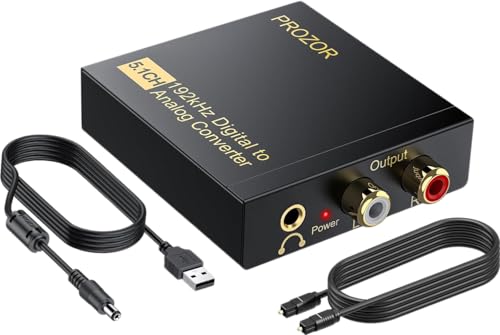
What it is: An optical/coaxial to RCA/3.5mm DAC that upconverts 192kHz, supporting 5.1 channel PCM/DTS/Dolby Digital inputs for 2.0/2.1/5.1 output formats.
Best for: Home theater systems that require robust digital-to-analog conversion from 5.1-channel sources to standard analog outputs.
Why it’s selected: It clearly specifies 192kHz sampling and 24-bit decoding for cleaner, more accurate reproduction, with practical connections for HDTV and Blu-ray players.
Limitations to consider: It emphasizes 5.1/2.0 channel outputs, so plan for stereo-only playback if your setup is strictly stereo and be mindful of the recommended input connections.
SOUTHSKY 5.1/2.1 Audio Rush Digital DAC
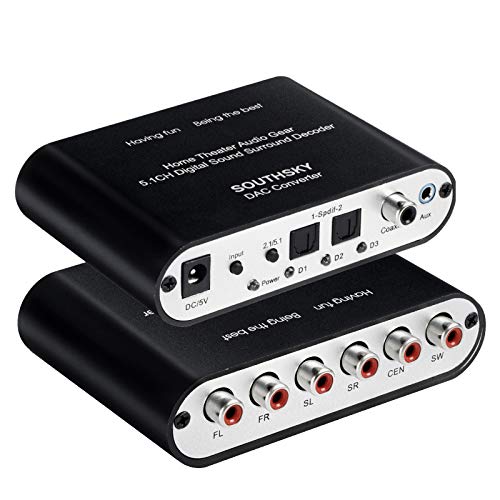
What it is: A DAC that converts digital optical or coaxial inputs to 6 RCA outputs for 5.1 channel or 2.1 channel listening. It includes a one-key switch to toggle between 5.1 and 2.1 modes and supports common surround formats like Dolby and DTS.
Best for: Older AV receivers or home theaters that need a simple path from digital sources to multiple analog outputs for surround sound.
Why it’s selected: The built-in switch simplifies mode changes between 5.1 and 2.1, and the six RCA outputs provide direct connections to multiple speakers.
Limitations to consider: The device focuses on analog output via RCA; if you require headphone or line-level versatility, you may need additional adapters.
Wiistar Fiber Optical Decoder
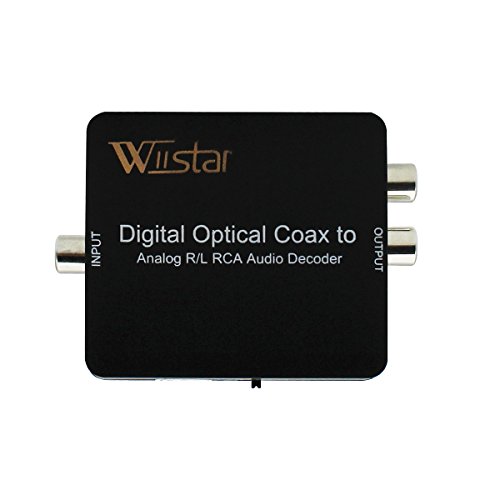
What it is: A compact DAC that converts DTS and PCM from optical input to 2-channel analog stereo. It supports SPDIF Toslink or coaxial input and can provide simultaneous RCA L/R and 3.5mm headphone outputs.
Best for: Quick upgrades to legacy TV systems or computers where a small, affordable DAC is preferred for stereo listening.
Why it’s selected: Its simplicity and dual-output capability make it a practical choice for straightforward stereo listening from a digital source.
Limitations to consider: It focuses on stereo output rather than multi-channel audio, so not ideal for true surround sound setups.
Buying Guide: Key Considerations For Choosing A Digital To Analog DAC
- Input compatibility: Check whether your source devices output via SPDIF (optical) or coaxial. Confirm that the DAC supports that input type reliably.
- Output needs: Decide between stereo (RCA/3.5mm) or multi-channel (5.1/6-channel RCA outputs). Choose a model that matches your speaker arrangement.
- Sampling rate and bit depth: Look for 192kHz/24-bit support for higher fidelity. This is especially important when decoding lossless formats from Blu-ray or game consoles.
- Volume control: Some DACs include a built-in volume knob; consider whether you want independent volume control or to control volume through your receiver or amplifier.
- Ease of use: Consider models with simple input switching or memory functions to recover the last input after a restart.
- Build and stability: A robust chassis and secure input connectors help prevent intermittent connections in everyday use.
- Future-proofing: If you anticipate upgrading to newer sources, prefer DACs that handle higher sample rates and multiple output formats without additional adapters.
Frequently Asked Questions
- What is a digital-to-analog audio converter used for?
It converts digital audio signals from devices like TVs, Blu-ray players, and game consoles into analog signals for speakers or headphones.
- Do these decoders support surround sound?
Some models support multi-channel outputs (5.1/6-channel) via RCA outputs, while others focus on stereo. Check the product’s listed formats before buying.
- Which input is best for me: optical (Toslink) or coaxial?
Optical and coaxial carry digital audio, but compatibility depends on your source device and cables. Ensure your chosen DAC supports the input you’ll use.
- Will I lose sound quality with a DAC?
Quality depends on the DAC’s design and how well it matches your system. High-resolution DACs can preserve more detail from compatible sources.
- Do I need a separate amplifier with these DACs?
Many DACs provide line-level outputs suitable for direct connection to powered speakers or a receiver. If your speakers require more power, an amplifier may still be needed.