
Best Digital Vocal Effects Processors for Home Studios and Live Performance
Answering the search for a robust digital vocal effects processor, this guide highlights five options that suit different setups—from home studios to live performances. These processors help singers and presenters shape tone, add harmony, and manage feedback without multiple standalone units. Top picks fit various buyers: hobbyists seeking simplicity, professionals needing powerful DSP, and venues requiring reliable, all-in-one solutions. Below is a quick summary table of the five chosen products to compare core capabilities at a glance.
| Product | Best For | Key Benefit | Limitations |
|---|---|---|---|
| BJLIFE Professional DSP Multi Effects Processor | Home studio & performers | 99 presets, dual-channel processing | May require time to explore 199 sound options |
| TONALUXE Digital Karaoke Mixer | Karaoke events & streaming | One-Touch vocal enhancement & feedback suppression | Interface may feel busy for beginners |
| FLAMMA FV01 Vocal Effects Processor | Live performers seeking pitch correction | Multiple vocal modes with tone control | Pedal form factor may be less suited for stage mounts |
| Camola AVE-100 Vocal Effects Processor | Studio and live streaming | Auto pitch correction & harmony features | AI features require some setup |
| Depusheng X5 Karaoke Digital Audio Processor | Karaoke setups & small venues | 3 mic channels and anti-howling | Basic interface, steeper learning curve for advanced use |
BJLIFE Professional DSP Multi Effects Processor

This unit targets performers needing a powerful studio-grade processing engine in a compact box. It features a robust DSP core, 24-bit signal processing, and 99 preset programs. It supports two audio paths with dual-channel processing, letting users apply different effects to separate sources or blend effects for complex soundscapes. Best for home studios and small live rigs where space is at a premium and sound quality is a priority.
Who it’s best for: DJs, solo artists, and small venues that require versatile effects without carrying multiple pedals. Why chosen: the combination of 99 presets and dual-channel operation offers flexibility for shaping both vocal and instrument signals in real time. Caution: mastering 199 overall sound options may require time to navigate for new users.
TONALUXE Digital Karaoke Mixer

This device focuses on homes, events, and studios requiring straightforward vocal processing with built-in karaoke features. It emphasizes a user-friendly control panel and intelligent DSP, delivering cleaner vocals, reduced noise, and stable feedback suppression. The key advantage is One-Touch Vocal Enhancement and Mic Priority, which can simplify live singing or hosting setups.
Who it’s best for: home karaoke enthusiasts and small events needing quick, reliable vocal shaping. Why chosen: it combines intuitive controls with effective feedback handling and EQ tuning. Caution: the control surface may feel overwhelming to absolute beginners until familiarized with the layout.
FLAMMA FV01 Vocal Effects Processor

The FV01 focuses on vocal tuning and expressive effects within a pedal-style unit. It offers pitch correction and multiple vocal effects organized around clear mode indicators (Warm, Bright, Normal). This makes it a strong choice for performers who want immediate vocal shaping during live performance or streaming without a computer.]
Who it’s best for: singers and streamers needing a portable, pedal-style processor with quick access to tone and pitch controls. Why chosen: the dedicated vocal modes and straightforward control scheme support fast, on-the-fly adjustments. Caution: pitch correction is a core feature, so settings can color the vocal tone more aggressively than some users expect.
Camola AVE-100 Vocal Effects Processor

The AVE-100 blends auto pitch correction, harmony, echo, and reverb in an all-in-one package. It supports phantom power and provides a user-friendly path for both live performances and home studios. It’s notable for AI-assisted key recognition and one-touch VocalErase for practice and streaming scenarios.
Who it’s best for: singers and streamers who want studio-ready vocal processing with harmony and automatic key detection. Why chosen: strong all-in-one feature set is well-suited for users who perform in varying keys or who want quick harmony generation. Caution: AI-based key detection may require occasional manual tweaks for unusual songs or non-standard tunings.
Depusheng X5 Karaoke Digital Audio Processor
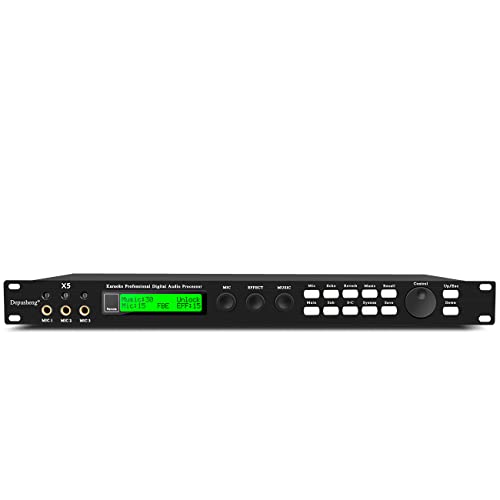
The X5 targets karaoke-oriented setups with independent, adjustable function blocks and a strong anti-howling system to minimize feedback. It supports three microphone channels and uses a straightforward interface for easy connectivity in small venues or home studios needing reliable mic processing.
Who it’s best for: small venues and karaoke-focused setups requiring multi-mic support with effective feedback control. Why chosen: the three-mic channel design and anti-howling capability address common karaoke environments. Caution: the user interface may appear basic compared with more feature-rich models, requiring manual exploration to leverage advanced options.
Buying Guide
What to prioritize when choosing a digital vocal effects processor:
- Sound processing power: Look for 24-bit or higher processing and dedicated DSP for clean, dynamic vocal tones.
- Number and type of effects: Consider whether you need reverb, delay, pitch correction, harmony, or multi-effect chains, and whether dual-channel processing is important.
- Ease of use: A well-organized control surface with clear labeling helps in live settings or streaming environments.
- Input/output options: Check mic preamps, instrument inputs, USB/Bluetooth streaming, and optical/coaxial compatibility for your setup.
- Feedback suppression: Effective anti-howling or FBX features reduce stage noise and monitor feedback during performances.
- Portability vs expandability: Pedal-style units are portable, while rack-mount units may suit studio rigs needing more stability and extra connections.
- Learning curve: AI-assisted features like auto key detection and VocalErase are helpful, but may require experimentation to align with your typical repertoire.
FAQ
- What is a digital vocal effects processor used for?
A digital vocal effects processor applies effects such as reverb, delay, pitch correction, and harmony to vocal signals, enabling studio-like processing for live performances or streaming.
- Do I need dual-channel processing?
Dual-channel processing is beneficial when you want different effects on vocals and instruments or to route two sources simultaneously for complex sound setups.
- Is pitch correction always necessary?
No, but it can help singers stay in key, especially in live contexts or during rapid vocal runs. It’s best used subtly to avoid an artificial sound.
- Can these processors replace multiple pedals?
Many models combine reverb, delay, EQ, and harmony in one unit, reducing the need for separate pedals or rack gear in small setups.
- What should beginners prioritize when starting out?
Choose a model with intuitive controls, clear presets, and reliable feedback suppression to minimize setup time and maximize performance confidence.
- Are AI-based key and harmony features reliable?
AI features are useful for quick harmony and key alignment, but manual tweaks may still be needed for complex songs or atypical tunings.