
Best Digital Wireless in-Ear Monitors for Stage and Studio
Digital wireless in-ear monitors (IEMs) deliver low latency, clear audio, and flexible channel options for performers and technicians. This guide highlights five strong options, showing who each is best for and why. Use this to compare personal monitoring setups, band configurations, worship teams, and studio practice rigs. The selection prioritizes low latency, stable transmission, and user-friendly pairing for live use and rehearsal settings.
| Product | Best For | Key Benefit | Notes |
|---|---|---|---|
| Xvive U4 Wireless in-Ear Monitor System Set | Small-venue performers and touring individuals | 2.4GHz wireless with 90 ft range and 6 channels | Latency under 5 ms; good for on-stage wireless monitoring |
| JOYO Wireless in Ear Monitor System JW-07 | Guitarists and practice setups | Low latency, real-time control, 48kHz/16bit audio | Frequency hopping for anti-interference |
| LEKATO MS-02 | Church bands and small to mid-sized stages | Ultra-low <4.5 ms latency; One TX to Many RX (up to 4) | 24bit/48kHz high sampling; auto-pairing |
| POGOLAB UHF 7-Channel IEM | Live bands and worship teams | 1 ms ultra-low latency; UHF stability with 7 channels | XLR input on transmitter; multiple channels for mix flexibility |
| Phenyx Pro 4-Channel UHF Mono PTM-33-4B | Multi-member bands and studio-like monitoring | 4-channel mono monitoring with IR sync | Up to 4 simultaneous mixes; 140-164 ft range |
Note: The table above underscores practical use cases and core strengths to help you pick a system that fits your venue size, number of performers, and desired channel freedom.
Xvive U4 Wireless in-Ear Monitor System Set
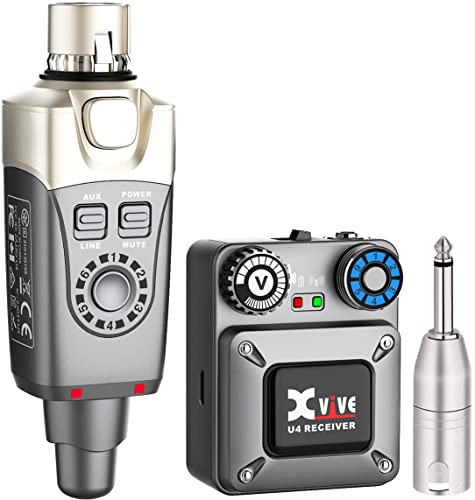
The Xvive U4 is a 2.4GHz wireless IEM system designed for personal or small-team monitoring. It supports up to six channels and claims a range exceeding 90 feet, making it suitable for small clubs and onstage broadcasts. Best for solo performers, duets, or small ensembles who need reliable wireless audio on a budget. Latency is cited as under 5 ms, reducing timing issues during performances. A potential limitation is that performance can be affected by crowded wireless environments; ensure channel selection is optimized in advance.
JOYO JW-07 Wireless In-Ear System

JOYO JW-07 targets performers seeking affordable wireless monitoring with clear audio. It features a 2.4GHz system, low latency, and 48kHz/16-bit clarity. The system emphasizes real-time practice and performance, with frequency hopping to minimize interference. Best for beginners and practice-oriented players, such as guitarists learning new material. A caution: efficacy depends on the surrounding wireless environment; test channels before set times to prevent dropouts.
LEKATO MS-02 Wireless In-Ear Monitor System

LEKATO MS-02 provides an upgraded low latency experience with <4.5 ms, plus a One TX to Many RX design supporting up to four receivers. It uses a 24bit/48kHz pipeline for higher fidelity and has auto-pairing for quick setup. Best for small to mid-sized venues or practice rooms with multiple performers. Limitation: the data notes longer-range performance as best in line-of-sight conditions; obstacles can affect range.
POGOLAB Wireless in-Ear Monitor System

POGOLAB offers a UHF 7-channel system with 1 ms ultra-low latency and 48kHz/24-bit hi-fi audio. It includes stable channel selection indicators and a professional XLR input on the transmitter, aiding versatile stage setups. Best for worship teams and touring bands needing reliable multi-channel performance. The device emphasizes visual channel indicators for quick setup and soundchecks. A potential limitation is that heavier venues may still require careful frequency planning to avoid interference.
Phenyx Pro 4-Channel UHF Mono Wireless IEM PTM-33-4B

The Phenyx Pro PTM-33-4B offers a four-channel mono monitoring experience with up to 4×25 UHF frequencies to minimize interference. It delivers a wide range and an IR sync for quick linking across multiple receivers. Best for multi-member bands or studio-like monitoring where separate mixes are necessary. Choose this if you require multiple independent mixes; avoid if you only need a simple, single-monitor setup due to its more complex configuration.
Buying Guide: Key Considerations For Digital Wireless IEMs
- Latency: Aim for sub-5 ms to avoid noticeable delays in cueing or live performance feedback.
- Channel capacity: If you have multiple performers, select systems with multi-channel (One TX to Many RX) support to simplify routing.
- Frequency stability: UHF systems and frequency hopping reduce interference in crowded environments; consider a model with multiple selectable channels.
- Range and line-of-sight: Larger venues benefit from longer-range designs; walls and metal obstacles can shrink effective distance.
- Input/output flexibility: XLR inputs and AUX/LINE connections enable easy integration with mixers and playback devices.
- Auto-pairing and ease of setup: Quick pairing reduces setup time and helps maintain performance schedules.
- Battery life and charging options: Long battery life matters for longer gigs; check whether a charging case is included or how many devices can be charged on the go.
- Durability and form factor: Clip-on transmitters and beltpack receivers should be robust for live environments and easy to clip or mount on performers’ gear.
- Compatibility and accessories: Review included cables, headsets, and ear tips to ensure a complete setup fits your needs.
FAQ
- What is a digital wireless in-ear monitor system? A digital wireless IEM uses a digital signal to transmit audio from a transmitter to wireless receivers, reducing noise and latency for on-stage monitoring.
- Which IEM is best for a small band? For up to four performers, LEKATO MS-02 or POGOLAB with multiple channels can offer reliable stability and easy setup.
- Do I need multiple channels? Yes, if multiple performers require independent mixes or if you need to route separate audio sources.
- Is 2.4 GHz wireless sufficient for live gigs? 2.4 GHz can work in smaller venues or with limited channels; however, UHF systems often offer more stable performance in crowded RF environments.
- What should I check before buying? Latency, channel availability, range, input options, and whether auto-pairing is present are key factors for quick, reliable setups.
- Can I use these with in-ear headphones? Yes; most systems provide a standard 3.5mm or dedicated headphone connection on the receiver for monitoring.