
Best Double Bass Pickup Options for Clear, Stage-Ready Tone
Answering the question what’s the best pickup for a double bass, this guide highlights five solid choices that balance tone, install ease, and reliability for upright players. Each option suits different players: some prioritize natural resonance and arco clarity, others emphasize stage presence and preamp versatility. The table below helps compare the standout picks at a glance.
| Product | Best For | Key Benefit |
|---|---|---|
| KNA DB-1 Double Bass Pickup | Bridge-mounted players | Natural tone with no instrument modification |
| EMG J Prewired Bass Pickup Set | Jazz and versatile tone | Solderless install with control plate |
| EMG J Active Bass Pickup Set | Modern, punchy bass | Active electronics for extended low end |
| The Realist RLSTLL1 Lifeline | Studio and live punch | Focused, punchy sound with easy installation |
| DiMarzio Model J Bass Pickup Set | Classic Jazz/Precision tones | Balanced neck and bridge voices |
KNA DB-1 Double Bass Pickup

The KNA DB-1 is a bridge-mounted piezo pickup designed to project the natural sound of an upright bass with minimal instrument modification. It is best for players who want a portable, non-invasive pickup that captures arco and pizzicato nuances for live gigs or recording sessions. Pros include a straightforward, wood-encased sensor and a faithful tone transfer to amps, PAs, or recording consoles. A limitation is that piezo systems can be sensitive to bridge and top wood variations, which may require precise placement for optimal response.
Best for: Players who want a portable piezo solution that preserves the instrument’s natural resonance without altering the bass body. Why selected: It offers true acoustic signal capture with minimal setup, ideal for session work and small venues.
EMG J Prewired Bass Pickup Set Plus Control Plate System
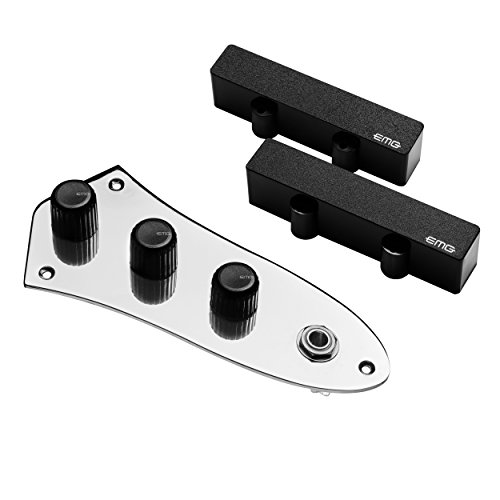
This prewired J-style pickup set comes with a control plate and a solderless installation approach. It delivers classic Jazz Bass tones with clear mids and harmonics. It’s best for players who want an easy swap-in system that reduces downtime and keeps wiring clean. A potential drawback is that the provided plate-centric design may limit customization for non-standard cavities or unusual control layouts.
Best for: Jazz players seeking a quick, clean install with familiar tonal characteristics. Why selected: The solderless, control-plate arrangement simplifies upgrades and maintenance.
Caution: The integrated plate may not fit every bass body perfectly; verify cavity compatibility before purchase.
EMG J Active Bass Pickup Set

This active EMG J set extends the classic Jazz Bass voice with an expanded tonal range and punchier low end. It features a low resistance-to-inductance ratio, which helps preserve clarity even at higher output. Best for players seeking modern, tight bass performance with articulation across strings. A limitation to note is the active circuit can require a 9V battery and may introduce noise if the system is improperly grounded.
Best for: Players needing more drive and clarity at higher output levels. Why selected: Active electronics deliver extended dynamics and punch for aggressive styles or dense mixes.
Tip: Ensure battery accessibility and proper grounding during installation.
DiMarzio Model J Bass Pickup Set

The DiMarzio Model J set is designed for classic Jazz/Precision-style tones with balanced neck and bridge voices. It suits players who want a versatile growl with smooth highs and present mids. This set is best for those who prioritize a traditional, musical bass voice rather than extreme modern output. A potential limitation is that it may not deliver the ultra-surgical articulation some modern active systems provide.
Best for: Players seeking balanced, vintage-inspired Jazz/Precision tones. Why selected: Provides reliable, musical character suitable for fusion or blues contexts.
Consideration: Passive construction means lower output compared to active systems; plan preamp needs accordingly.
Fishman BP-100 Classic Series Upright Bass Pickup

The Fishman BP-100 is a classic upright bass pickup option designed for reliability and straightforward use. It’s well-suited for players who want a simple, dependable pickup for live performances and casual recording. A consideration is that the simple design may offer fewer tonal sculpting options on some rigs, depending on the preamp or amplifier being used.
Best for: Players who value reliability and simple signal capture over extensive tonal shaping. Why selected: A time-tested choice that integrates smoothly with many setups.
Shadow SH-950 Double Side Bridge Pickup for Upright Bass

The Shadow SH-950 features two opposing sensors per side mounted between the wings and feet of the bridge. This configuration aims to capture evenness across the bridge and provide a balanced, accurate signal. It’s best for players who want consistent output across the instrument’s range. A limitation is that bridge-specific mounting may require careful alignment to avoid phase issues or uneven response.
Best for: Players who value symmetrical sensing for balanced tone. Why selected: Dual-sensor design helps minimize tonal bias across strings and dynamics.
Buying Guide: Key Purchase Considerations
- Pickup type: Piezo, magnetic, or hybrid. Piezo pickups (like KNA DB-1) capture wood tone with minimal magnetic interference, while magnetic options (EMG, DiMarzio) produce traditional electric bass textures. Hybrid designs blend signals for broader versatility.
- Installation: Some systems require no modification; others use bridge or control-plate mounted assemblies. Consider your instrument’s bridge type and whether you’re comfortable with drilling or bridge removal.
- Output and tonal character: Active electronics deliver more headroom and punch; passive options tend to offer a natural, musical response but with limited boost. Decide if you need extra sustain, low-end fullness, or a brighter attack for arco passages.
- Power requirements: Active pickups require power (battery or external preamp). Ensure you have easy access for battery changes on stage or in studio runs.
- Fit and compatibility: Some pickups are designed for standard bridges, while others target adjustable or unique bridge arrangements. Check dimensions and mounting compatibility with your bass.
- Intended use: For live gigs, consider durability, feedback resistance, and plug-and-play convenience. For studio work, prioritize fidelity and articulation across dynamics.
FAQ
- What is the main difference between piezo and magnetic pickups for upright bass?
Piezo pickups capture the instrument’s wood tone and resonance with minimal magnetic interference, producing a natural acoustic-like sound. Magnetic pickups favor electric bass tonal characteristics and emphasize string vibrations, often with more output and sustain.
- Do I need to modify my bass to install a pickup?
Some pickups are designed for non-invasive installation, while others require bridge or cavity modifications. Check the installation notes for each model before purchasing.
- Are active bass pickups worth the extra power requirement?
Active pickups provide more headroom, extended low-end response, and cleaner signal at high output. They require a power source and may need additional preamp considerations.
- Which pickup is best for arco playing on upright bass?
Options with precise articulation and stable output, such as the Realist Lifeline or well-tuned piezo bridges, can maintain clarity during arco passages without overwhelming sustain.
- Can I use multiple pickups on a single bass?
Yes, some players mix signals from different pickups to tailor tone across playing styles. This often requires a suitable preamp and careful wiring to avoid phase issues.