
Best Double Neck Explorer Guitar Options for Stage Versatility
Answering the search for a double neck explorer guitar, this guide highlights five strong options suited for players who need both 12-string and 6-string versatility on stage or in the studio. The top picks cater to collectors, DIY enthusiasts, and performers seeking bold stage presence and flexible tonal options. Use this overview to compare neck configurations, woods, and build ideas to fit your playing style and goals.
Overview at a glance: the table summarizes the five highlighted models, focusing on neck configurations, body woods, and best-use scenarios.
- Product
- Neck Configurations
- Body Wood
- Best For
| Product | Neck Configurations | Body Wood | Best For |
|---|---|---|---|
| IYV IDN-126 Double-Neck | Dual necks (likely solid body design) | Solid body | All-around live playing and studio tracking |
| Fistrock DIY Double Neck Kit (6 & 4) | 6-string neck + 4-string neck | Basswood body | DIY enthusiasts who want a completed look |
| Fistrock DIY Double Neck Kit (12 & 6) | 12-string neck + 6-string neck | Mahogany body | Classic mahogany tone with two necks |
| YLQSMX 12-String & 6-String (Mahogany) | 12-string neck + 6-string neck | Solid mahogany | Stage versatility with humbuckers |
| TARIO Double Neck (12 & 6) | 12-string fixed bridge + 6-string tremolo | Mahogany body | Versatile styles and tremolo use |
IYV IDN-126 Double-Neck Solid Body Guitar, Trans Red

The IYV IDN-126 combines two necks on a single solid body, offering clear separation between the upper and lower necks for quick switching during performances. This model is best for players seeking a straightforward, ready-to-play double-neck option with reliable CNC manufacturing consistency. Best for live performers who want a ready-to-play instrument with minimal build steps.
Why selected: It provides a clean, single-piece design approach with CNC production to ensure consistent geometry. Best for players who prefer a solid, no-fuss instrument over a DIY route. Caution: verify neck alignment and setup once received, as factory variances may require minor adjustment.
Fistrock Double Neck DIY Electric Guitar Bass Kit 4 & 6 String

This DIY kit combines a 6-string and a 4-string neck on a basswood body with engineered maple necks and prewired electronics. It’s ideal for players who want a highly customizable double-neck instrument and are comfortable with woodworking and assembly. Best for DIY builders who enjoy finishing the wood and tailoring electronics and aesthetics to their style.
Why selected: everything-you-need-in-one-box simplifies project planning, while unfinished bodies and heads encourage personalization. Caution: as a DIY project, it requires time, tools, and soldering skill to complete and setup properly.
Fistrock Double Neck DIY Electric Guitar Kit 6 & 12 String

This kit pairs a 12-string neck with a 6-string neck on a mahogany body, offering a warm, resonant foundation for expansive chord work and lead sequences. The kit emphasizes a professional-level build experience and dual-humbucker electronics. Best for players who want mahogany’s sustain and a classic double-neck configuration with substantial tonal depth.
Why selected: solid mahogany and finished necks deliver a durable platform for experimentation. Caution: requires careful neck alignment and precise setup to balance string tensions across two necks.
Double Neck Electric Guitar 12 String & 6 – Solid Mahogany Body

This model uses solid mahogany for both necks and body construction, with a dedicated neck selector and separate volume/tone controls for each neck. It’s a strong pick for players who want distinct 12-string and 6-string voices with the option to blend. Best for on-stage versatility and tonal experimentation during performances.
Why selected: dual-humbucker configuration and independent controls make it easy to sculpt two distinct sounds without swapping instruments. Caution: weight can be a consideration with all-mahogany builds; plan for balance on longer sets.
TARIO Double Neck Electric Guitar 12 & 6

The TARIO model blends a 12-string fixed-bridge neck with a 6-string vintage-style tremolo neck on a mahogany body. It features two 22-fret necks and a maple fingerboard, offering diverse tonal landscapes from jangly 12-string textures to aggressive 6-string leads. Best for players who want distinct bridge configurations and a blend-ready setup.
Why selected: versatile tremolo on the 6-string neck adds sonic flexibility that many double-necks lack. Caution: fixing a tremolo may require careful setup to maintain intonation across both necks.
Double Neck Electric Guitar 12 String & 6 – Mahogany
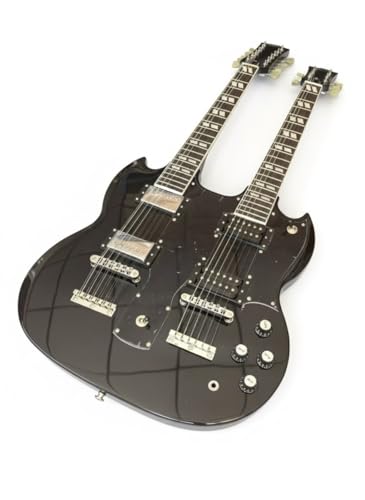
Another two-neck option with solid mahogany construction, featuring dual humbuckers and a neck selector. Best for performers seeking a balanced, resonant core tone with two clearly defined voice options. This model emphasizes sustain and a cohesive overall feel across both necks.
Why selected: sturdy mid-range option with reliable dual-pickup electronics. Caution: heavy instrument; ensure strap reinforcement and ergonomic balance for longer gigs.
Buying Guide: Key Considerations for Double Neck Explorers
- Neck configuration: Decide between 12 + 6, 12 + 12, or 6 + 6 necks. Your choice affects playability, weight, and tonal capabilities.
- Wood and construction: Mahogany bodies and necks offer warmth and sustain; basswood or maple necks can alter brightness and weight. Consider your preferred balance and feel.
- Electronics: Look for dual humbuckers and independent volume/tone controls for each neck. A neck selector or a switchable series/parallel option expands sound design.
- Bridge and tremolo: Fixed bridges are stable for tuning, while tremolos introduce vibrato options but may require careful setup to maintain intonation across both necks.
- DIY vs. ready-built: DIY kits offer customization and potential cost savings but require assembly skills, tools, and time. Ready-built models offer consistent setup and immediate playability.
- Weight and balance: Two necks plus mahogany bodies can be heavy. Check strap buttons, balance, and neck-dive risk for comfortable long playing sessions.
- Finish and aesthetics: Unfinished bodies and headstocks invite personalization; consider your painting, staining, or clear-coat plans if you want a unique look.
Frequently Asked Questions
- What is a double-neck explorer guitar best used for?
It is best for players who need to switch between a 12-string and a 6-string voice on stage or in the studio without changing instruments. - Are DIY double-neck kits worth it?
They’re ideal for builders who want customization and cost control but require time, tools, and soldering skills. - Do all double-neck guitars have independent controls for each neck?
Most do, with separate volume and tone knobs and a neck selector; verify this in product specs. - Is mahogany a good choice for a double-neck guitar?
Yes, mahogany provides warmth, sustain, and robust resonance, especially in heavier dual-neck designs. - What maintenance is required for double-neck instruments?
Regular setup, truss rod adjustments, nut and saddle checks, string changes for both necks, and bridge tuning stability checks are recommended. - How heavy are double-neck guitars typically?
They tend to be heavier than single-neck guitars due to extra wood and hardware; plan for support and balance during extended play.