
Best Drop Tuning Guitar Strings for Lower Tunings and Heavier Tones
Answering the need for reliable, drop-tuned strings, this guide highlights five top options suited for players who detune down from standard E or explore Drop A and similar tunings. Each pick targets a specific playing style: aggressive rhythm, lower tunings, or thick, stable tone under heavy picking. The following selections prioritize tuning stability, lower-end definition, and comfortable playability, helping you choose the right set for your guitar, whether you riff heavy chugging riffs or lay down tight, defined chords.
| Product | Best For | Why It Stands Out |
|---|---|---|
| Jim Root Signature Guitar Strings 12-64 | Drop A | Drop A players seeking clear highs | Handpicked by Jim Root for peak performance in intense playing conditions |
| Stringjoy 12-64 Drop Tune Heavy Signatures | Lower tunings with balanced tone | Excellent tuning stability and thick low end for Drop A/B/C |
| D’Addario NYXL1260 Electric | High-tidelity, high-tresshold tunings | Unrivaled tuning stability and stronger core |
| D’Addario NYXL1046 | Standard to mid-heavy play | Stays in tune with strong core and mids for cut through |
| DR DDT Drop Down Tuning (13-65) | Super heavy drop tuning | Specifically built for drop-down tunings with a broad low end |
Jim Root Signature Guitar Strings 12-64 | Drop A

Best for: Drop A players who want reliable tone under downtuned conditions. These strings are handpicked by Jim Root in the Dunlop String Lab to optimize peak performance when the guitar is tuned down and played aggressively. The design emphasizes clear highs and strong tuning stability when detuned, with comfortable playability that supports fast fretboard movement.
Why selected: They are tailored for intense playing sessions, preserving definition even when the low string is extended in pitch-down tunings. The set aims to reduce the need for constant retuning, which is crucial for live performances or dense riffing.
Limitation: Specific tension data isn’t provided, so players with extremely low tunings may want to gauge feel and tension by testing in a controlled setup.
Jim Dunlop Heavy Core Electric Guitar Strings 11-50

Best for: Players using dropped tunings who want a quick attack with defined low end. These strings are designed for dropped and lowered tunings, delivering a strong initial response and stable feel that suits aggressive rhythm work.
Why selected: The set emphasizes attack and low-end definition, which helps maintain note clarity during palm-muted or heavy picking passages in lower tunings.
Limitation: Shorter upper-range throats may lead to less sparkle on the highs when heavily detuned compared to lighter gauge sets.
Nickel Wound Electric Guitar Strings 11-56 | Drop C

Best for: Players pursuing Drop C and similar tunings who want balanced tension with consistent volume and a comfortable feel.
Why selected: These strings are engineered to deliver peak performance for modern playing demands with consistent volume across notes and a comfortable tension that suits dynamic playing styles.
Limitation: The heavier gauge may affect bending ease for players transitioning from lighter sets.
Stringjoy 12-64 Drop Tune Heavy Signatures
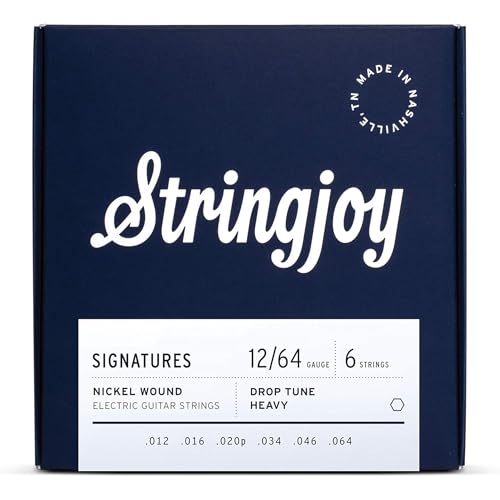
Best for: Drop tunings like Drop A or Drop B where a thicker low string is advantageous for grit, sustain, and low-end authority.
Why selected: Stringjoy Signatures 12-64 balance tuning stability with a strong low end, designed for consistency across lower tunings. They are noted for sustained tuning accuracy and a solid feel under heavy pick dynamics.
Limitation: Heavier gauges can demand more finger strength and may reduce open-string resonance compared to lighter sets.
DR DDT Drop Down Tuning Electric Guitar Strings (13-65)
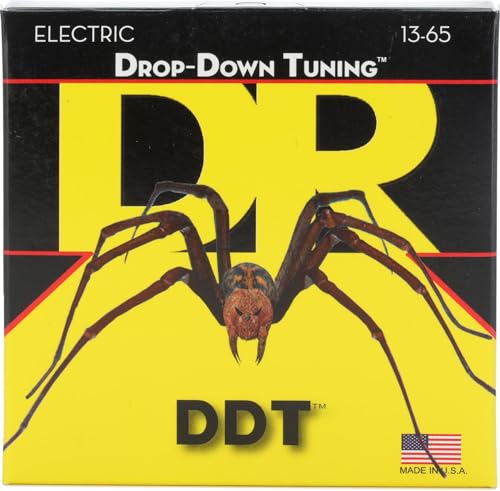
Best for: Players who require a super-heavy gauge set for extreme drop-down tunings with a broad, powerful low end.
Why selected: Specifically marketed for drop-down tunings, these strings provide an extended range in the high tension range and a robust bottom string that helps maintain string stability and tone in aggressive tunings.
Limitation: The 13-65 gauge may be stiff for beginners or players who prefer easy bending in standard tunings.
Buying Guide
What matters most when choosing drop-tuning strings:
- Tone vs. Tension: Heavier gauges deliver stronger low end but require more finger strength. Lighter sets are easier to play but less defined in detuned contexts.
- Tuning Stability: Sets designed for drop tunings often emphasize consistent intonation and minimal detuning across songs.
- Core and Wrap Materials: Nickel and nickel-wrapped cores offer balanced mids and crisp highs; high-carbon cores may increase stiffness and tone stability.
- Playing Style: Choose based on whether you prioritize fast playing, palm-muted chugs, or clean detuned chords.
- Maintenance: Coated vs uncoated affects longevity and texture; consider your playing environment and sweat levels.
Frequently Asked Questions
- What gauge is best for Drop A tuning? – A heavier gauge set like 12-64 or 13-65 can provide the low-end authority needed for Drop A, but personal feel varies.
- Do NYXL strings stay in tune in downtuned setups? – Yes, NYXL sets are designed for strong tuning stability and higher core strength, which helps in downtuned contexts.
- Are heavier sets harder to press? – Heavier sets require more finger strength and can affect feel; build up finger strength gradually.
- Should I choose coated or uncoated for down-tuned playing? – Coated strings last longer and resist corrosion, but can feel slicker and slightly quieter; choice depends on playing style and preference.
- Is it better to use a single brand across gauges? – Consistency can help with feel and tone; however, mixing gauges for specific sections is common among players with diverse needs.