
Best Dual 12 Inch Speakers for Deep Bass and Easy Installation
If you’re shopping for dual 12-inch speakers, you’re likely after powerful bass, reliable construction, and easy integration with your car or home audio system. This guide highlights five top dual-12 options, focusing on sealed or vented enclosures and loaded subwoofer packages. It helps you pick by intended use: sealed enclosures for tight, controlled bass; vented enclosures for higher peak output; and all-in-one loaded packages for quick setup. The table below compares the five selections at a glance to aid quick decision-making.
| Product | Type | Best For | Approx. Power (Max / RMS) |
|---|---|---|---|
| MTX Terminator Dual 12″ Subwoofer Box, Mono Amp, & 4 Gauge Wiring Kit | Loaded Enclosure | Car audio enthusiasts seeking compact sealed bass with simple setup | 1200W / 400W |
| Skar Audio Dual 12″ Complete 2,400 Watt SDR Series Subwoofer Bass Package | Loaded Enclosure + Amplifier | All-in-one package for strong bass in cars | 2400W / 1200W |
| Skar Audio SDR-12 D2 12″ 1200 Watt Max Power Dual 2 Ohm Subwoofer | Woofer Only | Budget-friendly 2-ohm dual voice coil option | 1200W / 600W |
| Skar Audio SDR-12 D4 12″ 1200 Watt Max Power Dual 4 Ohm Subwoofer | Woofer Only | Standard 4-ohm dual voice coil for flexible amps | 1200W / 600W |
| Skar Audio Dual 12″ 5000W Loaded EVL Series Vented Subwoofer Enclosure | Loaded Vented Enclosure | High-output bass with vented design for loud setups | 5000W / 2500W |
MTX Terminator Dual 12″ Subwoofer Box, Mono Amp, & 4 Gauge Wiring Kit

The MTX Terminator combination integrates dual 12-inch subwoofers in a sealed enclosure, preloaded for a compact trunk or cargo area. Best for buyers who want a ready-to-install setup with solid sealed bass response. The 5/8 inch MDF enclosure provides structural rigidity to reduce vibration during high-output playback. A caution: sealed designs tend to deliver tight bass at the expense of maximum peak SPL in some large-volume spaces; this package prioritizes accuracy over raw output.
Skar Audio Dual 12″ Complete 2,400 Watt SDR Series Subwoofer Bass Package
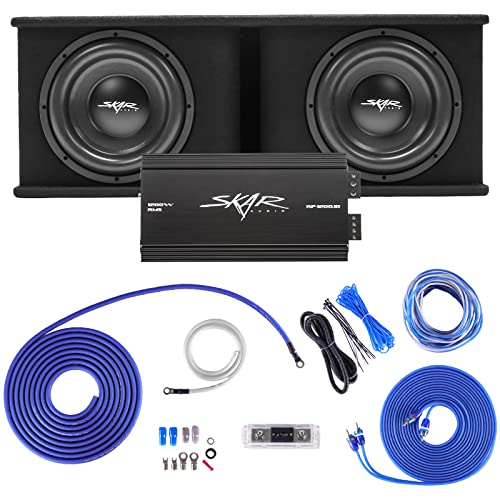
This all-in-one package provides a complete SDR series dual 12-inch loaded subwoofer setup, delivering a peak of 2,400 Watts and 1,200 Watts RMS. It’s best for buyers who want a turnkey solution with an integrated amplifier for strong, room-filling bass. The pre-wired design supports straightforward installation. A potential limitation is the need for a compatible power supply and head unit to maximize performance.
Skar Audio SDR-12 D2 12″ 1200 Watt Max Power Dual 2 Ohm Car Subwoofer

Designed as a dual 2-ohm voice coil subwoofer, this model targets flexible amplifier matching and strong bass response. Best for buyers who need a budget-friendly, power-efficient option with solid 600W RMS. Choose this if you’re running a lower-wattage system or want easy series/parallel wiring to reach the desired impedance. A limitation is that it’s a woofer rather than a full enclosure, so you’ll need a proper enclosure and mounting space.
Skar Audio SDR-12 D4 12″ 1200 Watt Max Power Dual 4 Ohm Car Subwoofer
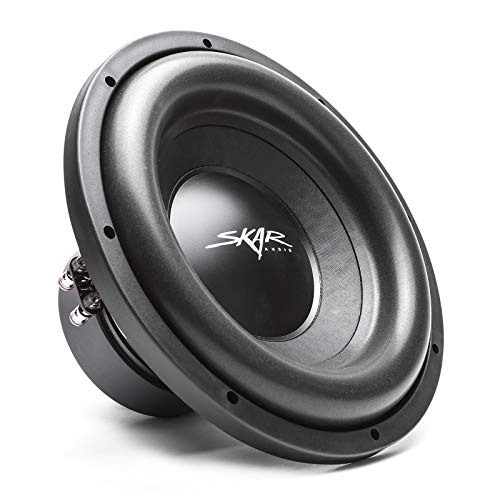
This dual 4-ohm subwoofer suits setups that favor flexible amp compatibility while delivering 600W RMS. Best for buyers who plan to pair with a class D amplifier or a multi-channel amp capable of stable 2-ohm or 4-ohm loads. A note: ensure enclosure volume matches the subwoofer’s optimal parameters to avoid shrinkage in bass output.
Skar Audio Dual 12″ 5000W Loaded EVL Series Vented Subwoofer Enclosure
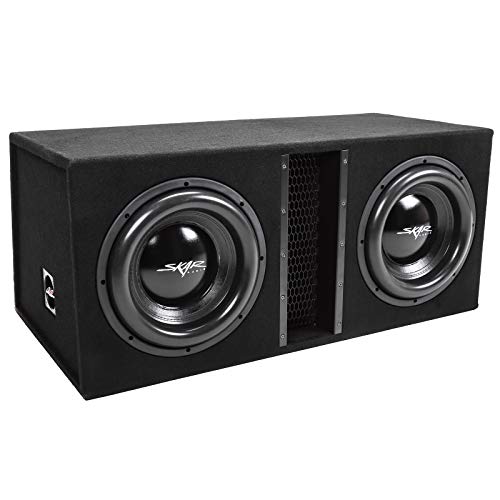
The EVL Series vented enclosure houses dual 12-inch drivers configured for high-output bass. Best for buyers seeking loud, party-ready bass with a pre-wired 1-ohm final impedance option. The enclosure is built for heavy bass demands, but installation requires adequate trunk or cargo space. Caution: vented designs can be less precise at very low frequencies compared to sealed enclosures in small, acoustically controlled spaces.
Buying Guide: Key Considerations For Dual 12-Inch Speakers
What enclosure type fits your space and listening style? Sealed boxes deliver tight, controlled bass ideal for music with fast transients. Vent-only designs maximize maximum output in large spaces like trucks or home setups with ample room.
Do you want a complete package or components? All-in-one loaded enclosures simplify setup, while component woofers require separate enclosures or boxes but offer more customization.
What impedance does your amplifier support? Dual 2-ohm or 4-ohm configurations affect how you wire drivers for the best efficiency and power transfer.
How much space do you have? Dual 12-inch drivers need deeper enclosures or truck cargo areas. Measure trunk or room dimensions before purchasing a loaded enclosure to ensure fit.
Power handling and cooling matter. Higher RMS ratings require adequate amp headroom and wiring. Plan for ventilation and secure mounting to prevent movement in mobile environments.
Frequently Asked Questions
- What is the difference between sealed and vented dual 12-inch enclosures? Sealed enclosures offer tighter bass with better control, while vented enclosures provide higher peak output and louder bass in larger spaces.
- Do I need an amplifier with a dual 12-inch subwoofer? Many setups use an external amplifier to match the subwoofer’s RMS rating; some loaded packages include an amp, simplifying installation.
- Can I install dual 12-inch subs in a small car trunk? Yes, but you should measure space carefully and consider a compact sealed enclosure to maximize space and bass control.
- Is impedance important when selecting dual 12-inch subs? Yes. Impedance affects amplifier compatibility and wiring options. Common configurations are 2-ohm or 4-ohm per voice coil.
- Are loaded enclosures safer for beginners? Loaded enclosures reduce the amount of DIY wiring and enclosure build, offering a straightforward route to solid bass performance.
- What should I consider for a home audio setup with dual 12-inch subs? Ensure room acoustics, sub placement, and an appropriate crossover with your main speakers to avoid bass overpowering your system.