Best Dual Cassette Player Recorder for Modern Reunions and Retro Archives
Exploring the best dual cassette players and recorders means balancing classic analog charm with modern convenience. The following selections emphasize two-Cassette decks, flexible recording options, and digital compatibility to preserve memories or enjoy retro listening. This guide highlights five models that pair sturdy deck mechanisms with features like USB or SD recording, pitch control, and portable designs, helping you find the right balance between nostalgia and practicality.
| Product | Brand | Key Feature |
|---|---|---|
| Cassette Tape Player with Stereo Sound (Dual Tape Decks) | TOMASHI | Tape-to-USB/TF recording, USB/TF playback |
| TEAC W-1200B Dual Cassette Deck | Teac | Independent deck controls, USB output, pitch control |
| TEAC W-1200 Dual Cassette Deck (Silver) | Teac | Independent decks, NR, RTZ, dual operation |
| SEMIER Small Cassette Tape Player | SEMIER | USB/SD card conversion to MP3 |
| Burtowic Portable Cassette to USB Converter | Burtowic | Direct USB recording, dual power options |
Cassette Tape Player With Stereo Sound And Dual Decks

The TOMASHI cassette system combines two independent tape decks with modern conveniences. It supports USB and TF card playback and includes a tape-to-USB/TF recording function, enabling quick digital preservation of analog tapes. The dual-deck arrangement facilitates uninterrupted playback and simultaneous dubbing, making it suitable for transferring entire collections or creating mixed duplicates. This model offers a balance between nostalgic listening and straightforward digital archiving, appealing to users who want a simple, reliable dual-deck experience without complex setups.
Design-wise, the unit emphasizes user-friendly controls, clearly labeled ports, and stable playback. While the lifetime of belts and heads depends on usage, the dual-deck design reduces the need to swap tapes mid-session, which is helpful for archiving large cassette archives or compiling new mixes. Audio quality is influenced by the tape type and condition, but the device supports standard formats and provides dependable stereo output for home listening or small gatherings.
Key benefits include convenient digital conversion, flexible playback, and a straightforward interface. For collectors or older rooms where a single deck is insufficient, TOMASHI’s dual system provides a practical upgrade path. Consider this option if you want a compact, all-in-one solution that bridges vintage cassettes and modern USB/SD workflows without extra hardware.
TEAC W-1200B Dual Cassette Deck With Recorder

Teac’s W-1200B emphasizes robust dual-cassette operation with independent drive sections for each deck. This model supports normal, chrome, and metal tapes, enabling flexibility across older and higher-grade formats. A built-in noise reduction system helps minimize hiss during playback, while the USB output supports digital recording to a PC or Mac at CD-quality 48kHz/16-bit PCM. Features like one-touch dubbing, RTZ, and pitch control add practical value for transcription, archiving, or remixing projects. A remote control rounds out the package for easier operation from a distance.
The W-1200B is ideal for users who want reliable, high-fidelity tape handling alongside modern digital capture. The dual decks allow simultaneous recording and playback, which is useful for archive transfers or creating duplicate cassettes. The device’s pitch control, A-B repeat, and quiet operation during dubbing support precise editing and consistent playback. Overall, this model provides a well-rounded, professional-grade dual cassette experience with ample digital integration.
Durability and serviceability are important with any cassette deck, and Teac’s reputation for dependable transport mechanisms helps reduce maintenance concerns. If you value multiple tape compatibility and a seamless bridge to digital archives, the W-1200B offers a balanced, feature-rich option for both reproduction and preservation tasks.
TEAC W-1200 Dual Cassette Deck (Silver)

The silver variant of the W-1200 continues the dual-deck approach with a focus on practical reliability. It highlights two simple, independent drive sections that permit seamless deck-to-deck operations. Playback supports Normal, Chrome, and Metal tapes with Auto detect, while the device includes a noise reduction system to minimize hiss and improve clarity. Pitch control on Tape 1 provides playback speed adjustment for transcription or archival restoration, complemented by RTZ for quick counter resets and easy search through tapes.
Two decks operate with separate controls, which helps maintain continuity during complex recording tasks. The built-in NR makes older recordings more intelligible, particularly if they were originally encoded with Dolby B. This model is well-suited for users who want a straightforward dual-cassette workflow with clear, reproducible sound and reliable tuning for long-term archiving projects.
As with other dual Teac decks, thisSilver edition emphasizes build quality and consistent performance. If your aim includes preserving conversations, lectures, or music across two synchronized decks, this variant delivers the expected robustness and practical feature set for daily use in a home studio or archive setup.
SEMIER Small Cassette Tape Player With USB/SD Recording

The SEMIER small cassette player functions as a compact conversion device, letting you play cassettes and record to MP3 via USB or an included SD card. It supports USB and SD card inputs for digital playback and recording, making it a practical option for travelers or spaces limited by size. The device emphasizes simplicity: a straightforward LCD for navigation and a built-in microphone for quick capture. It does not support Type IV or metal tapes, but it covers standard Type I tapes with a focus on converting memories to digital formats.
The unit is particularly attractive for those who want a minimal setup with digital transfer capability. The SD card slot and USB output provide convenient routes to archive audio without a computer, which can be ideal for quick archival projects, classrooms, or hobbyists who value portability and ease of use. The built-in speaker ensures immediate playback, while a headphone jack allows private listening when needed.
While the device is compact, its feature set centers on straightforward conversion and basic playback. If you want a compact, no-frills option to digitize old cassettes or to enjoy simple cassette playback with digital export, SEMIER’s small player provides a functional solution in a compact package.
SEMIER Portable Cassette Boombox With AM/FM Radio
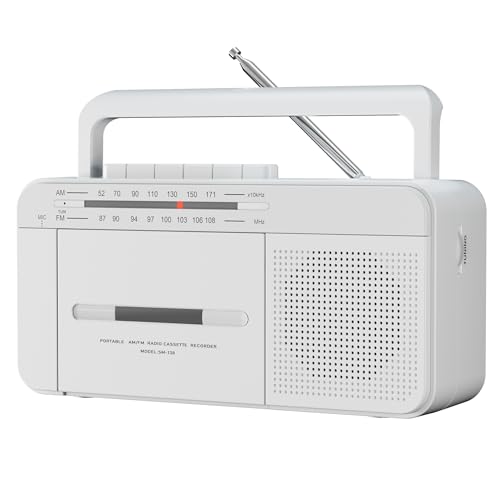
This SEMIER boombox combines a classic cassette deck with AM/FM radio, built-in speakers, and a microcassette-friendly design. It offers beverage-ready nostalgia alongside practical features like a 6W speaker output and a 3.5mm headphone jack for personal listening. The long-range AM/FM reception, aided by an extended antenna and DSP processing, aims to deliver reliable tuning across a broad frequency range. It’s suitable for home use, outdoor gatherings, or simple listening in a workshop or kitchen area while enjoying cassette playback and radio favorites.
The units’ portability and vintage charm make it a popular option for casual use and informal listening sessions. While not primarily a digital converter, it serves as a standalone playback device with built-in tuning for those who want a versatile, all-in-one audio solution that embraces analog media and radio broadcasts in a single package.
Portable Cassette To USB Converter, Dual Power Options

The Burtowic model emphasizes direct USB recording, enabling users to digitize tapes without a computer. It offers dual power options—two AA batteries or a USB-C power source—supporting on-the-go digitization or home setup. The device functions as a cassette player and a converter, including built-in speakers and a 3.5mm headphone jack for private listening. This versatility is particularly attractive for hobbyists who want portable digitization of their cassette collections and the flexibility to work in different environments.
When considering this option, assess the tapes you plan to convert and whether a direct USB workflow suits your workflow. If you need a compact, self-contained converter with flexible power options, Burtowic provides a practical, portable solution for digitizing cassettes and sharing old recordings in digital formats.
Buying Guide: Key Purchase Considerations For Dual Cassette Decks
Dual cassette decks offer different strengths depending on the intended use. When evaluating options, consider these factors:
- Deck independence and dubbing: Look for models with independent drive mechanisms for each deck to avoid interruptions during recording or playback. This is essential for seamless archiving or live dubbing projects.
- Digital integration: USB or SD card recording capabilities enable easy conversion to digital formats. Check supported sampling rates and formats (CD-quality is common at 48kHz/16-bit).
- Noise reduction and NR types: Some units include Dolby or built-in NR to reduce hiss. Compare performance with older tapes, as NR effectiveness can vary by tape quality.
- Playback tape compatibility: Ensure the device supports Normal (Type I), Chrome (Type II), and Metal (Type IV) tapes if you plan to preserve diverse collections. Auto-detect helps simplify operation.
- Pitch control and RTZ: Pitch adjustment is useful for restoring old recordings, while RTZ (Return to Zero) allows quick rewinding to a specific counter position for efficient editing.
- Recording quality and dubbing: For archiving, verify that the unit can perform parallel or one-touch dubbing reliably and with minimal signal loss.
- Portability vs. size: Larger boomboxes or dual-deck systems provide robust sound and controls but may be less convenient for travel or tight spaces. Portable converters offer flexibility for on-the-go digitizing.
- Power options: Some units rely on AC power, while others offer battery or USB-powered operation. Having multiple options can be advantageous for field use.
- Build quality and maintenance: Cassette transport mechanisms wear over time. Favor brands with solid transport design and accessible service options to minimize downtime.
- Overall value: Weigh feature breadth against price. A dual-deck unit with modern USB output can be more valuable for long-term archiving than a pure playback deck.
These considerations help compare dual cassette decks in practical terms. Depending on whether your priority is faithful playback, reliable dubbing, or easy digital conversion, you can select a model that aligns with your archival goals and listening habits. Always verify warranty coverage and compatibility with your existing tapes before purchasing.