Best Dual Cassette Tape Decks for Home Audio and Dubbing
Answering the shopper’s need for reliable, easy-to-use dual cassette decks that can record, playback, and digitize tapes. This guide highlights models suited for home use, hobbyists, and enthusiasts who want flexible dubbing, USB transfer, and audio controls. Read on to see which unit fits your tape type, preferred features, and workflow.
| Product | Best For | Key Feature |
|---|---|---|
| Pyle Dual Stereo Cassette Tape Deck (B09MSQ4JM8) | Casual home dubbing and MP3 transfer | Two speeds, USB MP3 conversion |
| Pyle Dual Stereo Cassette Tape Deck (PT659DU) | DIY digitization and CrO2 tapes | Dual speed dubbing, USB MP3 |
| ONKYO TARW244 | Hi-fi dubbing with auto reverse | Dolby, high-speed dubbing |
| TOMASHI Cassette Tape Player with USB/TF | All-in-one listening and recording | USB/TF recording, three-band radio |
| TEAC W-1200B | Advanced features with USB and pitch control | Rec/play on both decks, karaoke mic-in |
Pyle Usа Dual Stereo Cassette Tape Deck with MP3 Converter

The Pyle model offers dual-speed dubbing, enabling normal or high-speed copies with the ability to playback on both decks while recording/dubbing is restricted to deck B. It includes a USB connection to convert tapes to MP3 format, compatible with PC and Mac. A CrO2 tape selector and adjustable recorder/gain controls help shape audio before digitization. Best for hobbyists who want straightforward dubbing and quick digital transfers without specialist equipment.
- Best for: quick dubbing and MP3 digitization at home
- Limitation: only deck B handles recording/dubbing
Pyle Dual Stereo Cassette Tape Deck – PT659DU
This second Pyle model mirrors dual-speed dubbing and USB MP3 conversion, with CrO2 compatibility and auto-stop control. It’s positioned for users who want a ready-to-use device for copying tapes and saving digital copies on a computer, with simple physical controls for everyday use. Best for beginners or those updating from a basic single-deck player.
- Best for: simple, reliable dubbing and digitization
- Limitation: similar feature set to the first Pyle unit; choose for availability or price
Onkyo TARW244 Double Cassette Deck
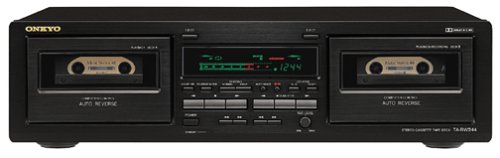
Onkyo’s TARW244 stands out for auto-reverse operation and high-fidelity dubbing with noise reduction features. It supports Dolby B and C, and includes dual decks for simultaneous playback and dubbing tasks. Best for users seeking a more traditional hi-fi cassette experience with robust audio processing.
- Best for: high-quality dubbing with noise reduction
- Limitation: may be less feature-rich for USB digitization compared with USB-equipped models
TOMASHI Cassette Tape Player with Dual Decks

TOMASHI blends classic dual cassette functionality with modern USB/TF card recording and playback. It also supports AM/FM/SW radio, delivering a versatile audio experience beyond tapes. This unit is best for users who want a multifunctional listening hub with straightforward tape recording and digital transfer options.
- Best for: all-in-one entertainment and recording from multiple sources
- Limitation: radio features may be peripheral if you only need tape-based workflow
TEAC W-1200B Dual Cassette Deck

TEAC’s W-1200B emphasizes professional-style features, offering two independent cassette decks with USB output for PC/Mac digital recording at CD-quality. It includes pitch control, karaoke mic-in, and parallel recording to two tapes. Best for serious archivists or hobbyists who want precise control, multiple recording paths, and digital archival options.
- Best for: precise control and simultaneous two-tape recording
- Limitation: more complex setup; may be more than casual users need
Buying Guide
Consider these factors when choosing a dual cassette deck:
- Digitization capabilities: If you need to convert tapes to MP3, prioritize USB output and software compatibility.
- Recording flexibility: Look for which deck(s) can record, and whether dubbing is dual-speed or single-speed.
- Tape compatibility: Check whether the unit supports CrO2, Type I/II/IV tapes, and auto-detect features.
- Noise reduction and sound quality: Dolby options and noise reduction (B/C) improve playback clarity.
- Connectivity and expansion: USB, RCA inputs/outputs, and mic-in for karaoke or voice recording.
- User-friendliness: Interfaces and controls should match your comfort level and workflow.
FAQ
- What is a dual cassette deck best used for?
Dual cassette decks are best for people who want to dub tapes, preserve analog collections, and digitize music with a single device.
- Do these machines support CrO2 tapes?
Many models include a CrO2 selector; verify in the features to ensure compatibility with your tapes.
- Can I digitize tapes to MP3 without a computer?
Most models require USB connection to a PC or Mac to transfer audio as MP3 files.
- Is auto reverse important?
Auto reverse is convenient for continuous playback or dubbing without manual tape flipping.
- Will these units play modern audio formats?
These devices primarily handle cassette formats; some include USB/TF input for digital sources but are not full multimedia players.
- What should I choose if I want both recording and high-quality dubbing?
Models with separate recording capabilities, Dolby noise reduction, and dual-deck operation are best for precise dubbing and archival work.