
Best Dual RCA to XLR Male Cables for Clear Audio Connections
Find the right dual RCA to XLR male cable for your studio, stage, or home theater needs. This guide highlights five reliable options, who they’re best for, and practical considerations to help you choose. Ideal for musicians, DJs, and audio engineers seeking straightforward, unbalanced signal connections.
| Product | Length | Best For | Why Pick |
|---|---|---|---|
| Cable Matters Dual RCA to XLR Cable, 6ft | 6 ft | Home studios and DJ setups | Solid shielding, straightforward RCA to XLR with dual channels |
| Tisino 2 RCA to XLR Male Unbalanced Cable Y-Splitter, 3.3 FT | 3.3 ft | Compact rigs and pedalboards | Y-split, good for routing or splitting signals |
| SiYear XLR Male to 2 x Phono RCA Patch Cable, 1.5 Meters | 1.5 m | Pro audio and studio setups | XLR to dual RCA with shielding for EMI/RFI control |
| Tisino 2 RCA to XLR Male Unbalanced Cable Y-Splitter, 10 FT | 10 ft | Long-run stage or studio connections | Long reach with unbalanced design |
| Cable Matters Dual RCA to XLR Cable, 10ft | 10 ft | Extended home theater or larger studios | Dual channels, shielded for low noise |
The following sections describe each product in detail, with practical notes on who should buy and why, plus any limitations to consider.
Cable Matters Dual RCA to XLR Cable, 6ft

This cable uses dual RCA male connectors on one end and dual XLR male connectors on the other, designed to connect stereo RCA line outputs to XLR inputs on power amplifiers or powered speakers. It carries left and right unbalanced signals separately and offers shielding with oxygen-free copper conductors to reduce interference. Best for home studios, DJ setups, and consumer AV routing where unbalanced signals are acceptable.
Who it’s best for: home studio owners and DJs needing a simple, reliable unbalanced connection without signal conversion. Why chosen: consistent shielded design and dual-channel layout support stereo imaging with straightforward compatibility.
Caution: this is an unbalanced cable; use where balanced signaling isn’t required to avoid hum or noise from long runs or high-interference environments.
Tisino 2 RCA to XLR Male Unbalanced Cable Y-Splitter, 3.3 FT

This Y-splitter provides two RCA to XLR male connections in a compact 3.3-foot length. It’s commonly used to link stereo RCA outputs to XLR inputs when a simple unbalanced pathway is needed, such as between a mixer, amplifier, or microphone setup. Zinc shielding plus 20 AWG OFC conductors help preserve signal clarity in typical home or project studios.
Who it’s best for: users needing a short, flexible solution for quick connections or signal splitting. Why chosen: compact form factor and practical unbalanced design make it versatile for small spaces.
Caution: designed for unbalanced use; attempting to balance the signal with this adapter is not possible.
SiYear XLR Male to 2 x Phono RCA Patch Cable, 1.5 Meters
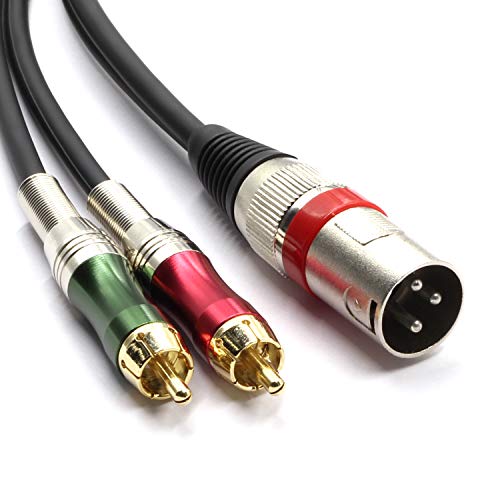
This adapter converts a single XLR output into two RCA plugs, effectively splitting mixed or mono signals into stereo RCA lines. It emphasizes EMI/RFI shielding and a high-density shield to prevent interference, suitable for connecting mixers or stage gear to amplifiers or recorders. It supports both studio and live environments where a straightforward XLR-to-RCA path is needed.
Who it’s best for: studios and live performers who need reliable signal integrity with shielding. Why chosen: clear EMI/RFI protection helps in environments with potential interference.
Caution: intended for unbalanced paths; not appropriate if a balanced, noise-sensitive setup is required.
Tisino RCA to XLR Cable, 2 RCA to 2 XLR Male HiFi Cord

This two-ended cable provides two RCA male connectors on one side and two XLR male connectors on the other. It’s ideal for connecting stereo outputs to paired XLR inputs, enabling clean stereo playback in home theaters or small studios. The 4N OFC copper and shielding support good signal fidelity and reduce interference.
Who it’s best for: music lovers and home theater enthusiasts needing a ready-to-use dual-RCA to dual-XLR solution. Why chosen: straightforward dual-channel design with solid conductors and shielding.
Caution: the adapter is designed for unbalanced signals; ensure your gear supports unbalanced RCA to XLR paths without noise issues over longer runs.
Cable Matters Dual RCA to XLR Cable, 10ft
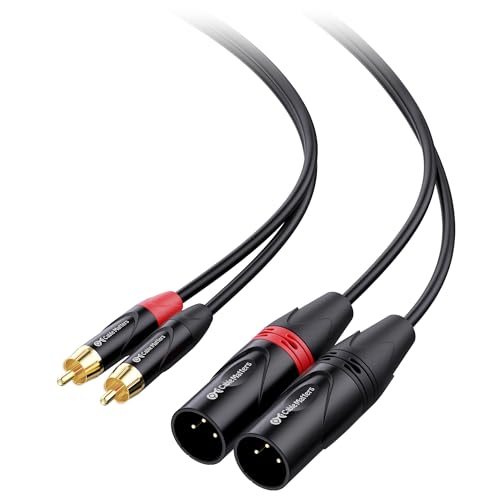
Offering extended reach, this 10-foot dual RCA to dual XLR cable connects stereo RCA line outputs to XLR inputs with unbalanced two-channel signaling. Built with shielding and oxygen-free copper conductors, it minimizes interference across longer distances. It’s suited for larger rooms or installations where cable routing requires more length.
Who it’s best for: venues, home theaters, and mid-size studios needing more flexibility in cable routing. Why chosen: longer length maintains signal integrity without sacrificing shielding.
Caution: longer runs may be more susceptible to noise in highly EMI-prone spaces; consider shorter cables or additional shielding if interference is observed.
Buying Guide: Key Considerations For Dual RCA To XLR Cables
- Signal Type: Understand that these cables carry unbalanced stereo signals. They do not convert unbalanced to balanced signals. Choose based on your gear’s input type and distance.
- Length: Select length to fit your setup. Longer runs can introduce more noise if shielding is inadequate; prefer well-shielded copper for longer distances.
- Shielding: Look for oxygen-free copper and braided shielding to minimize hum and RF interference in live or studio environments.
- Connectors: Confirm dual channels on both ends (dual RCA to dual XLR) to maintain stereo separation and avoid miswired setups.
- Applications: Ideal for connecting AV receivers, mixers, DJ controllers, or amplifiers to powered speakers or subwoofers. Use cases vary from home theater to project studios.
- Durability vs. Flexibility: Jackets like flexible PVC help routing; consider your installation environment (desk, rack, stage) when choosing length and jacket type.
FAQ
- Q: Can I use these cables to balance a signal?
- A: No. These cables are designed for unbalanced connections and do not convert signals to balanced form.
- Q: Are these suitable for long runs in a studio?
- A: Yes, but prioritize higher shielding (OFHC copper) and shorter runs when possible to minimize noise.
- Q: Do these cables support two-channel stereo properly?
- A: Yes. They carry left and right signals on separate channels, preserving stereo imaging.
- Q: What should I consider when choosing length?
- A: Match length to your space; longer cables require better shielding to avoid interference.
- Q: Are these compatible with all RCA and XLR gear?
- A: They are compatible with standard dual RCA outputs and XLR inputs, but verify unbalanced signaling on your equipment.