Best Open-Ear Earphones for Safe, All-Day Listening
Answering your search for earphones that sit outside the ear, this guide highlights open-ear designs that keep you aware of your surroundings while delivering clear sound. These options are ideal for runners, cyclists, commuters, and professionals who need situational awareness without blocking the ear canal. Below, five relevant picks are compared, with clear indications of who benefits most from each model and why they were selected.
| Product | Best For |
|---|---|
| Xmenha Open Ear Purple (Over The Ear) | |
| TOZO OpenEarRing | |
| Xmenha Open Ear Black | |
| GGSTOPWATER Open Ear Purple | |
| BeSing Open Ear Earbuds |
Xmenha Open Ear Purple: Stable, Safe Sound

The Xmenha Open Ear Purple model uses open-ear design to keep listeners aware of surroundings, suitable for outdoor activities. It is described as lightweight with premium soft silicone for a stable fit and features a 300mAh battery offering about 6-7 hours of listening. This is best for walkers, cyclists, and joggers who prioritize situational awareness and a comfortable long-wear fit. A potential limitation is that bone-conduction or outside-ear audio may not deliver the same deep bass as traditional in-ear models.
TOZO OpenEarRing: Ultra-Light, Long-Lasting
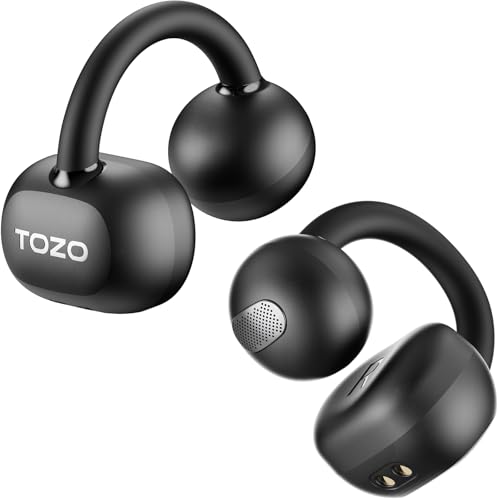
TOZO OpenEarRing emphasizes comfort with ultra-light construction and a secure clip-on design. A single earbud weighs about 5.1g, which helps minimize fatigue during extended wear. It uses OrigX acoustic tech for crystal-clear stereo and supports a long total playtime of up to 40 hours with the charging case. It is best for people who want long days of listening, including workouts and commutes, while still enjoying high-fidelity audio. A caveat is that the open-ear design may provide less immersive bass than enclosed earbuds.
Xmenha Open Ear Black: Budget Open-Ear Choice

This Xmenha model repeats the open-ear concept with a stable fit and 6-7 hour listening window. It is positioned as a cost-conscious option for open-ear enthusiasts who still want a reliable daily driver. The product emphasizes safe listening in outdoor settings, making it suitable for commuters and casual exercisers. The restriction is similar to other bone conduction/open-ear products: sound isolation is inherently reduced compared to in-ear designs, so louder environments may bleed into the listening experience.
GGSTOPWATER Open Ear Purple: Waterproof, Multi-Device

GGSTOPWATER Open Ear employs Bluetooth 5.4 with multi-point connections for quick device switching. It is IPX5 waterproof, making it a solid pick for workouts in sweat-prone or light rain conditions. The open-ear design promotes safety by keeping ears open to ambient sounds. Best for athletes who need consistent connectivity across devices and reliable moisture resistance. A limitation is that, like other open-ear designs, some listeners may notice reduced low-end depth compared with closed-ear headphones.
BeSing Open Ear Earbuds: Long Battery, Clear Calls
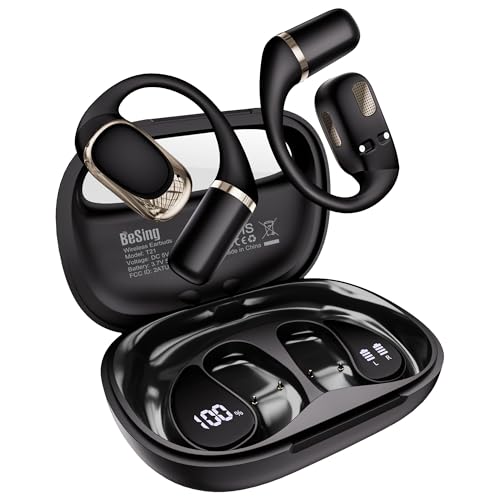
BeSing combines open-ear comfort with strong call quality, aided by dual AI-powered microphones and LDAC codec for stable wireless audio. It offers up to 50 hours of total playback with the case and about 12 hours per charge, suited to long workdays or travel. The design is aimed at professionals and gym-goers who value hours of continuous use and reliable mic performance. A potential drawback is that the open-ear form factor can yield less immersive bass compared to closed-in earbuds or headphones.
Buying Guide: Key Considerations For Open-Ear Earphones
Who should buy open-ear earphones? Anyone who needs awareness of surroundings during listening, such as runners, cyclists, and workers in dynamic environments. Consider comfort, battery life, and device compatibility when choosing.
- Fit and comfort: Look for lightweight builds, secure ear-hooks or clips, and soft materials that don’t press on the ear.
- Open-ear sound profile: Expect ambient awareness and generally lighter bass. If deep bass is essential, consider alternate designs but be aware of the trade-off.
- Battery life and charging: Choose models with enough hours for your routine and a reliable charging case if available.
- Connectivity and compatibility: Check Bluetooth version (5.4 is current), range, and whether multi-point pairing fits your devices.
- Water and sweat resistance: For workouts, IP rating (e.g., IPX5) improves durability in sweaty or light rain conditions.
- Microphone quality: For calls, look for noise reduction features and mic placement suitable for outdoor use.
Frequently Asked Questions
- Do open-ear earphones block the ear canal? No, they sit outside the ear canal and do not seal the ear, which helps preserve ambient awareness.
- Are open-ear options better for safety during outdoor activities? Yes, because surrounding sounds remain audible, improving situational safety.
- Will open-ear earphones feel bulky? Modern designs aim for light weight and secure fit; select a model with a form you find comfortable for long wear.
- Can these devices be used for calls in noisy environments? Many include directional microphones; however, performance varies with wind and background noise.
- Is battery life sufficient for daily use? Several models offer 10–12 hours per charge with additional hours from the case; evaluate based on your daily routine.
- Do these devices work with iPhone and Android alike? Most models support both, often with multi-point Bluetooth connections and USB-C charging where applicable.