Best Earthquake 12-Inch Subwoofers for Home Theater Systems
Choosing a 12-inch subwoofer from Earthquake can significantly boost low-end performance in home theaters and music setups. This guide highlights five strong options, focusing on models that deliver power, control, and clear bass extension. Each choice emphasizes advanced design features, build quality, and compatibility with common AV rigs. Use the product summaries below to compare performance notes and find the best fit for your room size and listening preferences.
| Product | Brand | Key Features |
|---|---|---|
| Earthquake Sound DBXi-12D | Earthquake | Dual 4-ohm voice coils, 1500W, Edge surround, efficient cooling |
| Earthquake Sound TNT-12DVC | Earthquake | 12″ polypropylene cone, Dual voice coils, spring terminals |
| Earthquake MiniMe DSP P-12 | Earthquake | 600W amplifier, DSP control, SLAPS passive radiator, auto room correction |
| Earthquake Sound TNT-12S | Earthquake | Single 4-ohm VC, 12″ woofer, compact passive design |
| Earthquake DJ-Quake P12 | Earthquake | 1000W passive sub, Speakon & TRS I/O, dual inputs |
Earthquake DBXi-12D 12-Inch Subwoofer

The DBXi-12D is designed for high-power output with a robust motor and voice coil configuration. Its dual 4-ohm voice coils offer wiring flexibility for various amplifier loads, enabling both parallel and series connections to tailor impedance and sound pressure levels. A 1.25″ edge surround fosters broad cone travel while maintaining structural integrity, reducing deformation at high excursions. The sub also features a hot-forged T-YOKE that improves magnetic flux flow, enhancing efficiency and dynamic response. A turbo cooling system helps manage heat during extended listening sessions, supporting stable performance in room-scale systems.
In practical use, the DBXi-12D aims to deliver deep bass with control, making it a good match for mid-to-large rooms and theater setups that require punch without distortion. The build quality and cooling design support long listening sessions at higher levels. Installation considerations include proper enclosure design and sufficient amplifier headroom to maximize the driver’s excursion without clipping. Overall, the DBXi-12D stands out with a blend of power handling and mechanical design suited for demanding bass tasks.
Earthquake TNT-12DVC 12-Inch Subwoofer

The TNT-12DVC features a 12-inch polypropylene cone paired with dual voice coils, offering flexibility in amplifier wiring. The dual voice coil configuration can support higher power handling and option-rich wiring schemes, enabling separate impedance choices that suit different amplification setups. Spring-loaded terminals simplify speaker connections and provide a secure, repeatable hookup for multi-driver systems. This model targets strong low-end output with a straightforward, durable design appropriate for both home theaters and music-centric rooms where robust bass is desired.
Performance notes include reliable bass extension with a focus on output consistency across listening levels. Users should plan for proper enclosure design and bass management alignment with their main speakers to achieve cohesive integration. The TNT-12DVC is a practical option when a flexible, cost-conscious Earthquake subwoofer is needed for reliable sub-bass reproduction in value-driven builds.
Earthquake MiniMe DSP P-12 12-Inch Subwoofer

The MiniMe DSP P-12 integrates a built-in 600-watt class D amplifier with automatic sensing and standby features. A digital signal processor (DSP) provides mobile app-based control via iWoofer, enabling room correction and fine-tuning for accurate bass response. The sub uses a Passive SLAPS radiator system designed to extract deep, precise low-frequency output without excessive enclosure volume. This model emphasizes precise alignment with room acoustics and main speakers, helping users achieve clean integration and controlled bass with modern streaming equipment and home theater PCs.
Key considerations include the reliability of the DSP ecosystem, app usability, and the effectiveness of automatic room correction in typical living rooms. The P-12 is well-suited for listeners who want advanced tuning options in a compact 12-inch form factor without sacrificing bass quality or dynamic range, making it a compelling option for tech-forward setups.
Earthquake TNT-12S 12-Inch Subwoofer
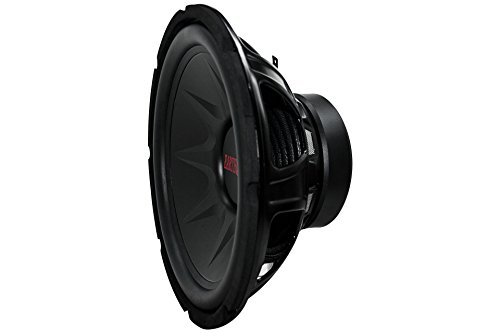
The TNT-12S provides a single 4-ohm voice coil setup with a 12-inch polypropylene cone, tailored for strong, dedicated bass. As a passive design, it relies on an external amplifier to drive the woofer, which offers flexibility in choosing amplification that matches room size and listening preferences. The single-voice-coil arrangement keeps wiring straightforward and can be a solid choice for users who want to pair a high-quality sub with existing or separate amplification stages.
Practical deployment considerations include ensuring compatibility with your active subwoofer processor or AV receiver’s bass management, as well as selecting an enclosure that complements the driver’s response. The TNT-12S is well-suited for users who prefer a modular approach—add a suitable amplifier and integrate with a larger two-sub setup for even bass uniformity across the listening area.
Earthquake DJ-Quake P12 12-Inch Passive Subwoofer

The DJ-Quake P12 is a 12-inch passive subwoofer rated at 1000 watts (500 watts RMS). It uses Speakon input/out connections to readily pass the signal to an additional woofer, along with balanced TRS inputs and speaker level inputs for flexible integration into multi-driver systems. This model is designed for setups that require reliable, scalable bass within a compact footprint and straightforward connectivity, making it a practical choice for both home theaters and performance-oriented rooms where expandability matters.
Considerations for the DJ-Quake P12 include ensuring your amplifier provides adequate headroom and that the enclosure is properly designed for the driver’s impedance and excursion. The passive design favors systems where bass management is handled by a dedicated processor or a separate power amp with a clear channel allocation, suitable for users building a multi-sub, high-fidelity listening environment.
Buying Guide: Key Considerations When Choosing an Earthquake 12-Inch Subwoofer
Power handling and amplifier compatibility: Look at RMS ratings and whether the sub is powered or passive. For powered models, verify the built-in amp’s wattage and its efficiency. For passive models, ensure your amplifier or AV processor can deliver clean power to the woofer without clipping.
Voice coil configuration and wiring options: Dual-voice-coil designs provide flexibility for impedance matching and parallel/series wiring to suit different amplifiers. Single-voice-coil models are simpler but may limit some wiring choices in larger systems.
Enclosure and tuning: The enclosure type (sealed vs. ported vs. passive radiator) significantly affects bass extension, speed, and output. Passive radiators like SLAPS can deliver deep bass with smaller enclosures, but require precise enclosure design and calibration.
Room size and listening goals: Larger rooms benefit from higher-powered models and multiple subs for even bass distribution. For home theater, consider how the sub integrates with main speakers via bass management, phase control, and crossover settings to minimize localization and ensure cohesive sound.
Build quality and cooling: High excursion bass drivers generate heat; models with efficient cooling or robust chassis construction tend to maintain performance during extended film viewing or music sessions. Check for features that reduce thermal compression and preserve dynamic range.