
Best Easy to Play Acoustic Guitar Strings for Comfort and Tone
Answering the search for strings that are easy on the fingers, this guide highlights five options designed to reduce soreness while preserving tone. The top picks are best for players with sensitive hands, beginners returning after a break, and performers seeking smooth playability for long practice sessions. The table below compares the five selected strings at a glance, noting core materials, coating, and typical feel.
| Product | Core Type | Wrap | Coating | Best For |
|---|---|---|---|---|
| Zager Easy Play Acoustic Strings | Soft-metal core | Phosphor Bronze | Ultra-smooth coating | Players seeking ultra-easy feel and comfort |
| Elixir NANOWEB Phosphor Bronze | Phosphor Bronze core | Phosphor Bronze wrap | NANOWEB coating | Stability and long-lasting tone |
| D’Addario EJ11 80/20 Bronze | Hexagonal high-carbon steel core | 80/20 Bronze wrap | Uncoated | Bright, classic acoustic tone |
| Belfort Phosphor Bronze | Phosphor Bronze core | 80/20 Bronze wrap | Coated for durability | Flexible, comfortable feel for varied styles |
| Ernie Ball Earthwood Silk and Steel | Steel core with silk wrap | 80/20 Bronze wrap | Silk wrap | Warm, forgiving tone with gentle touch |
Note: All products listed are sought for ease of playing, comfort, and consistent tone across sessions. Each option serves different playing styles and sensitivities, from ultra-soft coatings to silk-wrapped cores.
Zager Easy Play Acoustic Strings
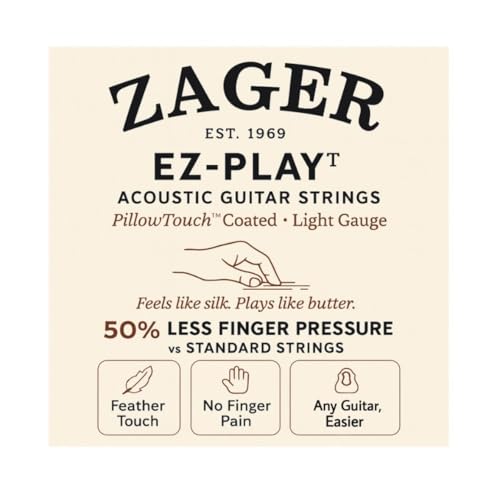
Zager Easy Play strings use a patented soft-metal core and an ultra-smooth coating to reduce finger pressure, helping players play faster and longer with less soreness. They are designed with finger pain and sensitive hands in mind, making them a favorable choice for beginners and players returning after a break. The strings are trusted by professional artists for their comfort and consistent feel. A potential limitation is that the ultra-smooth coating may feel different to players used to standard coatings, requiring an adjustment period.
Elixir NANOWEB Phosphor Bronze Acoustic Strings
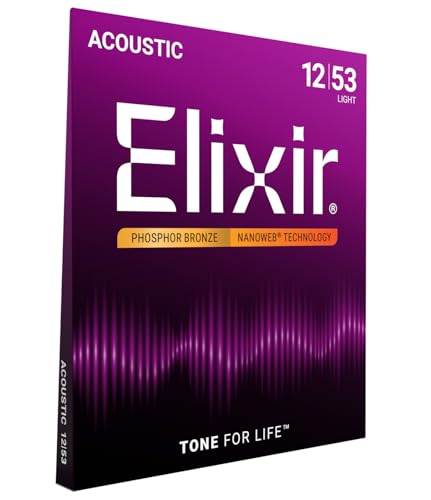
Elixir NANOWEB Phosphor Bronze strings offer long-lasting tone and a smooth playing feel, with stability against sweat and humidity. They are a top choice for players who want reliable brightness and durability for stage or studio use. The NANOWEB coating helps preserve tone longer, but may feel slightly slick to players preferring bare metals. Best for performers and committed players seeking consistent performance over time.
D’Addario EJ16-3D Phosphor Bronze (Three Sets)

D’Addario EJ16-3D Phosphor Bronze strings deliver a warm, balanced tone with a classic acoustic character. They are precision-wound over a high-carbon steel core, offering reliable intonation. These strings are well-suited for players seeking a traditional acoustic voice with comfortable playability. A consideration is that uncoated phosphor bronze strings may wear faster in humid environments or with aggressive picking, requiring more frequent changes for some players.
BELFORT Acoustic Strings Phosphor Bronze

BELFORT Phosphor Bronze strings are designed in Germany with a focus on durability, tuning stability, and rust protection. The LightForce set offers a softer feel that reduces playing effort for long sessions, making it suitable for beginners and players with sensitive hands. A possible limitation is availability and label familiarity; some players may prefer more established brands for consistency across sets.
Ernie Ball Earthwood Silk and Steel

Ernie Ball Earthwood Silk and Steel strings combine a silk wrap with a high-quality steel core to mellow brightness and soften touch. This results in a warm, forgiving tone ideal for fingerstyle playing and beginners who appreciate a gentle feel. They are best for players who want comfort and a subtle, cozy acoustic character. The silk wrap may feel different to players used to standard bronze wraps and can affect brightness slightly.
Buying Guide
What should you consider when choosing easy-to-play acoustic strings?
- Playing style: For fingerpicking or soft verse work, silk-wrapped or coated options can reduce finger wear and fatigue. For bright strumming, phosphor bronze or 80/20 bronze strings provide more projection.
- Coating and longevity: Coated strings last longer and resist corrosion, but some players feel a slight change in tone or feel. NANOWEB coatings tend to retain brightness longer while remaining smooth to the touch.
- Gauge and tension: Lighter gauges are easier on the fingers but may produce less volume. Medium to light gauges balance ease of playability with adequate projection.
- Durability vs. tone: If you play aggressively or perform frequently, consider coated options or strings with protective wraps. If you prioritize tone over longevity, uncoated phosphor bronze might suit you.
- Environment and hands: In humid climates or with sweaty hands, phosphor bronze strings can corrode faster. Coated or specially treated wraps help maintain tone in these conditions.
FAQ
- What makes easy-play strings better for beginners? They require less finger pressure and provide smoother feel, which reduces hand fatigue during practice.
- Are coated strings quieter than uncoated ones? Coated strings can be slightly quieter due to their smoother surface and coating, but this varies by brand and playing style.
- Which gauge is best for comfort? Light to extra-light gauges typically offer the gentlest touch and quickest fretting, especially for beginners.
- Should I prefer phosphor bronze or 80/20 bronze for ease of playing? Phosphor bronze offers warmth and balance, while 80/20 bronze tends to be brighter with strong projection; both can be easy to play depending on coating and gauge.
- Do silk-wrapped or silk-and-steel strings feel significantly different? Yes, silk-wrapped strings usually feel softer and produce a mellower tone, ideal for a comfortable playing experience.
- How often should I change strings for comfort? If you notice dull tone, stiffness, or poor intonation, it’s time to replace. Players seeking comfort may replace more frequently to maintain a smooth feel.