
Best Electric Guitar Volume Pots for Tone and Control
Need precise control over your guitar’s volume and tone? This guide highlights the best 5 electric guitar pots (volume or tone) that balance smooth turns, reliable construction, and broad compatibility. It’s ideal for players upgrading electronics, builders, and hobbyists seeking consistent response. The top picks are chosen for beginners and seasoned players who want predictable taper, easy installation, and durable parts.
The following table summarizes the selected products, focusing on taper type, compatibility, and notable strengths.
| Product | Taper | Best For | |
|---|---|---|---|
| Fender 500K Split Shaft Potentiometer | Audio Taper, 500K | Bright single-coil or hotter humbucker setups | Split-shaft, standard CTS-style thread |
| Seymour Duncan Ssdp 500K Pot | 500K, Smooth Turning | High-performance volume or tone control | Premium build, knob not included |
| Seymour Duncan 250K Smooth-Turning Pot | 250K, Smooth Taper | Vintage brightness with smooth feel | Versatile for Volume or Tone |
| Fender 0990830000 Pure Vintage 250K Split-Shaft | 250K, Split Shaft | Classic Fender tone and reliability | Includes nut, washer, and tone capacitor |
| CTS 500K Electric Guitar Pots (KAISH) | A500K (Audio Taper) | Consistent response with detailed engineering | Split shaft, precise dimensions |
Fender 500K Split Shaft Potentiometer

Type and range: 500K potentiometer with a 3/8″ split-shaft design. Threading is .375″ with a shaft length of .344″. Best for bright pickups or high-output setups where a strong, snappy feel is desired. This pot is well-suited for guitarists who want reliable, classic Fender performance. Consider this for Strat-style bodies or humbucker-equipped guitars looking for a consistent taper.
Who it’s best for: players seeking a traditional, durable pot with wide compatibility and a familiar feel. Why chosen: it’s a standard, factory-style component that delivers reliable performance and straightforward installation. Limitation: no mention of knob included, so plan for a compatible knob purchase.
Seymour Duncan Ssdp 500K Pot

Type and range: Smooth-turning 500K potentiometer designed for volume or tone control. Custom-crafted by Bourns; knob not included. Best for high-quality builds where precise, quiet turning matters. This pot is favored by players who want a refined feel with predictable taper, especially in guitars with aggressive pickups.
Who it’s best for: players prioritizing smooth, precise control with premium construction. Why chosen: reputable brand and tight manufacture give a dependable feel. Limitation: knob isn’t included, requiring an additional purchase.
Seymour Duncan 250K Potentiometer

Type and range: 250K smooth-turning potentiometer. Designed to exact Seymour Duncan specifications and crafted by Bourns. Best for vintage tones with a refined taper, suitable for both volume and tone roles. Trustworthy build quality from a recognized pickup brand.
Who it’s best for: players seeking vintage warmth with dependable taper. Why chosen: consistent, high-quality construction. Limitation: 250K range may not suit hotter pickups, which benefit from 500K for brightness.
Fender 0990830000 Pure Vintage 250K Splitshaft

Type and range: 250K split-shaft pot, Fender original factory part. Includes nut, washer, and tone capacitor. Best for classic Fender tones with authentic feel and dimensions that fit vintage or reissue guitars. This is a straightforward upgrade for reliable, period-correct performance.
Who it’s best for: players restoring or maintaining vintage Fender setups. Why chosen: authentic factory part ensures compatibility and tone integrity. Limitation: 250K may not yield the brightness you get from 500K with hotter pickups.
CTS 500K Electric Guitar Pots (KAISH)
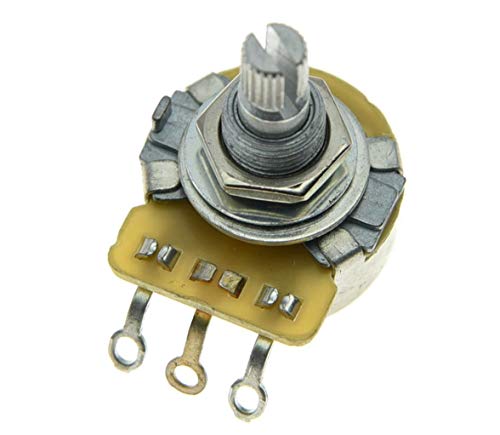
Type and range: 500K digital-era CTS pot with split shaft and fine spline knurling. Shaft length 18.5mm, diameter 6mm, base 24mm. A’ (audio taper) indicates a gentle, musical rise in resistance; appropriate for volume or tone as needed. Best for players who want precise, reliable CTS quality with clear spec transparency.
Who it’s best for: builders and players who want exact dimensions and dependable CTS manufacturing. Why chosen: CTS is a trusted name with detailed factory diagrams for verification. Limitation: data emphasizes factory diagrams—verify fit for your specific instrument before purchase.
CTS 500K Electric Guitar Pots (B500K Linear)

Type and range: 500K linear potentiometer (B500K) for a consistent, straight-line response. Split shaft, 18.5mm shaft length, 6mm diameter. Best for players who want a predictable, steady volume or tone change without taper curves. Useful in setups where a linear feel is preferred for precise control.
Who it’s best for: players who favor a linear taper for volume or tone. Why chosen: CTS build quality and clear linear taper behavior. Limitation: linear taper may feel less musical for those used to audio taper’s gradual roll-off.
Swhmc A500K Ohm Guitar Potentiometer

Type and range: A500K ohm pot for volume and tone with a long knurled split shaft. Best for secure knob fit and stable operation in busy control layouts. It provides a smooth turning feel and supports reliable long-term wear. Consider this for guitars with a lot of knob thrash and frequent turning.
Who it’s best for: players needing a durable, secure-fit pot with a long shaft. Why chosen: robust construction and long shaft help with knob compatibility. Limitation: data focuses on rugged design; ensure compatibility with your specific knob style.
Dopro 5Pcs Audio Guitar Pots 500K

Type and range: 500K audio taper pots. Includes five pieces with 24mm base and short split shaft. Best for bulk upgrades or multi-pickup configurations. This set is versatile for tone and volume applications depending on whether you choose audio or linear taper based on preference.
Who it’s best for: builders or players upgrading multiple guitars or fixtures. Why chosen: value-conscious option with broad taper guidance. Limitation: small shaft length may affect knob fit on some assemblies; verify compatibility before install.
Buying Guide: Key Factors For Selecting Electric Guitar Pots
- Taper type: Audio (A) versus Linear (B). Audio taper is common for volume and has a gradual roll-off; linear provides a steady change and can feel more predictable in tone controls.
- Potentiometer value: 250K is often preferred for single-coil to bright-sounding pickups; 500K is favored for humbuckers or hotter pickups to preserve brightness.
- Split shaft vs solid shaft: Split shafts work with common knobs and spacers; solid shafts may require different hardware.
- Brand and construction: Reputable brands (Fender, Seymour Duncan, CTS) tend to deliver consistent tolerances and longevity.
- Knob compatibility: Some pots ship without knobs; plan to purchase compatible knobs if needed.
- Mounting and dimensions: Verify shaft length, base diameter, and thread size to ensure fit in your guitar’s control plate or cavity.
- Knurled shaft design: Long knurling can improve grip and durability in tight control layouts.
Practical buying tips
- Match pot values to your pickups and desired brightness. If upgrading an older guitar, consider a 500K for a brighter, more aggressive feel with humbuckers.
- For vintage tones, a 250K pot paired with original caps can help preserve character.
- When upgrading multiple machines or parts, purchasing a bulk set (like 5 pieces) can save time and maintain consistency.
Frequently Asked Questions
What is the difference between audio taper and linear taper in guitar pots?
Audio taper (A) changes resistance slowly at the start and more toward the end, producing a musical roll-off. Linear taper (B) changes resistance evenly, giving a uniform feel across the knob range.
Should I use a 250K or 500K pot for a humbucker?
500K is often preferred for humbuckers to retain brightness and dynamic range; 250K can dull the highs, which is not ideal for most humbuckers.
Are split-shaft pots necessary?
Split-shaft pots pair with standard knobs and provide a stable fit; solid shafts can work but may require different hardware.
Do all pots come with knobs?
No. Some listings note that knobs are not included. Plan to buy compatible knobs separately if needed.
Can I mix pots from different brands?
Yes, but ensure compatible taper and resistance to maintain a balanced control feel across the guitar’s controls.