
Best Electric Guitars With Thin Necks for Faster Playability
Answering players who seek easy reach and smooth solos, this guide highlights five electric guitars and neck replacements that are commonly considered slim or easy-to-grip. Each pick suits different players: beginners needing comfortable hands, intermediate players chasing faster fretwork, and DIY builders aiming for a sleeker feel. The table below compares the top options to help you choose quickly.
| Product | Brand | Type | Best For | Note |
|---|---|---|---|---|
| Ktaxon 39″ Electric Guitar | Ktaxon | Full guitar with amp | Beginners who want an all-in-one practice setup | 20W amp included |
| EART YMX-SG3 Electric Guitar | EART | Full guitar | Players needing excellent playability and versatility | Roasted maple neck, compound radius |
| Monoprice Cali Classic Electric Guitar | Monoprice | Full guitar | Budget-minded beginners seeking a classic feel | Standard neck with 25.5″ scale |
| URSKOG Guitar Neck | URSKOG | Replacement neck | DIY builders wanting a slim, adjustable neck | 25.5″ scale, 22 frets |
| Alnicov Electric Guitar Neck | Alnicov | Replacement neck | Replacement or custom builds needing a maple neck | Rosewood fretboard, 24 frets |
Ktaxon 39″ Electric Guitar With 20W Amp

Best for beginners who want an all-in-one practice setup. The guitar features an ergonomic body, a tech fingerboard, and a smooth tone. It uses an H-S-H pickup configuration to deliver rounded bass, mids, and highs suitable for pop and rock. The included 20W amplifier supports headphones and MP3 output for silent practice or recording sessions. The neck is designed for comfortable fretting, making it a strong choice for learners who prioritize ease of playability. Caution: setup may require adjustment for optimal action out of the box.
EART YMX-SG3 Electric Guitar
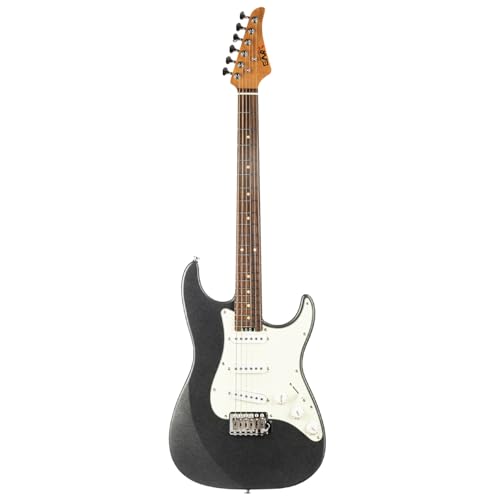
Better for players seeking versatile tones and enhanced playability. This model offers a 25.5″ scale with a roasted maple neck and a compound-radius fingerboard, aiding smooth transitions between chords and leads. The S3 pickup set with a 5-way switch delivers warm jazz tones to bright leads. The neck design supports comfortable fretting and precise intonation, making it a solid choice for players who want a sleek feel without sacrificing tonal range. Limitation: mid-range budget may still require later upgrades for gigging durability.
Monoprice Cali Classic Electric Guitar

Best for beginners with a classic single-cutaway style and straightforward setup. It provides standard full-size specs with a 25.5″ scale, suitable for players who prefer a familiar feel in a budget-friendly option. The guitar’s neck is designed for comfortable playing and stable action, making it a reliable entry point for newcomers. Caution: wood and hardware quality at this price point can vary between stock units, affecting long-term stability.
URSKOG Guitar Neck 22 Fret

Best for DIY builders who want a replacement neck with a slim profile. The URSKOG neck is designed for ST-style electric bodies, with a 25.5″ scale and a 22-fret layout. The truss rod is pre-installed at the headstock, simplifying setup for players seeking quick refurbishment or customization. Limitation: neck replacement requires routing and precise mounting on the body, so it’s more hands-on than ready-to-play guitars.
Alnicov Electric Guitar Neck

Best for replacements or custom builds needing a maple neck with a rosewood fretboard. This neck offers a straight neck, smooth finish, and a rosewood fretboard with inlays for easy fret location. The 24-fret layout provides extended access for lead playing. Caution: compatibility depends on the original neck pocket dimensions and mounting hardware, so verify fit before purchase.
Buying Guide: Key Considerations For Thin-Neck Electric Guitars
- Neck profile and width: Look for “slim” or “thin” in the product description, or compare nut width and neck contour to estimate grip ease.
- Scale length and radius: Shorter scale can feel lighter on the frets; a compound radius often enables smoother bends and faster chording.
- Construction and tuners: Stable hardware and reinforced neck joints reduce tuning drift, especially on thinner necks.
- Playability vs. tone: Slim necks can influence feel more than tone; evaluate whether tonal options ( pickups/wood) meet your music style.
- Replacement necks vs. full guitars: Replacements offer customization benefits but require fit checks with your existing body and hardware.
- Beginner vs. seasoned players: Beginners may prefer shorter scale or comfortable contours, while players seeking shred-capability may prioritize fast fretwork and precise action.
Frequently Asked Questions
- What makes a neck feel thin?
A combination of nut width, profile contour, and neck thickness at the first few frets; a slimmer profile reduces hand fatigue. - Are replacement necks compatible with most bodies?
Compatibility depends on scale length, neck pocket size, screw spacing, and mounting hardware; verify before buying. - Is a longer scale better for thin necks?
Not necessarily; longer scales can increase tension, which some players dislike, while others prefer the tension for control. - Do slim necks affect sustain?
Neck construction influences sustain, but body wood, pickups, and overall setup also play major roles. - Should beginners choose a guitar with a slim neck?
Yes, a slim neck can reduce hand strain and facilitate easier fretting for new players. - Can I install a slim neck on an existing guitar?
It’s possible with careful fitment, but professionals should confirm compatibility and mounting requirements.