
Best Electric Pedal Steel Guitar Gear for Rich Tones
Answering your search for versatile electric pedal steel guitar gear, this guide highlights five must-consider products. The top picks cover distortion, multi-effects, tuning, and string sets to help players shape authentic pedal-steel sounds. Each item is marked for who it’s best for, plus practical caveats to avoid issues. The recommended lineup balances punchy overdrive, flexible effects, and essential maintenance for steel guitars and lap steels alike. Below is a quick buying table to compare core features at a glance.
| Product | Best For | Key Benefit | Caveat |
|---|---|---|---|
| JOYO High Gain Distortion | Players seeking classic-to-metal tones | Wide gain range with full-range EQ | Analog feel may require careful gain staging |
| AFOT Heavy Metal Distortion | High-gain metal/rock players needing clarity | Independent EQ and broad tone control | Some users report a steep knob curve early on |
| LEKATO Multi Effects Pedal | Players wanting multiple amp sims and IRs | 9 amp models, 8 IR cabinets, USB/third-party IR support | Complex interface; learning curve for presets |
| Mr.Power Guitar Slide | Slide/steel players for tone and control | Wide compatibility and durable stainless steel | Size may feel small for hands with gloves |
| D’Addario NYXL Pedal Steel Strings | Players needing tuning stability and durability | Improved tuning stability and stronger core | Premium strings; higher tension may feel stiffer |
The following sections detail each product with practical insights for electric pedal steel players. Each entry notes who it’s best for, why it’s a strong pick, and a concise caution to help you decide quickly.
JOYO High Gain Distortion Guitar Pedal Review

Best for players seeking a wide tonal range from bluesy crunch to aggressive modern metal. This pedal offers a dedicated Treble and Mid control, enabling precise tone sculpting for pedal steel setups that need both bite and body. It’s well-suited for those who use dynamic picking and volume knob changes to shape sustain. The analog circuit delivers touch-sensitive response, mirroring how a tube amp reacts to attack. Pick this if you want a single-box solution for versatile rock to metal textures that cut through a mix. Caution: Start with moderate gain to avoid excessive noise in single-coil setups.
AFOT Heavy Metal Distortion Pedal Review

Best for players focusing on heavy metal, rock, or punk tones with clear, defined distortion at higher gain. The pedal emphasizes clarity across a broad gain range and features independent control sections that help dial in heavy textures without losing articulation. It’s suitable for pedal steel players who want aggressive textures without muffling the upper mids and treble. Caution: The control labels emphasize multi-section EQ; initial setup may require experimenting to avoid overly harsh high-end frequencies.
Donner Tuner Pedal DT-1 Review
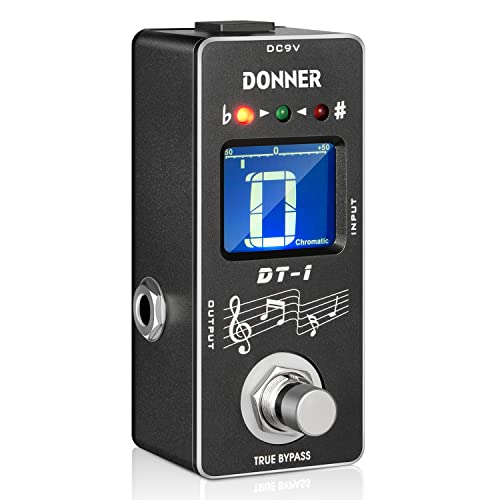
Best for players needing fast, accurate tuning on stage with clear visibility. This chromatic tuner covers a wide range from A0 to C8 and offers a bypass mode that preserves gain staging while muting the signal. It’s ideal for pedal steel or lap steel setups that require quick tuning checks during performances. Caution: Some users prefer higher-contrast displays for outdoor visibility; verify arena lighting compatibility if you frequently play outside.
LEKATO 9 Amp Models with IR Cab Review

Best for players who want a versatile floor unit with multiple amp tones and cabinet simulations. The 9 amp models plus 8 IR cabinets offer a broad palette for pedal steel tones, including delay and reverb options. It supports third-party IR files for customization, and presets help with live switching between tones. Caution: The interface can be complex; plan a preset workflow to avoid on-stage setup delays.
D’Addario NYXL Pedal Steel Strings Review

Best for players seeking enhanced tuning stability and durability on pedal steel guitars. NYXL Pedal Steel strings offer a stronger core and improved mid-range response, reducing detuning during bending and maintaining consistent tension. They’re ideal for players who bend and use heavy picking. Caution: Premium strings may feel stiffer to players accustomed to lighter gauges; consider gauge preferences when upgrading.
Buying Guide: Key Purchase Considerations for Electric Pedal Steel Gear
What tone are you aiming for?
Consider whether you want clean, bluesy textures, aggressive metal distortion, or a versatile setup that covers multiple genres. Pedal choices should align with your preferred pedal-steel timbre and playing style.
Do you need multi-effects or targeted pedals?
Multi-effects can simplify live rigs by offering several amp models and cabinets in one unit. If you primarily need a single, signature pedal tone, a dedicated distortion pedal may be more predictable and easier to tune.
How important is tuning stability?
For pedal steel players, reliable tuning stability during performance is essential. A precise tuner and corrosion-resistant strings support consistent intonation over longer sets.
Are IRs and presets worth the extra setup time?
IR loading and presets enable realistic amp/cabinet simulations and quick tone changes. If you play live and switch tones often, invest time in learning the preset workflow.
What about durability and stage practicality?
Durable enclosures, compact form factors for pedal boards, and easy-to-read displays on stage contribute to smoother performances, especially under bright venue lights.
FAQ
- What is a pedal steel guitar pedal used for? It expands tonal options on electric or lap steel guitars, enabling sustained distortion, delays, and effects to emulate pedal-steel textures.
- Which guitar strings work best for pedal steel? NYXL Pedal Steel strings offer tuning stability and stronger cores, benefiting long performances and heavy picking.
- Do multi-effect pedals replace amps? They can approximate amp tones, but many players still pair them with amplifiers or modelers to achieve fuller signals.
- Is it better to buy two specialized pedals or a single multi-effects unit? If you value flexibility and quick tone changes, a multi-effects unit helps; for consistent, predictable distortions, two dedicated pedals can be easier to dial in.
- What should I consider when choosing a tuner for stage use? Look for a bright display, fast tuning, a bypass option, and wide tuning range to accommodate various tunings on pedal steels.
- Are there caveats with high-gain pedals on pedal steel? High-gain stages can introduce noise or muddy high mids; pairing with proper gain staging and EQ helps maintain clarity.