
Best Recording Studio Equipment for Crisp, Professional Sound
Looking for reliable gear to create a professional-sounding home studio? This guide covers essential recording studio equipment, highlighting five top products chosen for versatile use—podcasting, singing, voiceover, and instrument recording. Each pick is explained with who it’s best for, why it stands out, and a practical caveat. The following table summarizes the five selected products to help you compare quickly.
| Product | Best For | Key Benefit |
|---|---|---|
| Dmsky Microphone Isolation Shield | Vocalists, podcasters, radio hosts | Triple sound insulation and adjustable stand |
| PreSonus AudioBox USB 96 Package | Home studios, multi-instrument setups | All-in-one recording & monitoring solution |
| Dejasound Upgraded Studio Microphone + Shield | Podcasters and streamers | USB cardioid condenser with direct PC connection |
| Also Go Podcast Bundle F998 | Beginners to intermediate podcasters | All-in-one bundle with mixer and sound effects |
| SwaykTech Studio Isolation Shield | Compact home setups | Foldable, portable isolation shield with pop filter |
Note: Each product is chosen for practical utility, ease of use, and compatibility with common home recording workflows. The table helps you quickly compare core advantages and intended user profiles.
Dmsky Microphone Isolation Shield With Pop Filter

The Dmsky isolation shield combines triple-layer sound insulation with a reflective, filter, and absorbing layer to reduce ambient noise and audio reflections. It includes a heavy-duty tripod stand, adjustable height up to about 78.7 inches, and a durable metal back panel. Best for standing vocal work, podcasting, and broadcast-style recording when you need a strong separation from room acoustics. A caveat: assembly and setup may take time, and the shield is relatively tall, which may require ceiling clearance for some room layouts.
Who it’s best for: vocalists, podcasters, and broadcasters who need noticeable room-noise reduction and flexible mounting options. Why selected: high-density foam and multi-layer design target common home-studio challenges—echo, spill, and ambient noise—without requiring expensive acoustic treatment.
BM-800 Podcast Equipment Bundle With Live Sound Card
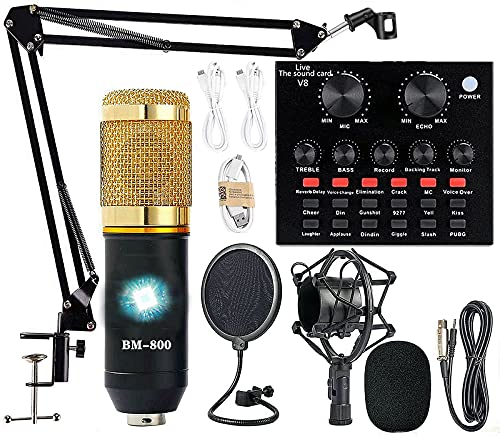
This bundle provides a complete setup for podcasting and streaming, including a BM-800 microphone, adjustable suspension arm, shock mount, pop filter, anti-wind foam, power cable, and a live sound card. Best for beginners who want an all-in-one package that’s ready to record with minimal add-ons. Caution: compatibility and feature breadth depend on the included audio interface; ensure your computer or device supports the interface requirements and software you plan to use.
Who it’s best for: new podcasters and hobby broadcasters seeking a turnkey kit. Why selected: compact, all-in-one design reduces the need for separate purchases while offering good vocal quality and basic live sound options.
PreSonus AudioBox USB 96 Studio Package

This package centers on the AudioBox USB 96 audio/MIDI interface paired with a large-diaphragm M7 condenser microphone. It’s designed for recording vocals and instruments at home with a rugged, reliable interface and cross-compatibility with common DAWs. Best for home studios that need a dependable recording chain for vocals, acoustic instruments, and small ensembles. Limitation: it may require acquiring additional monitors or headphones if you don’t already own them.
Who it’s best for: home studios and hobby musicians who want an all-in-one recording and production workflow. Why selected: the combination supports both mic input and MIDI, enabling straightforward music projects beyond voice recording.
Dejasound Upgraded Studio Microphone With Isolation Shield

The Dejasound microphone is a USB condenser with a built-in cardioid pattern and 16mm diaphragm, offering plug-and-play use with PC, smartphone, or laptop. It targets podcasters and home-studio musicians who want an easy setup with decent sound quality right away. Best for small studios or personal use where simplicity matters. Caution: USB-powered mics can introduce hum if ground loops or power supplies aren’t clean; using a powered USB hub or dedicated power source can help.
Who it’s best for: podcasters and streamers needing a straightforward USB mic with a shield. Why selected: the combination of direct USB output and included isolation filter helps reduce room noise and echo without extra gear.
ALSO GO Podcast Bundle With F998 Sound Card

This all-in-one bundle combines a mixer, BM-800 microphone, boom arms, shock mounts, pop filters, foam caps, and multiple cables, aimed at beginners and intermediate podcasters. Best for those who want a feature-rich setup with built-in voice effects and noise reduction options. A limitation: the included effects are software-based or on-device; verify compatibility with your editing software and platform. Choose this if you want quick-start professionalism without shopping for separate accessories.
Who it’s best for: beginner to mid-level podcasters seeking a complete, expandable kit. Why selected: practical coverage of on-air needs (monitoring, pop reduction, and basic effects) in a single purchase.
Buying Guide
What to consider when buying recording studio equipment:
- Room acoustics and noise control: If you record in a busy or untreated room, isolation shields and acoustic foam can dramatically improve clarity. Look for products with multi-layer shielding and durable mounting.
- Microphone type and connectivity: USB mics are convenient for beginners, while XLR mics with an interface offer more expansion for future upgrades. Consider your computer setup, software, and portability needs.
- Interface and monitoring: An audio interface with built-in monitoring helps you hear playback clearly. If you plan to record multiple tracks, ensure the interface supports multi-channel input and compatible drivers.
- Compatibility and future-proofing: Ensure gear supports your preferred DAW and operating system. Bundles can be cost-effective but verify what is included and whether you’ll need upgrades later.
- Portability vs. stability: Foldable shields and compact stands suit small spaces; sturdy stands and heavy-duty shields suit regular use and taller setups. Consider your posture and whether you’ll sit or stand while recording.
- Budget and expansion: Start with a core kit and add accessories (additional mics, headphone amps, or bigger interfaces) as your needs grow. Bundles are great for getting started, but check if you’re paying for features you won’t use initially.
Frequently Asked Questions
- What is the primary purpose of a microphone isolation shield?
They reduce room reflections and ambient noise, helping captured vocals stay clean and focused. - Is a USB microphone good for a serious home studio?
Yes, for beginners or quick-start setups. For long-term flexibility, an XLR microphone with an audio interface is recommended. - Do I need a mixer in a home studio bundle?
Not always. A basic USB interface may suffice, but a mixer provides hands-on control and effects for live recording or streaming. - Can I use any microphone with any computer?
USB mics work with most computers instantly; XLR mics require an interface compatible with your computer and DAW. - What should I buy first for a small home studio?
Start with a reliable microphone, an interface, and a protective shield or acoustic treatment. Add a stand and cables as needed.