
Best External Speaker Volume Control Solutions for Home Audio Setups
Answering the common need for centralized, reliable sound management, these external speaker volume controls help you adjust multiple zones without touching the amp. They’re ideal for rooms with mixed listening needs—home theaters, outdoor patios, kitchens, and multi-room systems. The top picks below emphasize high power handling, impedance matching, and easy wall-mount installation to suit different buyer profiles—from enthusiasts tackling large setups to casual listeners seeking simple, in-wall control.
| Product | Best For | Power | Impedance Matching | Notes |
|---|---|---|---|---|
| OSD Audio SVC100 | Homes with multiple zones | 100 W/channel | Yes | Front-mounted jumpers for up to 8 pairs |
| STUDIOFINIX ST-VC100 | Large rooms or outdoor areas | 100 W | Yes | Flexible, compact, passive design |
| OSD Audio SVC300 | High-demand setups | 300 W | Yes | Strong power headroom |
| OSD Audio VMS100 | Dining/porches and zones | 100 W peak | Yes | Slider style; easy reach |
| RECOIL VC-R100 | Home and office integration | 100 W | Yes | 12-step rotary control |
OSD Audio SVC100 100W In-Wall Volume Control
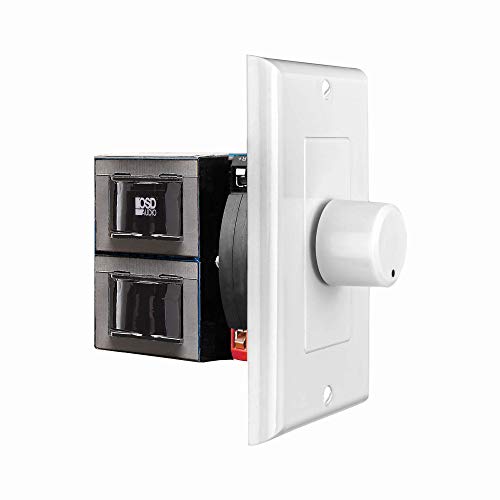
The SVC100 is designed for high-power, multi-speaker installations. It provides 100 Watts per channel with minimal bass roll-off and front-mounted jumpers to drive up to eight pairs of 8-ohm speakers. Ideal for multi-room systems where you need independent volume control per pair, this unit supports impedance protection to stabilize the load back to the amplifier, reducing heat and protecting electronics.
Best for: large homes or media rooms with several listening zones. Choose this if you require robust power and multiple speaker connections from a single in-wall control. A limitation: installation is in-wall, which may require wall modification.
1Mii 3.5mm Desktop Speakers With Volume Control

These compact desktop speakers pair built-in 3W stereo drivers with a front rotary volume knob for stepless adjustment. They are compatible with any device that has a 3.5mm AUX output, including Windows, MacOS, and Linux systems. They benefit users seeking quick, on-desk control and a simple upgrade to compact computer audio without external amplifiers.
Best for: desktop users in need of immediate, hands-on volume control. Better for: personal computer setups or small workspaces. Limitation: not designed for multi-room or high-power listening beyond casual use.
STUDIOFINIX 100W In-Wall Volume Control with Impedance Matching

The ST-VC100 from STUDIOFINIX delivers 100W power handling with impedance matching, enabling up to eight pairs of 8-ohm speakers. It is a passive design, simplifying installation and reducing the need for extra power supplies. This makes it suitable for both indoor and outdoor installations where discreet, reliable volume control is desired.
Best for: home theaters or outdoor areas needing centralized, robust control. Better for: users who want a compact, passive solution. Caution: ensure impedance matching is correctly configured to prevent speaker or amp strain.
OSD Audio SVC300 300W In-Wall Volume Control

The SVC300 offers a high-power 300W per channel option with the same impedance matching features as its smaller siblings. It includes front-mounted adjustable impedance jumpers to support multiple speaker pairs, allowing precise level control across a larger system. It suits serious multi-room or home theater configurations requiring substantial volume control capacity without sacrificing audio fidelity.
Best for: large, power-demanding installations. Choose this if you need headroom for many zones. Limitation: higher power unit may be larger and requires careful wiring during installation.
OSD Audio VMS100 100W In-Wall Volume Control (Slider)
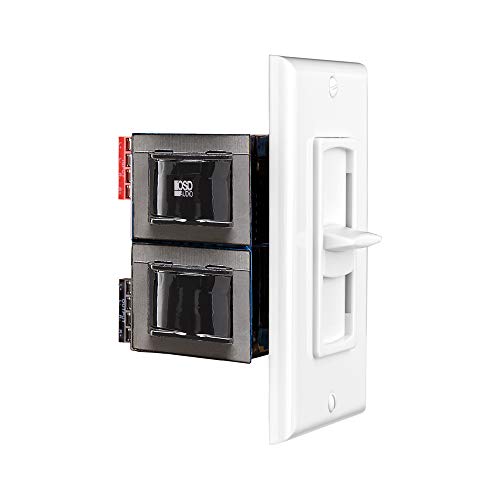
The VMS100 uses a slider control to adjust up to eight pairs of eight-ohm speakers, maintaining hi-fi response with minimal bass loss. It is designed for easy reach in dining rooms, porches, or other living spaces where a quick adjustment is preferable to a knob. It supports impedance protection to preserve amplifier health in complex setups.
Best for: zones where a horizontal slider is more convenient than a knob. Better for: spaces where you want quick, intuitive volume changes from a wall location. Caution: the slider mechanism may be less tactile in tight wall cavities for some installations.
Buying Guide: How To Choose The Right In-Wall Volume Control
- Power handling: Match the controller to your speaker system’s total wattage. Higher-power options (like 300W) prevent clipping in large rooms, while 100W units are often sufficient for typical home setups.
- Impedance matching: Critical for protecting amplifiers and speakers. Ensure the device supports parallel connections and correct impedance settings for your speaker array.
- Number of speaker pairs: If you plan multiple zones, confirm the device supports eight pairs or more. This helps future-proof your installation.
- Installation type: In-wall controllers offer clean aesthetics but require wall modifications. Passive designs simplify wiring but may have fewer features than active units.
- Control style: Knob versus slider affects user experience. Knobs provide precise control, while sliders offer quick, visible adjustment from common living areas.
- Placement and reach: Place the control where users will adjust volume most—near seating areas or along a central wall for easy access without reaching for the receiver or amp.
- Compatibility: Check speaker impedance, cable runs, and amplifier compatibility to avoid misconfigurations that can degrade audio quality or damage equipment.
Frequently Asked Questions
- What is impedance matching in volume controls? It stabilizes the electrical load presented to the amplifier, reducing the risk of overheating and protecting both the amp and speakers.
- How many speakers can these controls manage? Most models listed support up to eight pairs of speakers, suitable for multi-room configurations.
- Should I prefer a knob or a slider? Knobs offer steady, tactile control; sliders are quicker to adjust and can be more intuitive in dining rooms or outdoor areas.
- Is a passive volume control enough for all setups? For smaller systems or single-room listening, a passive design can be adequate; larger, more demanding systems may benefit from a higher-power or more feature-rich model.
- Can these units cause volume distortion? Distortion usually results from mismatched impedance or driving too many speakers beyond the device’s rated capacity. Always align the load to the amplifier’s capabilities.
- Do these require external power? Most are passive impedance-matching controllers and do not require a dedicated power source, though some configurations may benefit from active designs in very large installations.