
Best Flatwound Guitar Strings for Smooth Jazz Tones
Flatwound strings deliver a mellower, warmer voice with minimal finger noise, making them ideal for jazz, blues, and traditional styles. This guide compares five top flatwound electric guitar sets to help players decide which string set fits their technique and genre goals. The selections emphasize smooth feel, durability, and consistent intonation across common playing ranges. Suitable buyers include jazz players seeking a classic tone, beginners exploring clean, quiet string response, and versatile players who want a consistent flatwound option for practice and performance.
Summary table of selected products
| Product | Gauge | Best For |
|---|---|---|
| D’Addario XL Chromes Flatwound Electric Guitar Strings ECG23, 10-48 | 10-48 | Jazz players seeking mellower tone and smooth feel |
| Ernie Ball Regular Slinky Flatwound Electric Guitar Strings 10-46 | 10-46 | Players needing low finger noise with flexible feel |
| D’Addario XL Chromes Flatwound Strings ECG23-PL, 10-48 | 10-48 | Professional-grade flatwound with precise intonation |
| Ernie Ball Super Slinky Flatwound Electric Guitar Strings 9-42 | 9-42 | Light touch players seeking bright-flat feel |
| D’Addario ECG24 Chromes Flatwound Jazz Light | Light gauge variations | Jazz players prioritizing smooth, warm tones |
Product Comparisons At A Glance
- Best for jazz classic tone: D’Addario XL Chromes ECG23 or ECG24 Jazz Light variants.
- Better for low finger-noise and easy fretting: Ernie Ball Regular Slinky Flatwound 10-46.
- Choose this if you want a historical, refined flatwound feel: Thomastik-Infeld Jazz Swing Series.
D’Addario XL Chromes Flatwound Electric Strings ECG23, 10-48
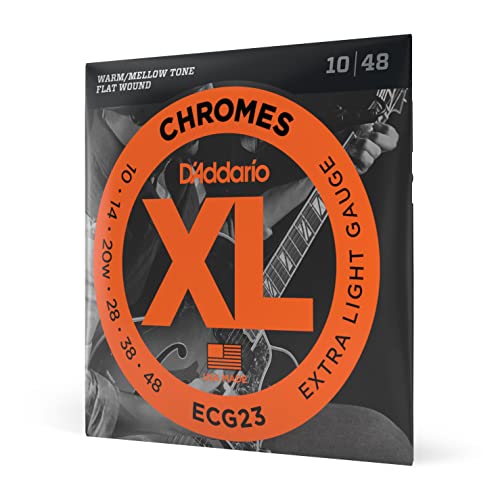
Best for players seeking a traditional flatwound voice with minimal finger noise. These strings use a stainless steel flattened ribbon wrap polished for smoothness and warmth, backed by a Hex-Core for stable intonation and durability. The mellow tone supports jazz fundamentals and clean rhythm playing. Caution: performance characteristics rely on proper winding and setup; if you prefer brighter edge or higher tension, consider a different gauge.
Ernie Ball Regular Slinky Flatwound 10-46

Best for flexible feel with low finger noise. The cobalt alloy ribbon wire offers precision winding and a round sound with flat feel, giving a balanced approach to jazz and blues. Best for players who want a smooth flatwound experience without excessive tension. Limitation: lighter gauges may produce less sustain in aggressive styles.
D’Addario XL Chromes Flatwound ECG23-PL, 10-48

Best for precision and consistent feel. Like other XL Chromes, ECG23-PL uses a flattened ribbon wrap with Hex-Core to ensure precise intonation and durability. The tone remains mellow and warm, suitable for jazz idioms and clean blues. Caution: some players feel the ultra-smoothness can slightly reduce initial bite compared to roundwound sets.
D’Addario Flat Tops EFT16, 12-53
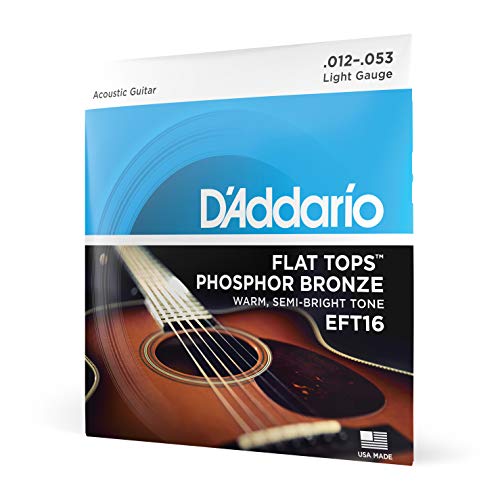
Best for acoustic-style flat tops with phosphor bronze wrap wire and precision winding. These strings balance warmth and brightness for versatile acoustic-like tone on solos and rhythm. Best for players who want a traditional acoustic texture on electric setups. Limitation: not a true electric flatwound; best used when a hybrid tone is desired rather than pure electric flatwound feel.
D’Addario ECG25 4-Pack XL Chromes, 12-52

Best for players seeking a reliable, widely-used flatwound set with a balance of smooth feel and warm tone. The 12-52 gauge range provides a medium-high tension suitable for jazz rhythm and lead lines. Choose this if you want a consistent supply and standard tension across performances. Caution: 4-pack convenience may lead to unused gauges if your setup changes frequently.
Thomastik-Infeld Jazz Swing Series 6-String Set

Best for serious jazz players seeking a legendary, traditional flatwound tone. These nickel flat wounds deliver rich fundamentals and articulate overtones with durability for long rehearsals and gigs. The set is favored by many established players for its historical sound. Caution: higher price and possibly stiffer tension for beginners compared to lighter sets; may require careful setup.
Buying Guide
What should you consider when buying flatwound strings?
- Gauges and tension: Lighter gauges are easier to press and quieter, but heavier gauges deliver more sustain and stability for jazz comping.
- Tone profile: Flatwounds are inherently mellower and warmer than roundwounds. Choose Chromes for a very smooth feel, and consider Thomastik-Infeld for a richer jazz voice.
- Core and wrap construction: Hex-Core design helps intonation stability; ribbon-wound wraps give a flat feel and consistent tension across frets.
- Scale compatibility: Ensure the set matches your guitar’s scale length and bridge setup for proper intonation.
- Longevity vs. feel: Some players prefer ultra-smooth wraps at the expense of initial bite; others want a touch more brightness without sacrificing quietness.
- Acoustic-like vs. electric flatwound: Some brands mix phosphor bronze or nickel materials; match to your tone goals and playing style.
Frequently Asked Questions
- What makes flatwound strings different from roundwound strings?
Flatwounds use a flattened wrap wire, producing a mellower tone and a smoother, quieter feel with less finger noise than roundwounds. - Are flatwound strings good for jazz?
Yes. They are a classic choice for traditional jazz tones and clean, articulate playing. - Do flatwound strings last longer than roundwounds?
Durability varies by brand, but flatwounds generally wear more slowly in terms of finger noise and feel due to the smoother wrap. - Which gauge is best for beginners?
Lighter gauges (closer to 9-46 or 10-46) are easier to press and less tiring for beginners. - Can flatwound strings be used on all electric guitars?
They are compatible with most electric guitars, but always verify gauge and neck tension to avoid setup issues. - Do flatwounds sound good for blues or rock?
They can yield a warmer, mellower tone suitable for blues and certain rock styles, though players seeking bright attack may choose lighter roundwounds.