
Best Floating Bridge Acoustic Guitar Upgrades for Jazz and Archtop Players
Answering the question for players seeking modular, upgrade-friendly floating bridges: these top picks offer adjustable action, improved intonation, and material tones suited for archtop and jazz guitars. They’re ideal for players upgrading a worn bridge, repairing a damaged one, or customizing action to taste. The following five products are selected for their relevance to floating bridge setups, build quality, and practical adjustability. The buyer profiles range from casual players seeking quick setup changes to professional amateurs pursuing precise tone shaping.
| Product | Material | Best For |
|---|---|---|
| MUSICAL STRING Guitar Bridge Ebony Archtop | Ebony | Classic archtop tone, tight intonation |
| Alnicov Archtop Jazz Guitar Bridge Rosewood | Rosewood | Lightweight, easy height adjustment |
| rosenice Floating Bridge 6 String | Unknown wood (synthetic/metal components) | Flexible height tuning, compact |
| Golden Gate F-2921 Compensated Django Bridge | Ebony | Prewar-inspired compensation and light weight |
| Swhmc Adjustable Rosewood Bridge | Rosewood | Precise action with dual-knob height control |
MUSICAL STRING Ebony Archtop Bridge

Best for: players who want an authentic archtop feel with 100% natural ebony on a traditional archtop bridge. The natural ebony wood promises a bright, articulate tone with clear string definition, suitable for jazz tones and vintage setups. This bridge is a straightforward replacement for acoustic archtop guitars seeking consistency in intonation and a classic look.
Why selected: Ebony brings a focused high-mid presence and strong sustain, which is desirable for jazz players who favor precision in note articulation. The product is a simple, direct replacement that aligns with traditional archtop hardware aesthetics.
Limitation: The data provided focuses on material rather than detailed dimensional specs. Installers should verify compatibility with their guitar’s bridge footprint and mounting style before purchasing.
Alnicov Archtop Rosewood Bridge

Best for: players seeking a lightweight, durable rosewood bridge with easy height adjustment for precise setup on archtop guitars. This bridge is a suitable replacement part for those upgrading a worn archtop bridge while maintaining a classic look.
Why selected: Rosewood provides a warm, balanced tonal character with comfortable handling for players adjusting action. The adjustable posts and thumbwheels simplify height changes, making it a good all-round upgrade for daily playing.
Limitation: The listing emphasizes adjustable height but does not specify exact string spacing or footprint, so confirm compatibility with your instrument’s bridge cavity and mounting points.
rosenice Floating Bridge for 6 String Jazz Guitar

Best for: players who want a compact floating bridge with adjustable action to suit jazz and traditional acoustic setups. Its two-knob height adjustment allows fine-tuning of string action for a comfortable playing feel.
Why selected: The dual-knob design enables practical action tuning, and the compact dimensions make it a versatile option for portable repair kits and varying guitar bodies. It supports standard bridge replacement needs with organization of string spacing during setup.
Limitation: The exact material composition isn’t fully disclosed, which may affect tonal expectations for some purists. Verify fitment with your guitar model before purchasing.
Swhmc Adjustable Rosewood Bridge
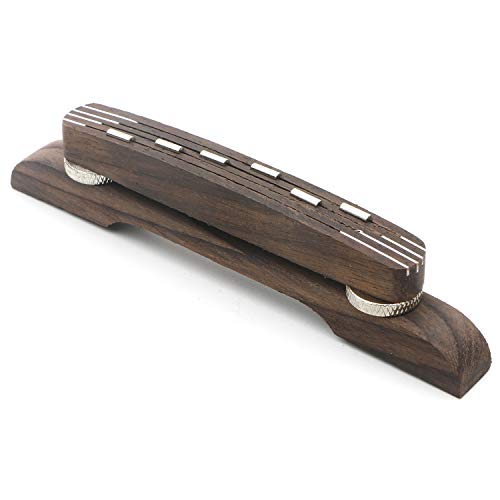
Best for: players who want a reliable, adjustable rosewood bridge with clear tone transmission for 6-string jazz guitars. It’s suitable for both replacements and setup optimization where precise action control matters.
Why selected: The two-knob height adjustment offers straightforward, repeatable action changes, while the compensated top helps maintain intonation across wound strings. Rosewood adds warmth to the overall voice, which many jazz players favor.
Limitation: The listing does not detail exact bridge footprint measurements, so check compatibility with your guitar’s existing screw pattern and string spacing.
Buying Guide: Floating Bridge Upgrades For Acoustic And Jazz Guitars
What should I look for when choosing a floating bridge?
Key factors include material (ebony, rosewood, or other woods), weight, adjustability (knobs or posts), and compatibility with your guitar’s bridge footprint. Ebony and rosewood offer distinct tonal characteristics—ebony often yields brighter articulation, while rosewood provides warmth and balance. Ensure the bridge height can be tuned to your preferred action without compromising intonation.
How important is adjustability?
Adjustability is essential for achieving optimal action and intonation. Look for bridges with clear height controls, such as dual knobs or thumbwheels, and verify the range of adjustment. A bridge that doesn’t allow you to fine-tune action can limit your playing comfort and intonation accuracy.
What about installation and compatibility?
Check the guitar’s mounting points, footprint, and string spacing. Some floating bridges require compatible posts or saddles. If you’re upgrading from a wooden bridge, ensure the replacement’s base will sit flat and align with the existing bridge plate. If in doubt, consult a professional luthier for installation guidance.
Which material should I choose?
Ebony is known for brightness and precise articulation, making it a staple for jazz tones and clean note separation. Rosewood tends to contribute warmth and a more balanced voice. Your choice should align with the guitar’s overall voice and the genre you play most—jazz players often favor rosewood for a smoother character, while ebony is preferred for crisp note definition.
What about durability and maintenance?
Look for bridges with well-constructed posts, durable materials, and secure fasteners. Regular maintenance should include cleaning the saddle area and ensuring no debris inhibits string action. Lightweight designs may be prone to minor shifts during transport, so ensure the bridge is securely mounted when playing live or rehearsing.
How do I decide between options?
Compare the tone you desire, how easy it is to adjust, and how well the bridge fits your guitar’s mounting pattern. If you value precise action and a vintage look, a compensated ebony bridge might be ideal. If you prefer a warmer tone with flexible height adjustments, rosewood bridges can be a better match. For portable setups, compact bridges with dual-adjustment knobs are practical.
Maintenance tips
- Regularly inspect screws and posts for looseness; tighten carefully to avoid stripping threads.
- Clean the bridge surface to prevent buildup that could affect action.
- When adjusting height, make small, incremental changes and recheck intonation.
Frequently asked questions
- Q: Do floating bridges affect intonation more than fixed bridges? A: Floating bridges allow action and intonation adjustments, which can influence overall tuning accuracy more noticeably if not set correctly.
- Q: Can I install a floating bridge on any archtop guitar? A: Compatibility depends on the guitar’s bridge footprint, mounting screws, and body design. Verify measurements before purchase.
- Q: Which wood sounds brighter, ebony or rosewood? A: Ebony generally yields brighter articulation with crisp treble details, while rosewood adds warmth and rounder highs.
- Q: Are adjustable bridges durable for travel? A: Many adjustable bridges are lightweight and travel-friendly, but ensure secure mounting to prevent movement during transport.
- Q: Do I need professional setup after installation? A: A basic setup to confirm action, intonation, and string height is often beneficial, especially on jazz guitars with floating bridges.
- Q: Can I mix different materials for saddle and bridge? A: Mixing materials can alter tonal balance; match saddles with your bridge material for a consistent voice, or consult a luthier for tailored options.