
Quick Intro: Choosing the right microphone and speaker system for a football helmet — whether for coaching, youth leagues, or flag football communication — requires attention to compatibility, weather resistance, battery life, and noise reduction. Below is a concise comparison of suitable helmet audio options drawn from drop-in speakers, motorcycle helmet headsets, and universal helmet audio kits that work with audio-ready helmets.
| Product | Type | Key Strength |
|---|---|---|
| Wildhorn Alta Wireless Bluetooth | Drop-In Helmet Headphones | Balanced HD sound, glove-friendly controls |
| ALECK 006 Universal Wireless Bluetooth | Drop-In Helmet Speakers | Universal compatibility, 40mm drivers |
| XGP X1 Motorcycle Helmet Speakers | Motorcycle Bluetooth Kit | Long battery, IP67 waterproof |
| ORZDOTMN Motorcycle Helmet Bluetooth Speakers | Motorcycle Bluetooth Kit | Dual-device pairing, graphene drivers |
| KOQQQ Motorcycle Helmet Speakers | Motorcycle Bluetooth Kit | Long playtime, intelligent noise reduction |
Wildhorn Alta Wireless Bluetooth Drop-In Headphones

Features: 40mm drivers, Bluetooth 5.0, built-in microphone, glove-friendly controls, universal drop-in size. These speakers are designed to drop into audio-ready helmets and provide HD balanced sound with deep bass. The integrated mic supports hands-free calls and voice assistant activation. The compact dimensions allow installation in many padded helmet ear pockets. This option is geared toward team members using audio-ready helmets who want clear music and basic communication without a bulky external unit.
ALECK 006 Universal Wireless Bluetooth Helmet Speakers

Features: 40mm drivers, Bluetooth 5, built-in microphone, universal compatibility. The Aleck 006 set focuses on compatibility with many brands (Smith, POC, Giro, etc.) and is engineered for drop-in placement into ear pads. It offers hands-free voice control and convenient button operation suitable for sport contexts where quick access to voice assistants or phone calls is needed. Its slim profile helps maintain helmet fit and comfort.
XGP X1 Motorcycle Helmet Speakers 40mm

Features: 800mAh battery, IP67 waterproof, Bluetooth 5.3, two microphones, boom and button mic options. Though marketed for motorcycle helmets, the XGP X1 offers extended battery life (up to 60 hours playback) and rugged sealing against water and dust. The inclusion of interchangeable mic styles makes it adaptable for various helmet types and communication needs. Dual-phone connectivity is helpful for coaches or staff who switch devices.
ORZDOTMN Motorcycle Helmet Bluetooth Speakers

Features: Bluetooth 5.3 dual-device pairing, 40mm graphene drivers, intelligent noise cancellation, 1000mAh battery. This headset stresses audio clarity with graphene drivers and active noise reduction that targets engine/wind noise — applicable for outdoor sports where ambient noise is a concern. The ability to connect two phones helps teams that use a separate device for music and another for communications or GPS.
KOQQQ Motorcycle Helmet Speakers With HiFi Sound
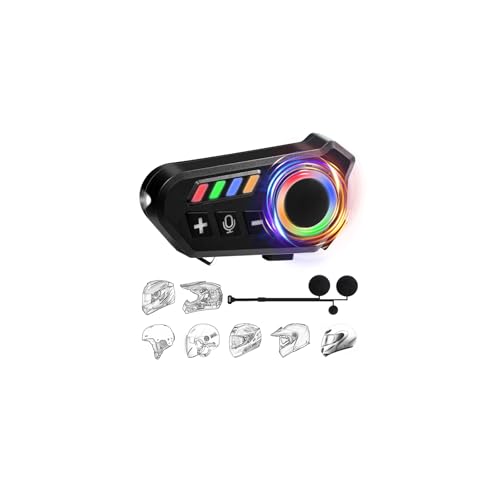
Features: Bluetooth 5.4 streaming, voice assistant button, double noise reduction, 800mAh battery, IPX8 waterproof. KOQQQ highlights voice control for hands-free commands and long battery life with fast Type-C charging. The dual noise-canceling microphones aim to preserve call clarity in noisy environments. The waterproof rating and extended standby make this kit a robust candidate for field use in varied weather.
Buying Guide: Choosing The Right Helmet Microphone And Speaker
Compatibility: Check whether the helmet is “audio-ready” (ear pockets and cable routing). Drop-in speakers are easiest for audio-ready helmets; external Bluetooth modules suit non-audio-ready helmets but require mounting and routing.
Microphone Type: Boom mics offer directional pickup and better wind rejection for louder environments. Button or short inline mics are less obtrusive but can be more affected by wind noise.
Noise Cancellation: Look for systems with active or DSP-based noise reduction if you need clear speech under ambient noise (stadium, sideline, or outdoor field).
Battery Life & Charging: Consider typical session length. For long practices or games, choose higher capacity batteries (800–1500mAh) or quick-charge support. Check standby and real-world talk/play times.
Connectivity & Pairing: Bluetooth version affects stability and latency. Dual-device pairing is helpful when users need to connect a phone for calls and another device for audio sources.
Water & Dust Resistance: For outdoor sports, IP ratings (IPX4, IPX6, IP67, IPX8) indicate resistance to moisture and dust. Higher ratings add durability in rain or damp conditions.
Installation & Controls: Glove-friendly controls, drop-in fit dimensions, and included mounting brackets or adhesive matter for field setups and quick swaps between helmets.
Audio Quality: Driver size (commonly 40mm in these kits) and driver material (graphene vs. standard) influence clarity and bass. Balance the need for speech intelligibility with music quality if both are required.
Team Use & Intercom Needs: If you require rider-to-rider or player-to-coach intercom functionality, verify that the system supports intercom or multi-unit pairing. Many motorcycle kits are focused on phone audio and may not provide mesh intercom features used in some team comms systems.
Durability & Warranty: Look for robust housing, replaceable parts (mics, pads), and manufacturer support. For youth and high-activity use, rugged units or units with higher IP ratings are preferable.
Installation Accessories: Confirm whether the package includes boom mics, button mics, metal brackets, 3M tape, or cable management that matches your helmet style.