
Best Fuzz and Distortion Pedals for Electric Guitars in 2026: A Practical Buying Guide
Answering the question: which fuzz and distortion pedals deliver classic grit and modern versatility for different playing styles? This guide highlights five well-rounded options suited for players seeking heavy crunch, vintage fuzz, or high-gain saturation. The top picks serve genres from hair metal to hard rock, and are ideal for guitarists seeking reliable performance on stage or in the studio. The following products cover a spectrum of tones, construction quality, and value. Use the quick reference table to compare core details at a glance.
Quick reference table:
| Product | Best For | Key Tone | Notes |
|---|---|---|---|
| Donner Morpher Distortion | Shredders and metal players | High gain with 3 modes | Durable aluminum build |
| Behringer Super Fuzz SF300 | Vintage fuzz lovers | 3 modes: classic fuzz, grunge, boost | Budget option |
| BOSS DS-1 | Classic distortion enthusiasts | Hard-edged attack, bold sustain | Iconic heritage |
| Donner Fuzz Pedal Classic Fuzz | Retro-style fuzz on a budget | Dense, delicate classic fuzz | Versatile tone controls |
| SONICAKE Fuzzy Cream | Vintage-inspired fuzz for guitar and bass | Creamy to aggressive fuzz | Analog circuit |
Donner Morpher High-Gain Distortion Pedal

Best for: shredders and players seeking a metal-friendly signal with clear definition. Why selected: Donner Morpher offers a high-gain distortion with three modes designed to expand dynamic range, enabling rich riffing and expressive solos. The all-aluminum alloy chassis provides durability for gigging musicians. The pedal’s indicator lights help you confirm the working state at a glance. Caution: high-gain settings can emphasize noise on single-coil pickups; use noise gate or proper powering to minimize hiss.
Behringer Super Fuzz SF300 3-Mode

Best for: players who want versatile fuzz tones on a budget. Why selected: SF300 recreates classic fuzz sounds from the 60s and 70s with three modes—classic fuzz, grunge, and gain boost. The blue status LED helps you see when the effect is on or battery health is good. Caution: performance and consistency may vary with power supply; ensure a stable 9V adapter or battery as recommended.
BOSS DS-1 Distortion Pedal

Best for: players seeking a legendary, hard-edged distortion with reliable performance. Why selected: The DS-1 defined a bold distortion sound since 1978 and remains a staple for aggressive rhythms and cutting solos. Its heritage signals a proven circuit design that stays responsive across attack dynamics. Caution: can feel thin at very low volume settings; pairing with a strong amp can help preserve presence without excessive compression.
Donner Fuzz Guitar Pedal – Classic Fuzz

Best for: players chasing a faithful recreation of classic fuzz with simple control. Why selected: The Fuzz Stylish II emphasizes a dense yet delicate fuzz texture, with tone, bass, treble, and level controls to shape the overall response. It’s well-suited for retro tones on guitar and bass. Caution: the pedal’s dynamic response can vary with guitar pickup type; adjust tone and level to match your rig for optimal texture.
IOppWin Fuzz Buff Guitar Pedal

Best for: guitarists seeking a legendary sweet fuzz with a compact build. Why selected: Fuzz Buff offers a dynamic, full fuzz voice with a robust metal enclosure and true bypass for signal integrity when the pedal is off. Caution: mini form factor can limit knob precision; use a steady hand when making on-board adjustments during performances.
SONICAKE Fuzz Guitar Effect Pedal Fazy Cream
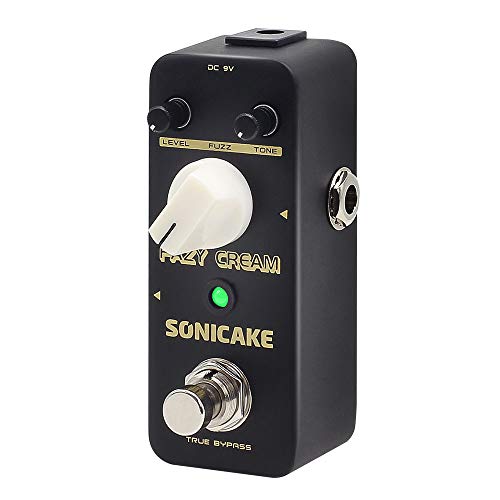
Best for: players who want a 100% analog path with broad fuzz range. Why selected: SONICAKE Fazy Cream transitions from creamy fuzz to high-gain distortion, suitable for guitar and bass. The wide tone control range allows from subtle to aggressive fuzz textures. Caution: analog circuits can drift with temperature; expect slight tonal shifts over long sessions.
Buying Guide
What should you consider when choosing a fuzz or distortion pedal?
- Gain range and modes: Do you need three modes for versatility or a single, focused tone? Some pedals excel at high-gain metal, while others cater to vintage fuzz aromas.
- Signal integrity: True bypass vs buffered bypass affects how your guitar signal behaves when the pedal is off. True bypass preserves tone best on a clean signal path.
- Construction and durability: On-stage reliability matters. Metal enclosures withstand frequent footwork and transport.
- Controls and versatility: Tone, level, gain, and extra knobs (bass, treble) allow you to sculpt your sound for various amps and guitars.
- Power and compatibility: Check power requirements (9V adapter or battery) and ensure your rig provides stable power for consistent performance.
How to compare tones quickly
- Classic fuzz vs. high-gain distortion: Fuzz pedals typically deliver a gated, velvety sustain with aggressive harmonic content, while distortion pushes a tighter, more focused crunch.
- Vintage vibes: Seek pedals marketed as analog or with classic-era sound to reproduce the midrange heft and fuzz texture of the 60s–70s.
- Stage practicality: Choose pedals with clear indicators and robust controls that respond predictably to pick attack and dynamics.
FAQs
- What distinguishes fuzz from distortion? Fuzz produces a clipped, singing texture with octave-rich harmonics, while distortion focuses on a tighter, more controlled gain with greater dynamic response.
- Is true bypass important for a fuzz pedal? True bypass helps preserve your guitar’s core tone when the pedal is off, which can be beneficial in a live setup.
- Can I use fuzz with a guitar and bass? Some fuzz pedals are designed to work with both, but tone and output level may differ between instrument types. Check the product description for compatibility.
- Do I need to invest in an expensive pedal to get good fuzz? Not necessarily. Many budget pedals offer solid vintage fuzz and modern high-gain options, depending on your needs.
- How should I power multiple pedals? Use a dedicated 9V power supply with isolated outputs to minimize noise and interaction between pedals.
- What is the best way to dial in fuzz for a band mix? Start with a moderate gain, adjust tone to tame hiss, and set level to sit between your guitar’s clean tone and the rest of the band. Then tweak for solos or riffs as needed.