
Best Guitar Amps With Attenuators for Flexible Live or Studio Use
The best guitar amps with attenuators let you dial in the tone you want at comfortable volumes. This guide focuses on five practical options that balance tone, portability, and authentic amp response for players who need lower volume control without sacrificing feel. The top picks suit different buyers: players who want studio-friendly dimming, live performers needing stage volume control, and enthusiasts seeking true load box or DI capabilities for silent recording.
| Product | Best For | Key Benefit |
|---|---|---|
| Bugera POWER SOAK PS1 | Players with tube amps seeking power attenuation | Emulated mic output for direct recording |
| Donner Amp Attenuator Pedal | Pedalboard setups and on-the-fly volume shifts | True bypass with flexible signal control |
| Two Notes Torpedo Captor 8 Ohm | Direct DI and reactive load for live/studio | Speaker sim and line output |
| AmpRX BrownBox | Full-sized tube amps needing multiple voltage options | LCD voltmeter and selectable voltages |
| Zunate Line Volume Attenuator | Inline volume control for guitars and monitors | Smooth, precise, stereo/mono capable |
Bugera POWER SOAK PS1 Passive 100W Attenuator

The Bugera POWER SOAK PS1 provides passive attenuation for guitar and bass amplifiers up to 100 watts. It offers multi-impedance input connectors (4, 8, and 16 ohms) to match a wide range of amps. A dedicated line output with level control supports direct recording or PA integration. This option is best for players who want a straightforward, robust attenuator with an emulated mic output for on-record or live-sound applications. Note that the device’s emphasis on passive attenuation means you should pair it with an amp that benefits from a post-power-stage load.
Best for: Players seeking a transparent stage-friendly attenuation with a usable mic-emulation for direct capture.
Limitations: Some users may prefer more tonal shaping options beyond the emulated output.
Donner Amp Attenuator Pedal

The Donner Amp Attenuator Pedal acts as an EMO AMP Box Controller and signal converter with a mute footswitch. It emphasizes clear tone at reduced levels while preserving the amp’s dynamics. True bypass allows the signal to bypass effects when needed, sending a strong front-end feel when the front end of the amp is driven. Best for players who need low-volume practice with authentic response and easy remote muting during performances.
Best for: Players who want to preserve dynamics at low volumes and benefit from a mute footswitch for quick on/off control.
Limitations: Design focuses on maintaining tone rather than advanced speaker simulation at all volume levels.
Two Notes Torpedo Captor Reactive Loadbox 8 Ohm
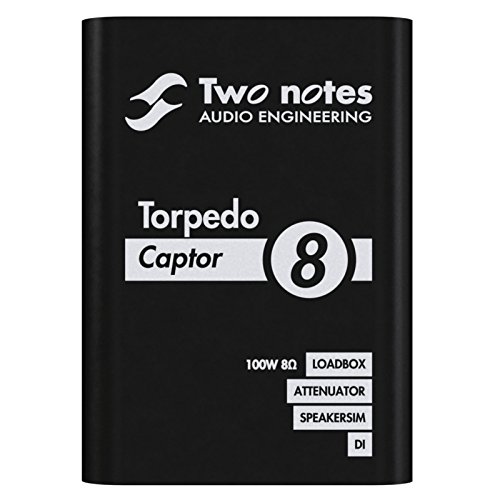
The Two Notes Torpedo Captor is a reactive load box with DI and attenuation designed to preserve the amp’s tone at any volume. It provides a speaker sim and direct line/DI outputs, making it suitable for silent recording and live use. It’s best for players who want studio-grade capture and robust protection for the amp while maintaining tonal integrity at lower volumes.
Best for: Recording and live scenarios where you need authentic amp feel and a flexible DI/line outputs.
Limitations: Higher upfront cost and more setup than simpler passive attenuators.
AmpRX BrownBox Tube Attenuator

The AmpRX BrownBox provides a tube-friendly attenuation with an LCD voltmeter and selectable output/input voltages. It targets full-sized tube amplifiers and supports multiple settings to tailor headroom and tone at reduced volumes. This is a practical pick for players who want to manage power-tube headroom precisely and track voltage changes during tone experiments.
Best for: Players with larger tube amps who want precise voltage control and monitoring to shape the feel at lower volumes.
Limitations: More niche for players who don’t need multi-voltage functionality or a built-in voltmeter.
Zunate Line Volume Attenuator

The Zunate Line Volume Attenuator is a passive inline control designed for 6.35mm connections. It offers stepless adjustment for instruments and dynamic microphones, preserving signal integrity in stereo or mono setups. It’s ideal for players needing precise, on-spot volume tuning for studio monitors, guitars, or keyboards without introducing tone loss.
Best for: Inline control on guitar rigs or monitor setups where smooth, precise adjustment matters most.
Limitation: It’s a straightforward inline attenuator, so it lacks additional amp-specific tone-shaping features.
Buying Guide: Key Things To Consider
What should you look for when choosing a guitar amp attenuator? First, assess the output power and impedance to ensure compatibility with your amp. If your goal is quiet recording, a reactive load or DI-capable unit helps preserve tone. For live use, consider a unit with a robust build, easy muting, and, if possible, emulation or direct outputs that suit your workflow.
- Impedance and power handling: Match the amp’s output (4, 8, or 16 ohms) to the attenuator’s input to avoid loading issues or tone loss.
- Tone preservation: Look for units that offer direct outputs or speaker-simulated paths if you record or play through interfaces.
- Portability and setup: Pedal-style attenuators work well on pedalboards, while rack-style or box attenuators suit studio rigs or larger amps.
- Controls and monitoring: A visible level control, mute options, and, in some cases, a voltmeter or LCD readout help you repeat tones and set precise headroom.
- Protection: Load boxes and reactive attenuators can protect the amplifier from mismatched loads and overheating.
Frequently Asked Questions
- What is an attenuator for guitar amps?
An attenuator lowers the loud signal from your amplifier so you can achieve overdriven tones at lower volumes without changing the amp’s gain structure.
- Do attenuators affect tone quality?
High-quality attenuators aim to preserve the amp’s original feel and dynamics. Some tone shaping is possible through load boxes and speaker simulations.
- When should I use a DI-capable attenuator?
Use a DI-capable unit when recording or running direct to FOH or an audio interface to capture authentic tone with minimal latency.
- Is a passive attenuator better than an active one?
Passive units typically introduce fewer components in the signal path, which can preserve dynamics, but active units may offer more gain control and additional features.
- What’s the difference between a load box and a simple attenuator?
A load box absorbs the amp’s output while providing a recording-friendly DI, whereas a simple attenuator mainly reduces volume with limited additional routing options.
- Can attenuators protect my tube amp?
Yes, proper load boxes and attenuators help prevent overheating and excessive speaker or transformer stress by presenting a safe load to the amp.