
Best Guitar Cable With Volume Control for Stage and Studio
Looking for a guitar cable with built-in volume control? This guide highlights five top options that let you dial in your tone on the fly, whether you’re recording, performing live, or practicing at home. The selections include inline attenuators and compact expression/volume pedals, plus reliable plain cables for comparison. The best fits vary by use case: inline controllers are ideal for precise on-cable volume tweaks; pedals suit hands-on control during performance; standard cables are best if you already have other gear to manage volume externally. The summary table below helps you compare key points at a glance.
| Product | Best For | What It Does |
|---|---|---|
| FOSA 1/4 Inch Volume Controller | Guitarists and mic use in studio or live | Stepless inline volume control with tactile roller |
| LICAEVEY 1/4In Volume Controller | Musicians needing precise attenuation | Stepless control, distortion-free sound |
| SONICAKE EXP Guitar Pedal | Players needing volume or expression via pedal | Dual function, auto-detect between volume and expression |
| Fender Professional Instrument Cable | General-purpose tone cables | Low-noise shielding, durable build |
| Amazon Basics TS Cable | Budget or starter cables | Simple, reliable basic instrument cable |
FOSA 1/4 Inch Volume Controller

The FOSA inline volume controller provides accurate, stepless adjustment for guitars, keyboards, and dynamic mics while passing signal with minimal loss. The device uses a smooth rolling wheel and aluminum alloy casing for durable, precise control during sessions. It is suitable for studio monitors, live rigs, and practice setups where a guitarist or vocalist wants quick, on-cable level changes without introducing distortion.
Who it’s best for: players who need fine-grained volume changes on the instrument cable itself, without altering setups or routing. Why selected: its large tactile dial and smooth operation make incremental changes easy during recording or on stage. Caution: as a passive device, it does not add gain and relies on your source to drive the output.
LICAEVEY 1/4In Volume Controller

LICAEVEY offers a precision, stepless volume controller with an all-aluminum housing. The inline device maintains signal integrity across stereo and mono setups for guitars, keyboards, and dynamic mics. Its tactile roller enables fast tweaks during sessions, from full volume to attenuation without audible distortion.
Best for: engineers and performers who require highly controlled, jitter-free level shaping on the instrument path. Why selected: the combination of precise adjustment and robust construction supports reliable use in both studio and live environments. Limitation: as with any passive inline control, loud transients from strong sources may still require upstream level management.
SONICAKE Passive Volume & Expression EXP Guitar Pedal
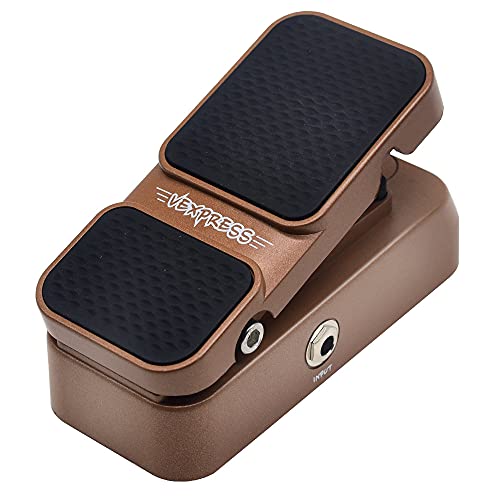
This compact pedal combines passive volume control and expression capabilities in one unit. It detects whether you’re using a volume or expression setup via the connected cable, enabling a seamless switch between modes. It’s compatible with guitars, basses, keyboards, synths, and other controllers, making it a flexible option for players who want on-pedal control without extra electronics.
Best for: players who want hands-on control with an option to morph volume into expression for expressive passages. Why selected: automatic detection reduces setup complexity during live performance or gigging rehearsals. Caution: using the EXP feature requires the right TRS/mono configuration; incorrect wiring can limit gradual control.
Fender Professional Instrument Cable
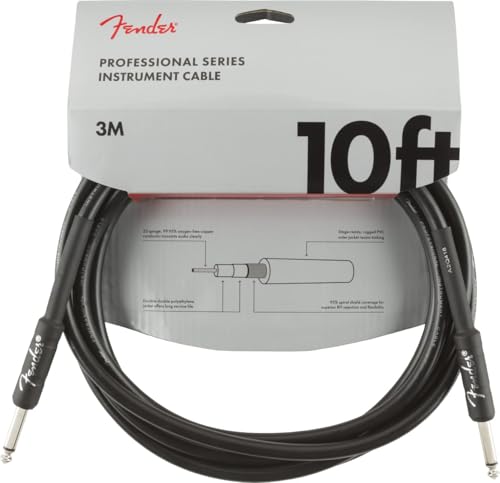
Fender’s 10-foot instrument cable combines durability with low-noise performance. It employs 95% oxygen-free spiral shielding, a rugged 8mm jacket, and nickel-plated connectors to resist wear and interference. This cable is a reliable choice when you want standard, dependable signal transmission for electric guitars, basses, or pedals.
Best for: players who already have volume controls elsewhere and just need a dependable, high-quality cable. Why selected: its shielding and build quality reduce handling noise and interference, delivering a cleaner signal during gigs or studio sessions. Limitation: not a volume-control solution on its own; use with an external inline controller if you need on-cable adjustment.
Amazon Basics TS 1/4 Inch Guitar Cable

This 10-foot instrument cable from Amazon Basics uses 23 AWG OFC conductors with an OFC spiral shield and conductive PVC shield to minimize interference. It’s a straightforward option when volume control is handled externally or when you simply need a reliable connection between guitar, amp, and effects.
Best for: budget-conscious buyers and beginners who need a dependable basic cable. Why selected: it offers clear signal transmission without unnecessary features, making it a solid baseline cable for comparison with more feature-rich options. Caution: lacks built-in volume control; pair with inline controllers if needed.
Buying Guide: How To Choose A Guitar Cable With Volume Control
- Control method: Decide between inline volume controllers and pedal-based volume or expression options. Inline controllers are compact and sit directly on the cable, ideal for quick tweaks. Pedals offer more expansive control and can handle expression changes in addition to volume.
- Signal integrity: Look for devices that maintain clean signal with minimal distortion. Passive attenuators should preserve tone without introducing hiss or crackle. Shielding and connector quality matter for live environments.
- Durability: Aluminum housings, robust jacks, and high-quality cabling extend life under gigging conditions. If you travel a lot or perform on crowded stages, prioritize rugged construction.
- Compatibility: Ensure the device matches your rig. Some pedals require TRS connections for true expression control. Stereo/mono capabilities should align with your amp or audio interface.
- Use case: For studio setups, inline controllers are convenient for patient, precise level matching. On-stage players may prefer pedals that can be stomped with foot while playing. Budget considerations may steer you toward standard cables with external controls.
- Limitations: Passive devices do not provide gain. You may need to adjust your overall input levels or preamp settings to avoid overly quiet signals. Some pedals require specific cabling configurations to function as intended.
Frequently Asked Questions
Do I need a volume control on my guitar cable?
Not always. If you already have a pedalboard or amp with volume control, a separate cable control may be unnecessary. A volume control on the cable is convenient for quick, on-the-fly adjustments during performance or recording.
Are passive volume controllers better than active ones?
Passive controllers preserve signal without adding power needs or noise from an active circuit. Active options may offer gain or more precise control in certain setups but require power and can introduce noise if not properly shielded.
Will a volume controller affect tone?
Quality inline controllers aim to minimize tonal impact. Reputable units maintain signal integrity, but aggressive attenuation can subtly alter perceived tone depending on the source and downstream gear.
Can I use a volume pedal for expression and volume control?
Yes, many players use a single pedal to manage both expression and volume when configured correctly with TRS connections. Some pedals auto-detect mode based on cable type.
What should I check before buying?
Check compatibility with your gear, whether the unit is passive or active, the build quality, and whether it includes shielding that suits live environments. Consider whether you need a right-angle or straight connector, length, and whether you require stereo or mono operation.
Do these cables require any special maintenance?
Keep connectors clean, avoid yanking on cables, and coil them properly after use. For longevity, store away from moisture and extreme temperatures.