
Best Guitar Effects Power Supply Reviews for Clear, Reliable Pedal Operation
The top choice for most guitarists is a high-isolation, low-noise power supply that can feed multiple pedals without hum. This guide highlights five solid options that cater to different pedalboards and budgets. Best for studio setups, live rigs, or compact boards, these power supplies emphasize stability, noise reduction, and protection for each output. Buyers can compare outputs, daisy-chain capabilities, and safety features to pick the right one for their gear and playing style.
| Product | Outputs / Current | Best For |
|---|---|---|
| Donner DP-1 | 10 isolated outputs (9V/12V/18V) | Big pedalboards needing many isolated rails |
| JOYO DC 9V (800mA-1A) | 4-way daisy chain, 9V DC 800mA | Compact boards with a few pedals |
| Pigtone DC 9V 1A | 9V 1A, 8-port daisy chain possible | Budget-friendly multi-pedal setups |
| D’Addario PW-CT-9V | 9V, up to 800mA | Reliable, simple 9V power |
| Mosky Power Supply | 10 isolated outputs + USB port | Quiet operation with multiple voltage options |
The following sections break down each option with clear, buyer-oriented details. Each product section notes who it’s best for, plus a practical caution to consider before purchase.
Donner DP-1 Guitar Pedal Power Supply

Best for large pedalboards requiring many isolated rails. The Donner DP-1 offers 10 isolated outputs with varied voltages (7 at 9V 100mA, plus one 9V 500mA, one 12V 100mA, and one 18V 100mA). It uses aluminum alloy construction for lightweight portability and includes a noise-reduction circuit to minimize hum. Short-circuit protection keeps other outputs running if one rail fails. Caution: ensure your total current draw stays within the combined limit to prevent overload.
JOYO DC 9V Pedal Power Supply (4 Way Daisy Chain)

Better for compact boards with a few pedals needing 9V power. This unit provides 9V DC at up to 800mA (max 1A) and includes a four-way daisy chain for simultaneous pedal powering. Tip-negative design is compatible with many common pedals. Caution: if your individual pedals require more than 800mA each or rely on higher voltage, this unit may be insufficient.
Pigtone DC 9V 1A Pedal Power Supply

Choose this for a budget-friendly, versatile power source. It provides 9V 1A total with center-negative polarity and a 5.5×2.1mm plug. It’s compatible with pedals drawing 10mA to 1000mA and pairs with a 1-to-8 daisy chain to power up to eight pedals. Caution: the efficiency and noise suppression may not match higher-end models, especially when running many devices simultaneously.
JOYO DC 9V 1.2A Power Supply with 5 Way Daisy Chain
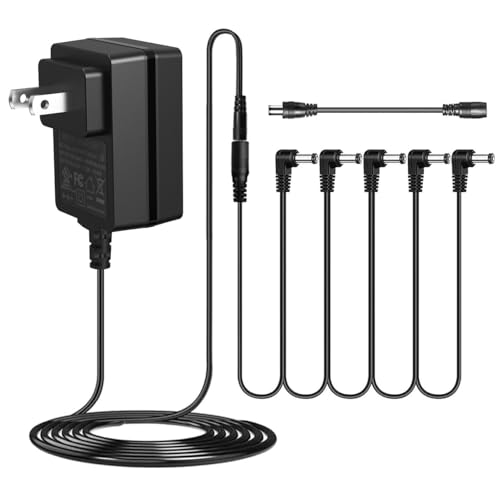
Best for medium boards needing multiple rails across 9V and a few higher-demand pedals. It delivers 9V DC at 1.2A total, with five daisy-chained cables. The kit includes a reverse polarity cable for compatibility with pedals that require it. Caution: while the main outputs are robust, some users may need more than 1.2A if several high-draw pedals run at once.
Donner DPA-1 9V DC 1A Power Supply
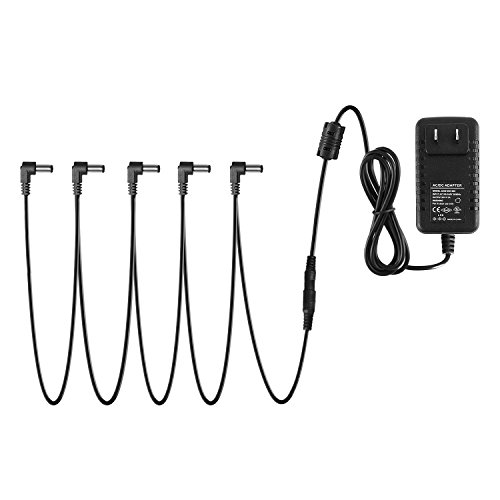
Best for musicians needing a simple, reliable single-rail power source for multiple devices. The DPA-1 supports 9V DC with up to 1A, and includes a 5-way daisy chain for powering several pedals. It emphasizes clean sound performance with copper-core cables and reduced hum. Caution: for boards with high-current pedals, verify total current requirements to avoid overloading the adapter.
Buying Guide: Key Considerations for Guitar Pedal Power
- Voltage and current needs: Check your pedals’ required voltages (9V, 12V, 18V) and total current draw. Choose a supply with headroom to avoid fluctuations.
- Isolation and noise: Isolated outputs reduce hum from shared grounds. Look for dedicated rail isolation and noise reduction features.
- Output configuration: Some boards need multiple 9V rails; others require mixed voltages. Ensure the unit supports your layout and daisy-chaining needs.
- Protection: Short-circuit and overcurrent protection protect pedals. Consider models with independent protection per output.
- Portability and build: Aluminum or solid housings improve durability. Lightweight designs help with on-the-go setups.
- Cable management: Daisy-chain cables and included adapters matter for clean pedalboards. Confirm plug sizes and polarity compatibility.
Frequently Asked Questions
- What is pedal-board isolation and why does it matter? Isolation prevents one pedal’s electrical noise from affecting others on the same supply, producing a cleaner overall signal.
- Do I need a separate power supply for 12V or 18V pedals? Yes, if you have pedals requiring voltages other than 9V, choose a supply with adjustable or dedicated 12V/18V rails.
- Can I power eight pedals from a single supply? Many multi-output supplies offer daisy-chain options; confirm total current draw and per-output limits before connecting.
- What is center-negative vs. center-positive polarity? Most guitar pedals use center-negative; verify your pedals’ polarity and match the supply’s output.
- Are isolated outputs better than non-isolated ones? Yes, isolated outputs minimize crosstalk and noise when multiple pedals share a supply.
- Should I buy a paid, high-end power supply or a budget option? For large, noise-sensitive rigs or live performances, investing in isolation and regulation is beneficial; smaller setups can often use budget models effectively.