
Best Guitar Soundhole Covers for Quiet Practice and Clear Stage Tone
Whether you’re practicing quietly at home, preparing for a live performance, or seeking to eliminate feedback, a guitar soundhole cover can make a difference. This guide highlights five top options that suit different guitar types and playing needs. Each option helps reduce feedback, protect your guitar’s finish, and maintain stage presence without altering tone excessively.
| Product | Material | Best For | Notes |
|---|---|---|---|
| Cheerock 4 Inch Black Rubber Soundhole Cover | Rubber | Stage use, all-round protection | Durable, easy to install |
| Piutouyar Guitar Sound Hole Cover (Wood) | Wood | Elegant look, subtle sound dampening | Artful design enhances aesthetics |
| Cheerock 4 Inch Brown Rubber Soundhole Cover | Rubber | Stage and practice, generic fit | Similar to black variant, different appearance |
| Acoustic Guitar Soundhole Cover – WHTCHSU | Soft rubber | Quick install, universal fit | Tool-free, reliable fit |
| Alucinico Black Feedback Suppressor | Flexible rubber with tapered contour | Custom fit, reduced feedback | Designed for easy adaptation |
Cheerock Black Rubber Soundhole Cover

Materials and design focus on durability and minimal finish impact. Best for players who perform live or rehearse in spaces where feedback control is critical. It’s easy to install by simply placing it over the sound hole and removing it when not needed, making it suitable for frequent changeovers during gigs or practice sessions.
- Best for players needing a quick, tool-free setup for stage use.
- Durable rubber surface helps maintain guitar cleanliness and finish protection.
Best for: Acoustic guitarists who want reliable feedback suppression and straightforward use. Limitations: Rubber may slightly alter sustain for some guitars, and fit depends on standard 4″ sound holes.
Piutouyar Wooden Sound Hole Cover

Crafted from wood with decorative hollow patterns, this cover blends artful aesthetics with practical sound control. It’s best for players who value on-stage appearance as well as performance, especially in visually oriented venues or recording settings where a natural wood look complements the instrument.
- Best for players seeking an elegant, wood-crafted appearance.
- Better for shows or rooms where a polished visual presentation matters.
Best for: Acoustic players who want a tasteful wood finish with sound isolation. Limitation: Wood construction may be more sensitive to finish wear or humidity changes than rubber options.
Cheerock Brown Rubber Soundhole Cover
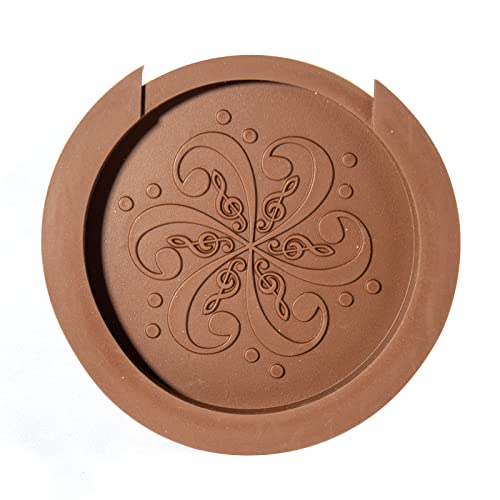
This brown rubber variant mirrors the black model’s performance with a different visual style. It’s best for players who want consistent feedback control and quick removal, particularly when switching between practice and performance scenarios.
- Best for players who prefer a contrasting finish on darker guitars.
- Better for frequent on/off use at gigs or studio sessions.
Limitation: Color choice should match guitar finish for a cohesive look; otherwise, the function remains the same as the black version.
Acoustic Guitar Soundhole Cover – WHTCHSU

Designed for fast installation with no tools required, this cover uses a soft rubber insert to secure fit without risking finish damage. It’s best for beginners or players who practice in shared spaces where quick removal is advantageous.
- Best for practice rooms and quick stage setups.
- Better for players who want tool-free adjustments.
Limitation: Some players with very tight or unusually sized sound holes may experience a looser fit; ensure standard 4″ diameter compatibility.
Alucinico Black Feedback Suppressor

Featuring a tapered contour for a custom-like fit, the Alucinico suppressor adapts quickly to most 4-inch soundholes, allowing higher volume levels with reduced feedback. It’s best for players using dynamic pickup systems or needing adaptable placement without modifications.
- Best for players needing a flexible, quick-fit solution across different guitars.
- Better for setups where feedback is hard to manage with a single fixed cover.
Limitation: The tapered contour may require careful positioning on some guitars to ensure maximum effectiveness and avoid intermittent gaps.
Buying Guide
What should you consider when choosing a guitar soundhole cover?
- Purpose: Practice quiet, stage performance, or aesthetic emphasis? Choose materials and designs accordingly (rubber for durability, wood for appearance).
- Fit: Most covers target a standard 4″ soundhole. If your guitar uses a non-standard hole, check compatibility or look for adjustable or tapered options.
- Installation: Tool-free designs offer quick switching between playing and muting. For stage use, consider covers that stay securely in place even with vigorous strumming.
- Finish and finish protection: Rubber variants are typically gentler on finishes; wood covers can add a decorative touch but may require humidity considerations.
- Pickup compatibility: Some covers interact with pickups; choose a model described as non-disruptive to pickup performance if you rely on electrics.
- Durability and care: Rubber options tend to be durable and easy to clean; wooden options may require occasional maintenance to preserve appearance.
FAQ
- Do soundhole covers affect guitar tone?
They can dampen high-end feedback and slightly alter resonance, but most models are designed to minimize tonal impact while reducing feedback. - Are these covers universal for acoustic guitars?
Many options target standard 4″ soundholes; verify diameter and fit before buying. - Can I damage my guitar finish with a cover?
Choose rubber or soft inserts to minimize scratching; ensure proper fit and remove after use to prevent wear. - Is installation difficult?
Most are tool-free and simply placed over the soundhole; some newer designs use a clip or tapered fit for secure placement. - Should I use a cover during recording sessions?
A cover can help manage feedback in loud rooms, but for studio recording you may prefer minimal interference and test both with and without. - How do I choose between rubber and wooden covers?
Rubber offers durability and practical mute function; wood adds a visual appeal but may be more sensitive to humidity and wear.