
Best Guitar Recording Equipment for Beginners: Easy, Affordable Interfaces and Bundles
Answer: For beginners, the best guitar recording setup combines a simple, plug‑and‑play audio interface with reliable compatibility and clear monitoring. The top picks here include compact interfaces, beginner bundles, and guitar‑friendly kits that make it easy to capture clean, bone‑dry guitar tones and clean vocals without a steep learning curve. These options suit new players, hobbyists, and home-recording enthusiasts who want quick results and minimal setup time. The list also highlights which setups are best for solo practice, streaming, or small‑group jam sessions.
Summary table of selected products:
| Product | Best For | Why It Stands Out |
|---|---|---|
| KYXAIN Guitar Audio Interface Pocket | On‑the‑go practice and live streaming | Compact, 24bit/48KHz, Type-C/Lightning compatibility, low latency |
| Ueteto Audio Interface For Guitar | Portable guitar recording | Plug‑and‑play, no drivers, compact, versatile compatibility |
| Sovvid Guitar Audio Interface Pocket | Home studio and streaming | Low latency, 24‑bit/48kHz, Bluetooth option for synced feeds |
| Sktome Podcast Bundle AM100‑V8 | Basic multi‑use bundle for beginners | BM‑800 mic and live streaming features, versatile for voice/guitar |
| ALSO GO Podcast Bundle BM‑800 & V8s | Beginners who want a complete starter kit | All‑in‑one kit with mic, mixer, and sound card; good for vocal practice and small recordings |
KYXAIN Guitar Audio Interface Pocket

The KYXAIN interface emphasizes ease of use and guitar‑friendly features. It offers 24bit/48KHz internal recording quality and supports Type‑C USB connections for Android devices, laptops, and other gear. The compact design makes it ideal for beginners who want to practice and record on the go. Real‑time monitoring is supported with low latency to keep performances tight. Best for players who value portability and straightforward setup.
Who it’s best for: beginners looking for a mobile, plug‑and‑play interface to capture guitar demos or practice takes without heavy software requirements.
Why selected: It provides clear, faithful sound with simple connectivity and minimal fuss, which reduces the barriers to starting a home studio. A potential limitation is lack of advanced DSP or built‑in effects, so users may rely on their DAW or external pedals for tone shaping.
Ueteto Audio Interface For Guitar

Ueteto’s guitar interface emphasizes portability and ease of use for beginners. It is marketed as plug‑and‑play with no drivers needed, and it supports both Android and iPhone/iPad configurations through USB‑C and Lightning adapters. The compact design means it’s easy to carry for practice sessions or casual recording on the go. Best for: learners who want a super simple setup and don’t want to troubleshoot driver issues.
Why selected: The focus on immediate usability makes it attractive for new players, and its portability supports spontaneous practice sessions. Limitation: it is described as a simple interface without advanced editing features, so serious multitrack projects may require additional gear or software.
Sovvid Guitar Audio Interface Pocket

Designed for real‑time performance, the Sovvid interface emphasizes ultra‑low latency (<5 ms) and high‑fidelity 24‑bit/48kHz recording. It also includes Bluetooth for direct internal capture, simplifying syncing with video content. Best for guitarists who stream or record with video and need tight timing and clear tone. Caution: Bluetooth capture can introduce slight latency or drop‑outs on busy networks; wired monitoring is often more stable for critical takes.
Brvomussy Podcast Equipment Bundle

This bundle centers on a studio setup with two broadcast mics, a mixer, and a sound card. While marketed for podcasting, it can suit beginners who want a multi‑purpose kit for guitar and voice recording, especially for solo performances or small livestreams. Best for: players who want an all‑in‑one kit with easy access to mic‑based guitar demos or vocal takes. Caution: focused on vocal workflows; guitar tone is captured via mic rather than a dedicated guitar interface, which may add room ambience to guitar recordings.
ALSO GO Podcast Bundle With BM‑800
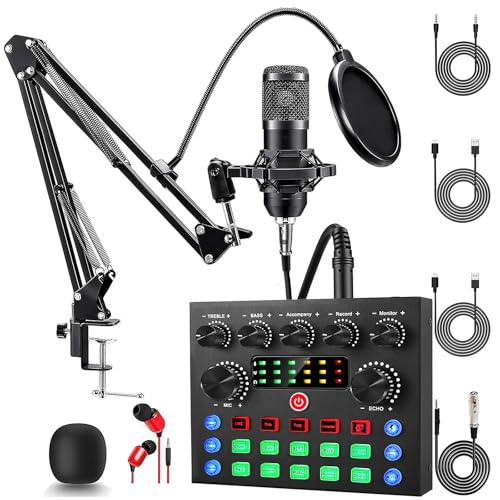
The ALSO GO guitar and vocal bundle combines a BM‑800 microphone, a mixer, and a sound card in a single package. It is well suited for beginners who want a complete, ready‑to‑use kit for guitar practice, singing, and streaming. Best for: learners who prefer a microphone‑centric setup and a compact, turnkey system. Limitation: not specifically tailored to guitar DI recording; room acoustics and mic technique will influence guitar tone unless paired with a direct guitar signal path.
Buying Guide: Key Considerations For Beginner Guitar Recording
- What type of interface do I need? For most beginners, a compact USB audio interface with a 1‑2 input design suffices for guitar and voice. Look for 24‑bit/48kHz recording capability and a direct monitor option to avoid latency during performance.
- Should I use a microphone or a guitar interface? If you want vocal or mic‑based tracks, a good mic setup is essential. If you primarily record guitar directly, prioritize interfaces with instrument inputs and DI capabilities.
- What about latency and monitoring? Low latency (below 5 ms) helps maintain timing during live playing and streaming. Choose interfaces with direct monitoring or reliable software monitoring options.
- Portability vs. studio setup: For beginners who practice away from home, compact interfaces and bundles provide flexibility. Home studios may benefit from bundles that include a mixer or pop filters for cleaner takes.
- Compatibility and future proofing: Ensure the device supports your devices (Windows, macOS, iOS, Android) and has the right cables or adapters for your gear. USB‑C is common for newer devices.
- Value of bundled kits: Starter bundles often combine mics, stands, and pop filters with the interface, offering a lower barrier to entry and fewer missing components. Evaluate if you will actually use all included items.
Frequently Asked Questions
- What is a guitar audio interface used for? It converts the guitar’s analog signal into a digital signal that your computer can record and process in a DAW.
- Do I need a microphone to record guitar? Not always. A direct guitar input via an instrument input on the interface is sufficient for many styles, but a mic can capture room tone and a more natural sound for certain tracks.
- Is Bluetooth in an audio interface useful for guitar recording? Bluetooth can help in streaming workflows, but wired connections generally offer more stable, lower latency audio for recording.
- What should I consider when choosing between beginner bundles? Look at the included mics, the type of mixer or sound card, and how the bundle aligns with your intended use (guitar demos, singing, streaming, or podcasts).
- Can I use a smartphone for guitar recording? Yes, many interfaces are compatible with smartphones via USB‑C or Lightning adapters, enabling on‑the‑go practice or quick demos.
- What’s the difference between a DI guitar interface and a mic‑based setup? DI interfaces capture a direct guitar signal with minimal coloration, ideal for electric guitar tones; mic setups capture room ambience and natural dynamics but may require more room treatment.