
Best Guitar Strings for Low Tuning: Keep Stable Tone on Drop Tunings
If you play in down-tuned styles like drop A, drop B, or C standard, you need strings that stay in tune and deliver enough tension without choking your sustain. This guide highlights five top options that excel in low tunings, explaining who each is best for, why they were selected, and any limits to watch for. The featured picks cover a range of gauges, cores, and coatings to suit different playing styles—from heavy rhythm to searing leads. A quick buying table compares core details to help you decide at a glance.
| Product | Best For | Key Benefit |
|---|---|---|
| Mammoth Slinky Nickel Wound Electric Strings, 12-62 | Low tunings with heavy rhythm | Ultra-low tuning readiness with robust tension |
| Skinny Top Heavy Bottom Slinky, 10-52 | Versatile shredding and chunky chords | Balanced top/bottom for bend-friendly feel |
| Jim Dunlop Heavy Core Korn, 10-65 | 7-string and extended range | Increased dynamic range and stability |
| D’Addario NYXL, 12-60 | Stability and mid-range punch | Stays in tune with stronger core |
| Stringjoy Signatures, 12-64 Drop Tune | Balanced tension for Drop A/B | Designed for consistent low-end response |
Ernie Ball Mammoth Slinky Nickel Wound Electric Strings 12-62
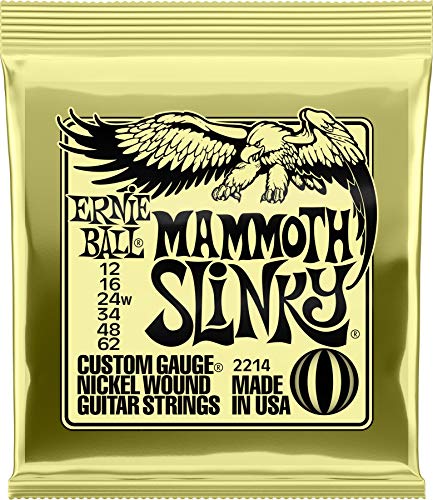
Best for ultra-low tunings, these Mammoth Slinkys are built to handle aggressive drop tunings like drop A and drop B while preserving clarity in the highs. The set uses nickel wrapping and a robust phosphor bronze? No—these are nickel wound, optimized for long life with Element Shield Packaging that helps the strings stay fresh. This makes them a strong choice for players who demand reliable intonation and crisp attack in tuned-down settings.
Who this is for: players seeking maximum stability in very low tunings without sacrificing brightness. Why selected: high tension at low tunings provides stable feel and strong note definition. Caution: heavy gauges can feel stiffer if your playing style relies on very fast, light picking.
Ernie Ball Skinny Top Heavy Bottom Slinky 10-52

Best for players who want shred-ready top strings but solid, chunky bottom strings for rhythm in lower tunings. The skinny top (E, B, G) combined with a heavier bottom (D, A, E) offers a notable blend of playability and punch, making it easier to bend on the upper strings while preserving stability on the bass strings. Selection advantage: versatile for both lead lines and heavy rhythm in Drop tunings. Caution: if you prefer uniformly balanced tension, this setup is more contrasted than a standard set.
Jim Dunlop Heavy Core Korn 10-65 (7-String)

Best for seven-string guitars and extended-range setups, these strings emphasize a broader dynamic range with strong tension, aiding tuning stability under lowered tunings. They are designed in collaboration with recognizable players to match the demands of heavier styles. Selection advantage: extended range with tuned stability for drop tunings. Caution: heavier gauges may require more finger pressure and can alter the feel on standard-scale guitars.
D’Addario NYXL Nickel Plated 12-60

Best for players seeking stronger mid-range presence and reliable tuning stability. NYXLs are designed with a premium nickel-plated wrap and a higher-core wire to resist detuning and to deliver a punchier midrange for cut-through in a mix. Selection advantage: stays in tune 131% better than standard sets and remains under the breaking point even when bent down two whole steps. Caution: uncoated strings can pick up finger oils; consider maintenance to extend life in humid environments.
Stringjoy Signatures 12-64 Drop Tune
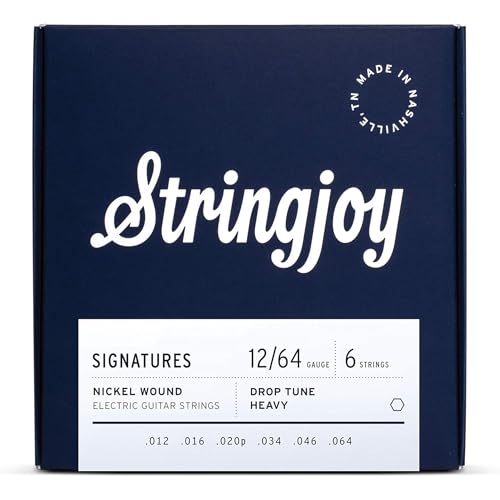
Best for Drop A and Drop B, this set is engineered to maintain consistent tension across the strings, delivering a thicker low end without losing clarity in the highs. The nickel wound construction provides warmth and midrange complexity while preserving overall bite. Selection advantage: designed specifically for lower tunings with balanced tension. Caution: heavier gauge at the low end may require a sturdier neck setup and longer break-in period for some instruments.
Buying Guide: Key Considerations For Low Tunings
Choosing strings for low tunings involves balancing tension, stability, and tone. Consider the guitar’s scale length, neck tension, and your playing style when evaluating gauges and cores.
- Gauge and tension: Heavier bottom strings help maintain tension in drop tunings, reducing flab and keeping intonation stable.
- Cores and windings: Nickel-wound vs. phosphor bronze or other coatings affect brightness, sustain, and durability. Steel cores with nickel wraps tend to offer stability in down-tuned situations.
- Coatings and life: Some options use protective packaging or coatings to prolong life at low tunings where strings may encounter more friction and wear.
- Intonation and compatibility: Not all sets suit every scale length or neck. For 7-string or extended-range guitars, look for heavier cores and appropriate gauge ranges.
- Maintenance: Wipe strings after playing to reduce oils and corrosion, especially when tuning stability is critical for performances or recording sessions.
FAQ
- What gauge is best for drop tuning on a standard 6-string?
– Generally, a heavier bottom for the low string helps maintain tension; many players favor 46-60 ranges on 6-string sets for drop tunings, but preferences vary by playing style. - Are nickel-wound strings better for low tunings than phosphor bronze?
– Nickel-wound strings are common for electric 6-string sets and typically offer greater tuning stability and brightness, which helps in low tunings; phosphor bronze is limited to acoustic guitars and behaves differently. - Do 7-string sets work well for standard 6-string guitars in drop tunings?
– Some players use heavy-core 7-string sets on 6-strings for extra tension, but may require bridge or nut adjustments and careful setup to avoid binding. - How important is a coating for low tunings?
– For players who play aggressively or sweat heavily, coatings can extend life, but coatings may slightly affect feel and brightness; choose based on playing conditions and tone preference. - Can I use standard light gauges for drop tunings?
– Lighter gauges can be unstable in lower tunings and may go out of tune more easily; heavier bottom strings usually provide better stability for tuned-down playing. - Is tension stability more important than tone for down-tuned styles?
– Both are important. Stability helps intonation and sustain, while tone defines you playing’s presence in the mix. A balanced set often works best.