Best 6-String Guitars and Strings for Every Player
Answering the question of which guitar strings and sets are best for a six‑string guitar, this guide highlights top 6‑string options across acoustic and electric styles. Each product is chosen for its unique benefits, target player, and practical considerations. Ideal for beginners seeking easy playability, players chasing brightness and sustain, and professionals needing durability. The summary table below helps compare core traits at a glance.
| Product | Type | Best For | Key Benefit |
|---|---|---|---|
| D’Addario EJ11 (6‑string acoustic set) | Acoustic Bronze | Beginners and players who want bright, projecting tone | Bright 80/20 bronze with precision wound core |
| Elixir 80/20 NANOWEB (6‑string acoustic set) | Acoustic Bronze with NANOWEB coating | Players seeking longest-lasting tone | Coated for corrosion resistance and smooth feel |
| Ernie Ball Earthwood Extra Light (10‑50 acoustic) | Acoustic Bronze | Players who want light tension and easy playing | Bright tone with low tension, easy playability |
| Belfort Premium 6‑string set | Acoustic Bronze (Phosphor Bronze, 80/20) | Comfort-driven players and varied styles | LightForce design for less finger fatigue |
| Yookat Acoustic Strings Kit | Acoustic Bronze | Beginners and practice routines | Three sets plus picks for ready-to-replace practice |
D’Addario EJ11 6‑String Acoustic Set
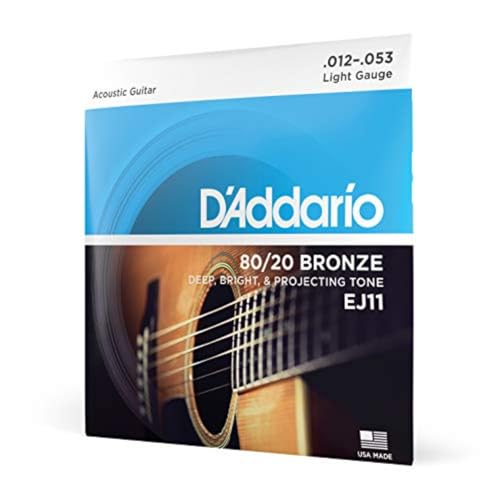
Best for players seeking a bright, projecting acoustic voice. The D’Addario EJ11 uses 80/20 bronze wrap wire precision wound over a hex high-carbon steel core, delivering a bold, bright tone with clear note definition. This set is the original acoustic string choice for many players since the 1930s and remains a staple for folk, bluegrass, and classic singer‑songwriter repertoires.
Who it’s for: beginners starting out on steel‑string acoustics, players who want crisp brightness for strummed chords and lead lines, and those who prefer traditional acoustic attack. Caution: 80/20 bronze can sound slightly brighter and less forgiving than phosphor bronze in some settings, and strings may wear a bit faster in humid environments.
Ernie Ball Regular Slinky Nickel Wound Electric Strings

Best for electric players who want a versatile, rock‑oriented set with widespread compatibility. The Regular Slinky set, gauges 10–46, has become an industry standard due to its balanced feel, smooth bendability, and dependable tone across genres. The Element Shield packaging helps maintain string freshness over time.
Who it’s for: players who play rock, blues, metal, or pop and want reliable tension and tone. Caution: Electric string performance can vary with guitar scale and pickups; ensure proper intonation when changing gauges or brands.
BELFORT Premium 6‑String Acoustic Set

Best for players who want a balance of durability, tuning stability, and comfortable play. These 80/20 phosphor bronze strings are designed in Germany with a focus on long‑lasting brightness and corrosion resistance. The kit includes four picks and an extra high E string, adding value for beginners and traveling players.
Who it’s for: beginners and seasoned players who want flexible, easy handling across various styles—from soft fingerpicking to bright strumming. Caution: Some players may prefer phosphor bronze strings for a mellower midrange; testing different coatings can help find the preferred feel and tone.
BELFORT Classical Nylon Strings (Nylon Set)

Best for players exploring nylon‑string tones, including classical repertoire and flamenco‑inspired pieces. This Belfort nylon set uses Italian nylon with Light Force Technology to maximize comfort and reduce playing fatigue, delivering a warm, articulate sound with clear trebles.
Who it’s for: classical players, beginners practicing classical pieces, and those seeking a comfortable nylon option. Caution: Nylon strings are not interchangeable with steel‑string guitars; ensure you’re using a classical guitar to avoid neck and tension incompatibilities.
Elixir Acoustic Strings 80/20 NANOWEB 6‑String Set

Best for players who want the longest lasting tone and a smooth feel. Elixir’s NANOWEB coating protects the strings from sweat and corrosion, sustaining a bright, focused tone across the life of the set. These strings are widely appreciated for on‑stage reliability and a consistently clear voice.
Who it’s for: performers and serious hobbyists who play frequently in varied environments and want less frequent string changes. Caution: Coated strings can feel slightly stiffer to touch for some players, and the price is higher than uncoated sets.
Ernie Ball Earthwood Extra Light 80/20 Bronze

Best for players seeking low tension and easier playability. The Extra Light gauge (10–50) uses 80/20 bronze wire wound around a high‑carbon steel core to deliver a bright, balanced tone with good projection and clarity, while reducing finger fatigue for beginners and players with lighter touch.
Who it’s for: players new to steel strings, players who prefer lighter feel, and those who want less finger pressure during chord changes. Caution: The lighter tension can produce slightly more fret buzz if action is not properly set up on the guitar.
Buying Guide: Practical Choices For 6-String Guitars
What should I consider when choosing 6-string strings?
Key factors include guitar type (acoustic vs. electric vs. classical), gauge (light, medium, heavy), and material (bronze, phosphor bronze, nylon, nickel). Coated vs. uncoated strings affect tone longevity and feel. Consider your playing style, environment, and whether you prioritize brightness, durability, or ease of playing.
How do I pick between acoustic bronze and phosphor bronze?
Bronze strings (80/20 or phosphor bronze) yield bright, crisp tones with strong projection. Phosphor bronze strings tend to last longer and resist corrosion while offering a slightly warmer midrange. For players who play bright folk or bluegrass, bronze is common; for general genres with long performance periods, phosphor bronze can be preferable.
Are coated strings worth it for longevity?
Coated strings, like NANOWEB Elixir, resist corrosion and stay bright longer but can feel slightly slick or stiffer to the fingers at first. They’re ideal for players who play frequently in sweaty conditions, perform regularly, or prefer longer string life with less frequent changes.
What about nylon strings for a six-string guitar?
Nylon strings are designed for classical guitars and produce a mellower, warmer tone with less tension. They are not interchangeable with steel‑string necks. If you play classical repertoire on a standard six‑string, ensure you have a classical guitar with proper neck and bridge setup.
How do I know which gauge is right for me?
Light gauges (e.g., 10–46 or 12–53 for acoustics) are easier to press and play, making them ideal for beginners and players who perform with complex chords. Medium to heavy gauges offer more volume and tone stability for aggressive playing or fingerstyle with strong attack. Your skill level and playing style should guide gauge choice.
Maintenance tips to maximize tone and life
- Wipe strings after playing to remove sweat and oils.
- Keep your guitar in a stable environment—avoid extreme humidity and temperature.
- Change strings regularly based on playing style and environmental wear.
- Wash and condition your fretboard as recommended for your guitar type.
FAQ
- What is the best string set for beginners? A light gauge set on a steel‑string acoustic or electric guitar is typically easiest to press and play.
- Do coated strings sound different from uncoated? Coated strings may feel different and last longer; tone can stay bright longer but some players notice a slightly mellower or less bright initial feel.
- Should I choose phosphor bronze or 80/20 bronze for acoustic? Phosphor bronze generally offers a warmer tone and longer life; 80/20 bronze is brighter with crisper attack.
- Are nylon strings compatible with standard six‑string guitars? No; nylon strings are for classical guitars with different neck tension and bridge design.
- How often should I change strings? It depends on playing style, climate, and instrument; many players change every 1–3 months with frequent playing.
- What gauge is best for fingerstyle on acoustic? Light gauge sets are a common choice for fingerstyle to reduce finger fatigue and ease plucking.