
Best Ham Radio Desk Microphone for Clear, Reliable Communication
Answering the search for a quality ham radio desk microphone begins with choosing models that deliver clear audio, robust reliability, and compatibility with common bases. This guide highlights five strong options, each suited to different operating styles—from compact desktop setups to base stations requiring rugged build and easy PTT control. The top picks cover both wired and wireless solutions and cater to operators who prioritize clarity, reduced background noise, or hands-free operation during long QSOs.
| Product | Best For | Why It Stands Out |
|---|---|---|
| ICOM SM-30 | Compact desks, budget-conscious operators | Low cut function, 8-pin compatibility, compact footprint |
| ICOM SM-50 | Stable, single-direction pickup | Unidirectional pattern, 70 dB SNR, amplifier-friendly |
| TWAYRDIO KMC-9C | Kenwood base setups | 8-pin base mic, larger PTT, broad Kenwood compatibility |
| AnyTone BT03 | Stable wireless operation | Wireless desk mic with PTT, designed for AT-578UV/878UV |
| MAONO PD200W | Hybrid flexibility | USB/XLR/wireless options, good SNR, versatile for many rigs |
ICOM SM-30 Compact Desktop Microphone
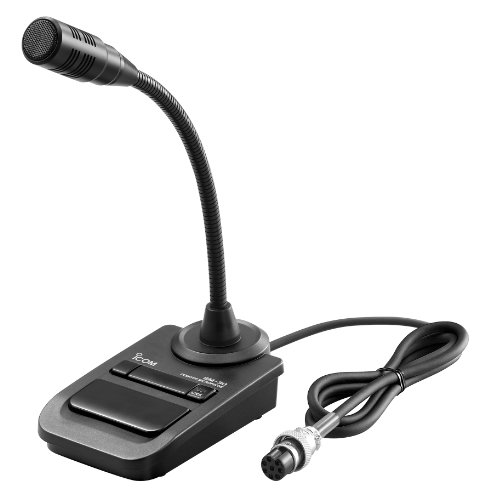
The ICOM SM-30 is a compact desktop microphone with a practical low-cut function. It uses an 8-pin round connector for compatibility with many ICOM transceivers and base stations. This mic is best for operators who need a small footprint on the desk and straightforward operation. The low-cut filter helps reduce pops and wind noise during voice operation, improving clarity in crowded bands.
Best for: Operators who want a simple, space-saving desk mic with reliable performance and easy integration into ICOM-based rigs. This is a solid choice for casual base setups or field day stations with limited desk space.
Caution: The compact design means the mic reach may be shorter than larger desk mics, which could affect users who prefer distant mic placement.
ICOM SM-50 Desk Microphone

The ICOM SM-50 offers a unidirectional pickup pattern, focusing on sound from the operator while minimizing ambient noise. With a signal-to-noise ratio around 70 dB, audio tends to stay clear even in moderately noisy environments. It is compatible with amplifiers for clean, amplified voice transmission, which can be beneficial in crowded or windy operating areas.
Best for: Operators who want consistent, directional voice pickup and straightforward compatibility with amplifiers. The SM-50 is well-suited for fixed-base stations where background noise management matters.
Caution: A unidirectional pattern may pick up less room ambiance or broad sound if you need more natural room presence in a multi-mic setup.
TWAYRDIO KMC-9C Desktop Microphone Base

The KMC-9C is designed as a desktop microphone base for Kenwood mobile radios, featuring an 8-pin mod plug base MIC and a larger Push-To-Talk button. Its footprint is suitable for fixed desks where operators need quick PTT access without reaching for the radio controls. The mic is compatible with several Kenwood base models, making it a good option for mixed-brand setups that rely on a robust PTT interface.
Best for: Kenwood-based base stations or dispatch workflows where a dedicated desktop mic with a big PTT button improves efficiency. This mic is particularly suitable for operators who value easy, hands-on control during long periods of use.
Caution: Compatibility is strongest with Kenwood models; verify your transceiver’s pin-out before purchase to avoid compatibility issues.
AnyTone BT03 Wireless Desk Microphone

The AnyTone BT03 is a wireless desktop microphone designed for AT-578UV and AT-878UV radios, using a proprietary low-latency protocol for stable operation and minimal interference. It includes a Push-To-Talk control for reliable communication, making it suitable for base stations, dispatch centers, or extended QSO sessions where mobility and cable-free setup are desired.
Best for: Operators who want wireless convenience with dependable PTT and minimal latency on AnyTone-compatible radios. This mic excels in mobile-style or cramped desk environments where a wired mic is impractical.
Caution: Not compatible with non-AnyTone models, so check radio compatibility before purchasing to avoid fit issues.
MAONO PD200W Hybrid Wireless Microphone

The MAONO PD200W blends wireless convenience with flexible connection options, offering USB, XLR, and wireless modes. It uses a dynamic capsule and cardioid pickup to deliver clear vocal reproduction with an SNR around 82 dB and handling up to 128 dB SPL, helping minimize distortion in loud environments. It can support multi-mode setups, including dual-mic tracking when paired with compatible receivers.
Best for: Podcasters, streamers, or amateur radio operators who want flexible connectivity and the option to switch between wireless and wired modes without changing mics. Choose this if you need a versatile mic for multiple rigs or recording scenarios.
Caution: Wireless performance may depend on the paired receiver and environment; ensure the wireless ecosystem aligns with your radio setup for optimal latency and range.
Buying Guide: Key Considerations for Ham Radio Desk Mics
- Voice pickup pattern: Cardioid or unidirectional mics help isolate your voice from background noise. Consider the noise level of your operating environment when choosing a pattern.
- Wired vs. wireless: Wired mics offer stable latency and power; wireless mics add flexibility but may require pairing and charging considerations.
- Connector compatibility: Ensure the mic’s connector (8-pin, XLR, USB, or proprietary) matches your transceiver or base station.
- Push-To-Talk (PTT) design: A larger, tactile PTT button improves quick access during long sessions or in emergency communications.
- Desk footprint: Compact mics save space on crowded operating desks, while larger bases may offer better ergonomic access for PTT and mic placement.
- Durability and build: Ham work can involve extended use; look for sturdy housings, metal components, and robust cables.
- Sound quality targets: A higher signal-to-noise ratio and lower distortion levels generally yield clearer voice transmission, especially on crowded bands.
FAQ for Ham Radio Desk Microphones
- What is the advantage of a unidirectional mic for ham radio?
- Is a wireless desk microphone practical for base stations?
- Can I use any desk microphone with any ham radio?
- Should I prioritize SNR or SPL handling?
- What maintenance is needed for a desk mic?
- Is a gooseneck design beneficial for ham radio?
It focuses on your voice and reduces ambient noise, which helps maintain clear transmission when there is background noise.
Yes, if you need mobility or a cable-free setup. Ensure compatibility with your radio and consider battery life and potential latency.
No. Check the mic’s connector type and compatibility with your transceiver’s mic input or base station interface.
Both matter. A high signal-to-noise ratio reduces background noise, while a high SPL rating prevents distortion at loud volumes. Balance based on your typical operating levels.
Keep connectors clean, inspect cables for wear, and store the mic in a safe, dry place when not in use. Replace any frayed cables promptly.
Gooseneck mics offer flexible positioning, which helps accommodate different operators and desk layouts, improving comfort and pickup consistency.