
Best Ham Radio Vehicle Antennas for Cars: VHF/UHF Dual-Band Picks
Finding the right mobile ham radio antenna hinges on your mounting options, operating bands, and installation ease. This guide highlights five reliable choices across magnetic base, lip/mast mounts, and dual-band designs. Each pick suits different drivers—from daily commuters needing steady local chatter to off-road enthusiasts seeking longer-range communication. The selections emphasize versatility, ease of install, and compatibility with common handheld and mobile radios.
Summary of top picks at a glance:
- Nagoya UT-72 (BTECH): Superior UHF gain and weatherproof magnetic base — best for frequent UHF use and vehicle installs.
- Eightwood Dual Band: Low-profile, dual-band coverage — best for discreet installs in tight spaces.
- Anina Dual Band Lip Mount (with NMO compatibility): Flexible mounting on trunk/hatch — best for no-drill installations.
- BINGFU Vehicle Ham Mobile Antenna VHF UHF (lip mount): Simple 5 m coax and strong mounting — best for versatile on-vehicle use.
- Comet SBB‑1 Dual‑Band: Flexible, rugged design — best for general mobile VHF/UHF use with durable whip.
Nagoya UT-72 Super Loading Coil Dual-Band Antenna

The UT-72 is a heavy-duty magnetic-mount antenna kit designed for VHF/UHF operation. It includes a robust magnetic base, an SMA adapter, and a durable cable, enabling quick, tool-free setup on a vehicle. Best for operators who frequently switch between handheld and mobile radios and want a weatherproof, all-in-one solution. The enhanced UHF reception is driven by a high-performance loading coil, extending range in the UHF spectrum. Users should consider weight and magnetic surface suitability on certain vehicle finishes as a potential limitation.
Best for: Frequent UHF users needing a solid, weatherproof mobile solution.
Limitations: Magnetic mounting may be less secure on non-metal surfaces or certain vehicle finishes without a proper mounting base.
Eightwood Dual Band VHF UHF Ham Mobile Antenna

This low-profile dual-band antenna covers VHF 136-174 MHz and UHF 400-470 MHz with a PL259 connector and a 5 m RG58 cable. Its mount is designed for magnetic bases with a SO239 female bulkhead, making it a flexible option for vehicles where a discreet, unobtrusive antenna is preferred. Best for drivers who value a compact profile without sacrificing dual-band performance. Limitation: performance may vary with vehicle bodywork and mounting surface conditions.
Best for: Discreet, dual-band operation on a magnetic base.
Anina Dual Band Lip Mount Vehicle Antenna
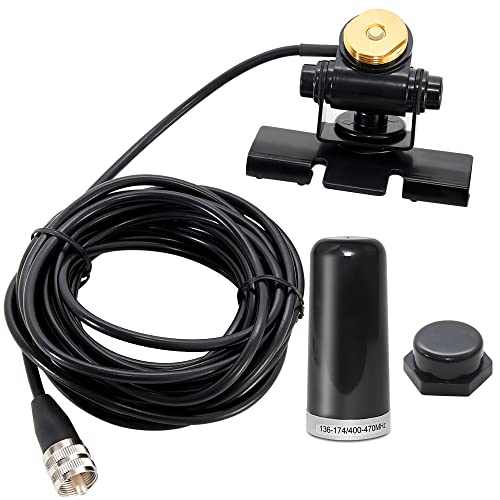
This model uses an NMO lip-mount design suitable for trunk, lip, or hatchback mounting with a flexible 360-degree base. It supports VHF 136-174 MHz and UHF 400-470 MHz with a 2.5 dBi gain, designed for compatibility with a wide range of radios including BaoFeng, Icom, Yaesu, and more. Best for drivers who want a no-drill installation with adjustable mounting flexibility. Caution: ensure the lip-mount bracket fits your specific vehicle type before purchase.
Best for: No-drill installations with flexible mounting on car lips or hatches.
Bingfu Vehicle Ham Mobile Radio Antenna (VHF/UHF)
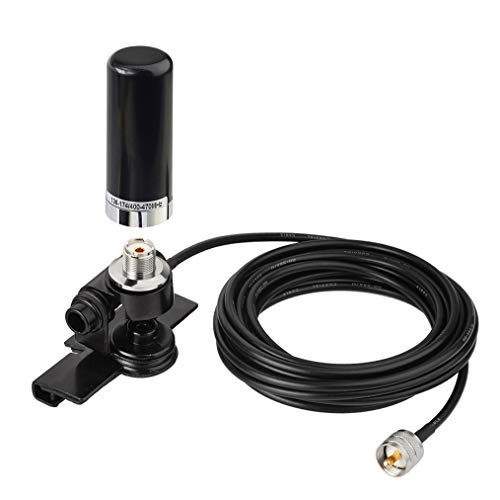
This Bingfu model offers dual-band VHF 136-174 MHz and UHF 400-470 MHz coverage with a lip-mount mounting option. It uses a UHF PL259 Male connector and a 5 m RG58 coaxial cable, enabling flexible routing around a vehicle. Best for drivers seeking a straightforward dual-band solution with a reliable 5-meter feed line. Limitation: performance can depend on mounting surface and alignment with the vehicle’s body.
Best for: Everyday dual-band use with easy lip-mount installation.
Comet SBB‑1 Dual‑Band Mobile Antenna

The Comet SBB‑1 provides dual-band VHF/UHF coverage with a flexible rubber whip and a PL‑259 connector for quick installs on cars, trucks, vans, and other vehicles. The rubberized whip resists bending while maintaining signal integrity in everyday driving environments. Best for drivers who want a durable, flexible antenna with easy compatibility. Caution: longer vehicles or heavy-duty use may require careful routing to avoid whip interference.
Best for: Rugged, all-around mobile VHF/UHF use with a flexible whip.
Buying Guide
- Band Coverage: Choose antennas that cover your active bands (VHF 136-174 MHz and UHF 400-470 MHz). Dual-band models simplify mounting and ensure compatibility with most handhelds and mobiles.
- Mount Type: Magnetic bases offer quick installs but require a clean metal surface. Lip/NMO mounts provide no-drill options and flexible placement but verify compatibility with your vehicle’s roof, lip, or hatch.
- Connector and Cable: Most options use UHF PL259 connectors with RG58 coax. Check that your radio’s connector and the mounting base match to avoid adapters that can degrade performance.
- Antenna Length and Gain: Longer whips can improve range but may encounter clearance issues. Higher gain helps with weak signals but can reduce broad-area coverage in some installations.
- Durability and Weatherproofing: Weatherproof and rugged designs benefit vehicles exposed to the elements. Magnetic bases with a solid metal surface are crucial for stable performance on vehicles used in varying conditions.
- Installation Considerations: No-drill options are preferred in rental or temporary setups. Ensure the chosen mount does not interfere with vehicle operations, sensors, or doors when opening and closing.
FAQ
- What is the difference between VHF and UHF antennas? VHF covers lower frequencies (136–174 MHz) ideal for local communication; UHF covers higher frequencies (400–470 MHz) useful in urban environments with buildings and obstacles.
- Do magnetic-mount antennas damage vehicle paint? A strong magnet can leave marks if moisture or debris is present. Use a protective pad or ensure clean, dry surfaces during installation.
- Is a longer antenna always better? Not always. Longer antennas can improve range but may cause clearance issues and wind noise at high speeds; balance length with mounting space and vehicle type.
- Can I install a dual-band antenna on any car? Most dual-band antennas are designed for common vehicle mounts, but confirm mounting compatibility (lip, trunk, hatch, or roof) and fitment with your vehicle model.
- Will I need an antenna tuner? Many mobile radios work well with dual-band antennas without a tuner, but some setups may benefit from tuning for optimal performance on a specific band.
- Which antenna is best for beginners? A no-drill lip-mount option or a magnet-based kit with straightforward installation is typically best for beginners seeking reliability and easy setup.