
Best Hard Clipping Overdrive Pedals for Guitar Tone Control
Hard clipping overdrive pedals deliver tight, aggressive saturation with punchy attack. This guide focuses on five reliable options that suit players seeking crisp, amp-like crunch or direct hard-edged distortion. The selections emphasize durability, tonal versatility, and clear signal paths ideal for modern rock, blues-rock, and live performances. Each entry includes who it’s best for and a practical note on its limitations to help you choose confidently.
| Product | Best For | Key Benefit |
|---|---|---|
| BOSS SD-1 | Classic overdrive lovers; versatile tones | Timeless, musical overdrive |
| JOYO King of Kings | Dual-channel versatility; stacked tones | Independent channels with multiple clipping options |
| Walrus Iron Horse V3 | Heavy, riff-driven distortion | Thick, punchy distortion |
| Keeley Blues Disorder | Hybrid drive tones and tone-shaping | Two analog circuits; flexible clipping |
| JOYO JF-01 Vintage | Smooth, classic overdrive | RC4558-based vintage voice |
BOSS SD-1 SUPER Overdrive Pedal

The BOSS SD-1 is a legendary hard-dating overdrive that defines classic “amp-like” crunch. It’s a proven workhorse since 1981, delivering rich, musical tones with a simple three-control layout. This pedal suits players who want reliable, consistent grit for blues-rock, classic rock, and funk-inspired edge without digital artifacts. Best for players who value predictability and a familiar touch-sensitive response. Caution: it’s a straightforward overdrive, so extremely high-gain, modern metal tones may require additional gain-stacking with other pedals or amps.
JOYO Dual-Channel Overdrive Pedal (King of Kings)

The JOYO King of Kings provides two independent overdrive channels in one unit, with per-channel Volume, Gain, and Tone controls. It’s ideal for players who crave tonal flexibility, allowing a warm rhythm tone on Channel A and a clean boost for solos on Channel B, or stacked A→B saturation for soaring leads. Each channel offers four clipping voicings (hard, soft, both, or off) to dial the edge exactly where you want it. Best for players who perform diverse sets and want quick tonal shifts on stage. Limitation: with multiple modes, dialing in the exact amp-match may take more time than single-voicing pedals.
Walrus Audio Iron Horse V3 LM308 Distortion

The Iron Horse Distortion from Walrus Audio is a thick, punchy distortion inspired by classic circuits. It emphasizes a heavy, riff-ready tone with strong midrange and a solid low end. This pedal is best for players who want a rowdy, aggressive edge for rock riffs or driving leads. It features top-mounted jacks for convenient pedalboard setup and true-bypass switching for minimal tone coloration when off. Caution: some players may find the busier midrange less suitable for jangly single-coil gear when seeking ultra-clean blues tones.
Keeley Blues Disorder Overdrive and Distortion

The Blues Disorder combines two analog drive circuits in one pedal, offering both hard clipping distortion and soft clipping overdrive. It enables hybrid tones by swapping Drive and Tone circuits, delivering flexibility for blues to hard rock. The pedal can switch between true bypass and buffered bypass to preserve tone when off. Best for players who want a broad tonal palette in a single pedal and the option to contrast clipping styles. Limitation: some users may prefer more drastic gain separation between channels for complex live rigs.
JOYO Vintage Overdrive Guitar Pedal
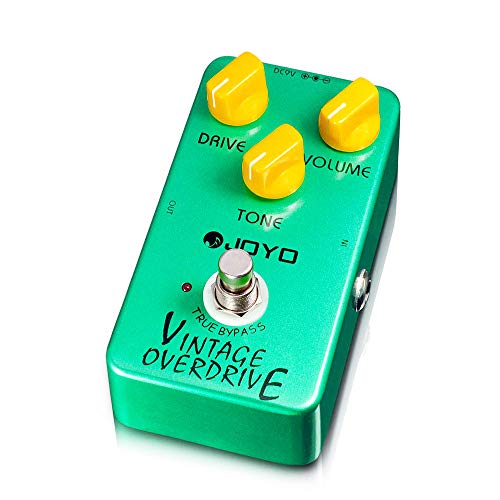
The JOYO Vintage Overdrive uses an RC4558 op-amp for a smooth, classic overdrive voice with vintage warmth and harmonic richness. It offers a wide gain range, from clean boost to singing crunch, and adapts well to both humbuckers and single-coils. True bypass ensures a clean signal when disengaged. Best for players seeking a versatile, affordable vintage-style overdrive. Caution: the vintage voice may be too restrained for players aiming for modern, high-gain tones.
Buying Guide
What should you consider when choosing a hard clipping overdrive pedal?
- Tone character: Do you want tight, modern crunch or warm, vintage edge? Consider how each circuit shapes mids and attack.
- Gain range and headroom: Some pedals offer more saturation at higher gains; others stay musical at low gain for clean boosts.
- Channel design: Dual-channel pedals allow stacking and switching between textures during performances.
- Clipping style: Hard clipping yields aggressive edge; soft clipping delivers smoother, tube-like saturation. Some pedals offer both.
- Bypass type: True bypass minimizes tone loss; buffered bypass can help preserve tone with long chains.
- Pedalboard integration: Top-mounted jacks, compact form, and reliable power options matter for live setups.
Practical Comparisons
Choose this if you want: the most iconic hard clipping tone with predictable behavior (BOSS SD-1). Two independent channels with flexible clipping options (JOYO King of Kings). A strong, riff-friendly distortion with robust build (Walrus Iron Horse). Classic two-analog-drive flexibility (Keeley Blues Disorder). A vintage-voiced,RC4558-based overdrive for a smooth, bluesy edge (JOYO Vintage).
FAQ
- What is hard clipping in guitar pedals? Hard clipping refers to diodes that sharply limit waveform peaks, producing a crisp, aggressive distortion.
- Can I use these pedals with both single-coil and humbucker guitars? Yes, most listed pedals are designed to respond well to both pickup types, with tone controls to compensate.
- Do hard clipping pedals work well with tube amplifiers? Yes, many players prefer pushing the front end of tube amps for natural compression and sustain.
- Is a dual-channel pedal more versatile than a single-channel one? Typically yes, it enables stacking, switching, and on-the-fly tone changes during gigs.
- Should I prefer true bypass pedals for long signal chains? True bypass minimizes tone loss when the pedal is off, which helps preserve your core signal.
- Is there a risk of noise with hard clipping pedals? Some models can introduce extra hiss at high gain; using good cables and proper gain staging helps mitigate this.