
Best Headphone Amp With Speaker Output for Quiet Practice and Shared Listening
If you need a headphone amplifier that can also feed a speaker or line-out for others, these picks fit the bill. The top options below are best for musicians practicing late at night, home studios needing multiple headphone outputs, or small setups where quiet listening matters but sharing sound is still possible. Each product highlights who it’s best for and why it stands out, plus a practical caveat to consider before buying.
| Product | Key Benefit | Ideal For |
|---|---|---|
| LEKATO Guitar Headphone Amp | Built-in Bluetooth, multiple guitar-focused effects | Guitarists seeking silent practice with effects on the go |
| Fosi Audio Q4 DAC Headphone Amp | USB/Optical/Coax inputs, drive to powered speakers | Desktop setups needing integrated DAC and speaker-output |
| FIFINE N6 4 Channels | 4 independent outputs with individual volume controls | Small groups monitoring a shared mix |
| Nobsound P32 Tube Headphone Amplifier | Swappable tube and high power for demanding headphones | Hi-fi enthusiasts seeking warm tube character |
| Mackie HM-4 Headphone Amplifier | Four independent outputs from a single source | Music production or rehearsal with multiple listeners |
Note: This guide emphasizes clear, sourceable differences, so you can pick the model that best fits your environment and listening needs. All products listed are intended for headphone amplification with some form of speaker or line-out capability, aiding both solo practice and multi-user listening without sacrificing sound quality.
LEKATO Guitar Headphone Amp For Silent Practice
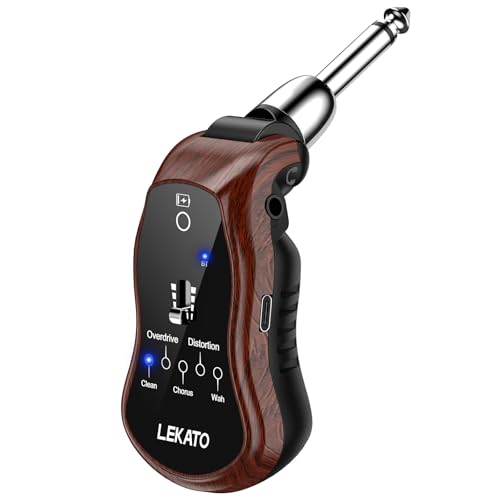
Best for guitarists who want silent practice with built-in effects. The LEKATO unit includes classic effects such as Clean, Overdrive, Chorus, Distortion, and Wah, plus a VOL control to adjust headphone output volume. It supports Bluetooth reception (connect to a phone or device) for playing along with background tracks. Not suitable for Bluetooth headphones or speakers, as it connects via standard outputs for speakers or headphones. The compact design makes it ideal for late-night practice without disturbing others. Choose this if you want a pocket amp with multiple guitar effects in one device.
10W Mini Guitar Amp By flatsons

Best for home practice and portable jam sessions. This pocket amp uses pure analog technology with a 100Hz-20kHz frequency response and 10W output, offering two tone modes (CLEAN/DRIVE) for flexible sounds. It includes a 3.5mm headphone jack and an AUX input to play along with external audio. It’s best for players who want simple, reliable amplification with quiet practice capability and a straightforward control layout. A potential limitation is that Bluetooth connectivity is not included, so wireless streaming requires separate devices.
Fosi Audio Q4 DAC Headphone Amp

Best for desktop setups needing both DAC and headphone amplification with speaker-ready outputs. The Q4 offers USB, Optical, and Coaxial inputs plus RCA and 3.5mm outputs. It drives headphones from 16Ω to 200Ω and can connect to powered speakers or an amplifier. Bass and Treble controls let you fine-tune the sound. Consider this if you want a compact, driver-free solution that improves overall audio quality while feeding a speaker system. A note: some users may prefer more advanced tone shaping for critical listening.
FIFINE N6 4 Channels Headphone Amplifier
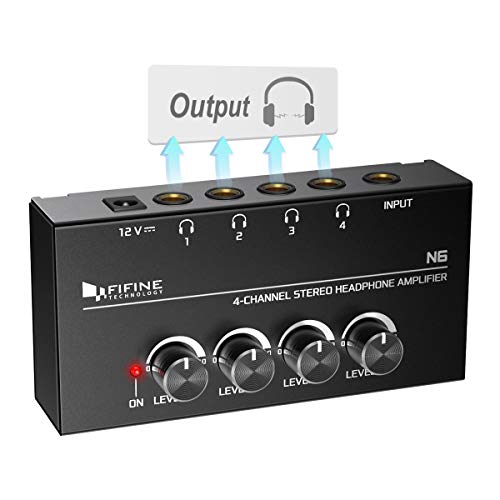
Best for small groups needing independent headphone monitoring. The FIFINE N6 provides four outputs with separate volume controls, suitable for studios or gatherings. It is compact, rugged, and designed to minimize signal loss when multiple listeners are connected. The caveat: while compact, it may be less ideal for ultra-high-end stereo monitoring and relies on the source’s own channel separation for clarity. Choose this when you want consistent, parallel headphone listening for several people.
Nobsound P32 Tube Headphone Amplifier
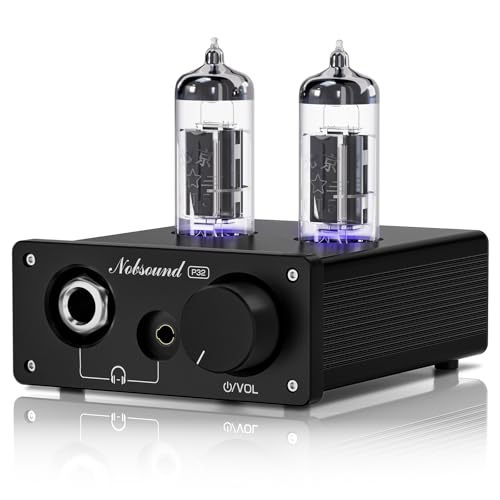
Best for enthusiasts seeking warm tube character and high-power headphone drive. The P32 provides 1000mW output and a versatile tube preamp path, which can enhance the perception of detail in darker mixes. It can also serve as a preamp for powered speakers. Best used with high-impedance headphones for the fullest effect. A limitation is the need to manage tube warmth and occasional tube-swap considerations for maintenance and consistency.
Mackie HM-4 Headphone Amplifier (4-Channel)

Best for studio and rehearsal rooms needing multiple independent headphone mixes. The Mackie HM-4 provides four outputs with own volume control, enabling each listener to set their own level from a single source. It’s a straightforward, reliable option for groups, bands, or classrooms. A potential drawback is that it relies on the main source for sound quality; ensure your input delivers the desired tone to all headphone outputs.
Buying Guide
What to consider when choosing a headphone amp with speaker output:
- Number of outputs: How many listeners need independent control? More channels mean better shared listening.
- Output type: Do you need headphone-only monitoring, or should the device feed speakers or a powered mixer?
- Source compatibility: Look for USB, optical, or coax inputs if you plan to connect a computer or media player.
- Tone shaping: Are bass/treble controls important, or do you prefer a clean, flat response?
- Portability: For practice on the go, consider compact units with battery operation or USB power.
- Tube vs solid-state: Tube units offer warm, rich character but require more maintenance; solid-state tends to be reliable and low-maintenance.
FAQ
- What is a headphone amplifier with speaker output best used for?
It’s ideal for private practice, home studios, and small groups where multiple listeners need to hear the same source with adjustable levels. - Do all these units work with both guitars and general audio sources?
Most listed models support general audio input and headphone output; guitar-focused units provide instrument input and often onboard effects. - Can I connect these to powered speakers?
Yes, multiple models include line-out or speaker-ready outputs suitable for powered speakers or amplifiers. - Is a tube headphone amp necessary for best sound?
Tube amps add a warm character and richness; however, they require more care and may not suit every listening preference. - Will the four-channel amps eliminate crosstalk between listeners?
Four-channel designs aim to minimize crosstalk, giving independent volume control per listener, but the source quality remains a key factor. - Which setup is best for a small band practice room?
A four-output model with independent controls (like Mackie HM-4) combined with a reliable DAC/preamp is a balanced choice.