
Quick Overview: This guide compares common ways to connect a 3.5mm headphone jack to speakers or audio equipment with larger jacks or bare-wire inputs. Below is a summary table of the selected products to help you choose the right adapter or cable for connecting phones, computers, amps, speakers, and DIY speaker projects.
| Product | Type | Best For |
|---|---|---|
| QianLink 1/4 Male To 3.5mm Female Adapter | 1/4″ Adapter | Connecting 3.5mm headphones to 6.35mm jacks (amps, keyboards) |
| JSAUX RCA To 3.5mm Cable | 3.5mm To RCA | Hooking phones/MP3 players to receivers or powered speakers |
| Syncwire 3.5mm Nylon Braided Aux Cable | Aux Male-Male Cable | Direct 3.5mm-to-3.5mm connections (car, portable speaker) |
| Poyiccot 3.5mm To Screw Terminal Adapter | TRRS To Terminal Block | Attaching bare speaker wires to a 3.5mm jack (DIY installs) |
| Accessonico 3.5mm To Speaker Wire TRRS Cable | 3.5mm To Bare Wire | Replacement/repair cable for headsets or speaker connections |
QianLink 6.35mm 1/4 Male To 3.5mm 1/8 Female Adapter

Type: 6.35mm (1/4″) Male To 3.5mm (1/8″) Female Adapter. Compatibility: Lets 3.5mm plugs fit into 6.35mm jacks such as guitar amps, keyboards, mixers, and some powered speakers. Build: Gold-plated connectors and solid brass copper body for corrosion resistance and low signal loss. Use Case: Ideal when you have headphones or a phone with a 3.5mm plug and need to connect to professional audio gear with a 1/4″ socket. Notes: Passive adapter—no amplification or impedance conversion. Works best for line-level signals and headphone outputs within typical impedance ranges.
JSAUX RCA To 3.5mm Cable 6.6ft

Type: 3.5mm Male To Dual RCA Male (Y Cord). Compatibility: Connects phones, tablets, or laptops to stereo receivers, powered speakers, and TVs with RCA inputs. Build: Gold-plated connectors, oxygen-free copper core and dual shielding for reduced interference. Use Case: Best when you need left/right channel RCA inputs from a single 3.5mm source. Notes: RCA connectors are color-marked (red/white) to ensure correct stereo hookup. Cable is bi-directional for sending audio either way between 3.5mm and RCA-equipped gear.
Syncwire 3.5mm Nylon Braided Aux Cable (3.3ft)
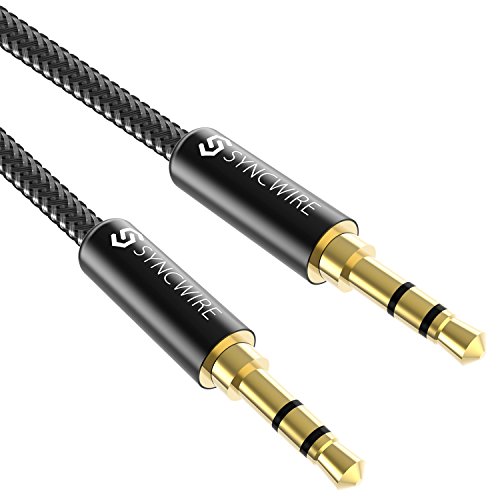
Type: 3.5mm Male-To-Male Aux Cable. Compatibility: Any device with a 3.5mm aux port: phones, car stereos, portable speakers, headphones, tablets. Build: Nylon braided jacket, 24K gold-plated connectors, and high bend lifespan for durability and tangle resistance. Use Case: Directly connect a phone or MP3 player to a speaker or car aux input without adapters. Notes: No signal conversion—works with standard TRS stereo connections. Check case compatibility for phone-jack models with protective cases.
Poyiccot 3.5mm TRRS Male To 4-Pin Screw Terminal Block

Type: 3.5mm TRRS Male To AV 4-Pin Screw Terminal Block. Compatibility: Useful for connecting bare speaker wires or custom wiring to a 3.5mm TRRS jack. Build: Four conductors (three signals + ground) and screw terminals to secure bare wires. Use Case: Handy for DIY speaker installs, connecting open-ended wires from wall plates or projects to devices with a 4-pole 3.5mm input. Notes: Confirm whether your device uses TRRS pinout expectations—this cable has four conductors and differs from standard stereo TRS jacks.
Accessonico 6.6ft Aux To Speaker Wire TRRS Cable

Type: 3.5mm TRRS Male To Bare Open-End Wires. Compatibility: Repair cable or adapter for headsets, microphones, or speaker wiring projects requiring separate conductor access. Build: 6.6ft length with color-coded wires: red (left), white (right), green (mic), black (ground). Use Case: Use when repairing a broken 3.5mm cable or wiring a custom harness to a 3.5mm plug. Notes: Ensure you match the device pinout and insulation requirements before wiring; this is a passive cable without signal processing.
Buying Guide: Choosing The Right Headphone Jack To Speaker Adapter
Identify Your Ports: Determine the connector types on both devices. Common source jacks are 3.5mm TRS/TRRS; destinations can be 3.5mm, 6.35mm (1/4″), RCA, USB, or bare speaker terminals. Match cable or adapter type accordingly.
Signal Type And Direction: Confirm whether you need line-level, headphone-level, or speaker-level connection. Passive adapters merely change plug size; they do not convert speaker-level amplified outputs to line-level inputs or vice versa.
TRS vs TRRS: TRS (3-conductor) supports left/right stereo and ground. TRRS (4-conductor) adds mic or additional channel. Use TRRS cables only if your device expects 4 poles; mixing TRS/TRRS may result in missing channels or mic interference.
Shielding And Conductor Quality: For the best noise rejection, choose cables with dual shielding and oxygen-free copper cores. Gold-plated connectors help resist corrosion and reduce contact noise.
Length And Durability: Longer cables can pick up more interference—choose an appropriate length. Nylon braided jackets and reinforced connectors increase lifespan for frequent plugging and outdoor or mobile use.
RCA And Stereo Receivers: When connecting modern phones to older receivers, a 3.5mm-to-RCA cable preserves stereo channels and is bi-directional. Color-coded RCA plugs simplify left/right hookup.
Bare Wire And Terminal Blocks: For DIY speaker hookups, use screw terminal adapters or bare-wire-to-plug cables to avoid soldering. Confirm polarity and conductor assignments before powering speakers.
USB-To-Aux Alternatives: If a device lacks a functioning 3.5mm jack, consider a USB-to-3.5mm adapter with an integrated DAC. Note USB adapters vary: some support TRRS mic functions while others are output-only; check compatibility.
Impedance And Volume Considerations: Headphone outputs typically have higher output impedance and level than line outputs. Using headphone output into line inputs is generally safe but may require lowering volume. Avoid connecting amplified speaker outputs into inputs—this can damage equipment.
Compatibility Checks: Verify device-specific quirks (phone cases, atypical TRRS wiring standards, or manufacturer limitations). Read product specs for one-way or bi-directional signaling, especially for RCA and USB adapters.
Multiple Comparison Perspectives:
- For Studio/Pro Gear: Use a 3.5mm-to-1/4″ adapter with gold plating to ensure reliable contact with amps and mixers.
- For Home AV: Choose a 3.5mm-to-RCA cable for seamless connection to receivers and powered speakers.
- For In-Car Or Portable Use: A short, durable 3.5mm-to-3.5mm braided aux cable provides convenience and longevity.
- For DIY Speaker Wiring: Select screw terminal or bare-wire conversion cables that expose conductors clearly and label channels.
- For Devices Missing A Jack: Consider a USB-to-3.5mm adapter with the correct DAC and TRRS support for your platform.