Best Headphones for Hearing Impaired With Microphone for Clear Communication
These headphones are designed to help people with hearing challenges communicate more clearly. The top picks below balance amplified or clearer sound with reliable microphone performance, making them suitable for calls, classes, work, and everyday conversations. Best fits include seniors seeking easier listening, professionals needing reliable voice pickup, and students who require steady amplification. The following table summarizes key features for quick comparison.
| Product | Best For | Key Benefit | Limit |
|---|---|---|---|
| EKSA H8 USB Headset | Office workers, call centers | Clear HD sound with ENC mic | 3.5mm lacks mic noise cancel |
| IROGER Hearing Amplifier | Seniors, daily wear | Auto gain with long battery life | Not a full headset for calls |
| EKSA E900 Headset | gamers and remote work | Detachable noise-canceling mic | Wired only for mic control |
| Ansee Wireless TV Headphones | TV watchers, seniors | 100 ft wireless range, clear sound | RF transmitter required |
| CXK Open Ear Headphones | Office calls on the move | Open-ear design with AI mic | Open ear may leak sound to others |
EKSA H8 USB Headset With Microphone

Best for professional calls and daily desk work. Features a 40mm driver for clear audio, and an ENC microphone to reduce low-frequency background noise like typing. The 270° adjustable boom mic provides precise voice pickup. Note that noise reduction applies to the microphone, not incoming audio, and the 3.5mm connection does not support microphone noise cancellation. Compatible with Skype, Zoom, Teams, and similar apps. Compatible connection options include 3.5mm jack, USB-C, or USB-A.
- Pros: Clear conversation audio, flexible connections, comfortable over-ear design.
- Cons: Microphone noise cancellation does not apply to all inputs; 3.5mm mic control not supported.
Best for: Office workers, call-center teams, and students who need reliable voice pickup during calls. Why selected: Balances price, compatibility, and a dedicated mic with adjustable pickup.
IROGER Hearing Amplifier Rechargeable Device
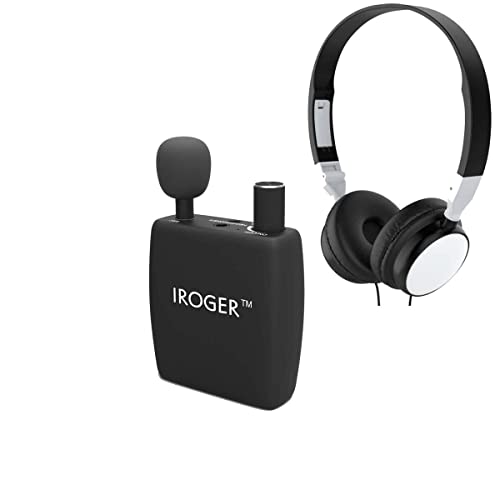
Best for seniors needing adjustable amplification in daily listening. It features Auto Gain Control for real-time amplification adjustments, with up to 65dB peak gain for strong, clear sound. A simple one-knob control makes volume adjustments straightforward. Fast charging plus long battery life—up to 120 hours—supports extended wear. This device is designed to improve overall hearing but is not a conventional headset for long conversations without a separate microphone accessory.
- Pros: Easy control, strong amplification, long battery life.
- Cons: Not a full headset; best used with compatible accessories for calls.
Best for: Seniors and adults who need straightforward, reliable amplification in everyday activities. Why selected: Simple operation and long-lasting power meet daily listening needs.
EKSA E900 Headset for PC and Consoles

Best for gaming and work that requires a reliable mic. The detachable noise-canceling microphone minimizes background noise for clear voice transmission. It includes a 50mm driver for immersive audio with a wide dynamic range. Comfort is enhanced by a sturdy, adjustable headband and soft memory foam cushions. A caution: mic controls are more focused on mute and volume, and wired connectivity means you should be near a device with a compatible port.
- Pros: Detachable mic, strong audio range, comfortable fit.
- Cons: Wired design may limit mobility; mic controls are basic.
Best for: Gamers and remote workers who need crisp voice chat and robust audio. Why selected: Combines strong microphone performance with comfort and durability.
Ansee Wireless TV Headphones for Seniors

Best for watching TV with hearing impairment while avoiding audio delay. It uses a 2.4GHz RF transmitter for stable wireless reception up to about 100 feet and provides adjustable listening comfort with 40mm drivers for clear sound. It can be used wirelessly with the TV or wired via 3.5mm. A key caveat is the RF transmitter requirement, which may add setup steps compared to Bluetooth options.
- Pros: Long wireless range, clear TV audio, adjustable comfort.
- Cons: Requires RF transmitter; may be bulkier than standard headphones.
Best for: TV watchers and households with hearing challenges who want freedom of movement. Why selected: Strong legibility of dialogue with minimal lip-sync issues in TV use.
CXK Open Ear Headphones With Mic

Best for hands-free calls and active environments. The AI noise-canceling microphone reduces ambient noise while keeping you audible during calls. The open-ear design improves awareness of surroundings, which can be safer in busy settings. The one-touch mute function provides quick privacy when needed. The trade-off: the open-ear design may allow others to hear some audio, depending on volume and environment.
- Pros: Clear mic, safe open-ear awareness, convenient mute.
- Cons: Open-ear design may let others hear audio at higher volumes.
Best for: Office calls, commuting, and working outdoors where situational awareness matters. Why selected: Combines practical mic performance with a comfortable, open-ear design.
Buying Guide
What should I look for in headphones for hearing impairment with a microphone?
Key factors include microphone quality, amplification (if applicable), comfort for long wear, and compatibility with devices. Consider whether you need open-ear versus closed-back design, wireless range, and latency. For home use, prioritize a reliable RF or Bluetooth connection and easy control access for volume and mute.
Should I choose amplified hearing devices or standard headsets?
Amplified devices (like the IROGER) help with steady sound levels for daily conversations, while standard headsets with a good microphone (like EKSA H8 or E900) provide clearer voice pickup for calls. If you primarily watch TV or need to move around the house, wireless TV headphones (Ansee) offer freedom with minimal lip-sync concerns.
What about open-ear designs?
Open-ear models (CXK) improve situational awareness and comfort but may leak sound in noisy environments. They are suitable when safety or social awareness is a priority. If you need maximal sound isolation for calls, closed-back models may work better.
How important is microphone noise cancellation?
Microphone noise cancellation improves voice clarity in noisy environments. Models with ENC or directional mics capture speech more clearly, reducing background sounds like typing or fans. If your environment is quiet, this feature is less critical.
Connectivity considerations
Wired options provide consistent latency and no battery dependence but limit mobility. Wireless options offer range and freedom but may introduce latency or interference. Check compatibility with your devices (USB-C, USB-A, 3.5mm) and software platforms (Zoom, Teams, Skype).
Durability and comfort
Look for memory foam cushions, adjustable headbands, and sturdy materials for long sessions. Ergonomic design reduces fatigue during extended calls or gaming.
FAQ
- Which headset is best for hearing impairment with a microphone? The choice depends on your use case. For daily calls, headsets with ENC microphones like EKSA H8 are effective. For seniors needing amplification, consider the IROGER device for straightforward volume control.
- Do open-ear headphones work well for calls? Open-ear designs (like CXK) offer comfort and safer surroundings awareness, but they may pick up more ambient noise and leak sound at higher volumes.
- Is wireless better than wired for hearing-impaired users? Wireless provides freedom to move and reduces cord clutter; wired always offers lower latency and fewer connection issues, which can be important during important calls.
- Can these devices work with standard video conferencing apps? Yes. Most listed products support common platforms such as Zoom, Teams, and Skype when paired with appropriate connectors (USB-C/USB-A or 3.5mm).
- What is a safe listening level? Keep volume at a comfortable level to avoid ear fatigue. For amplification devices, use the minimum setting that makes speech clear and comfortable.
- Do I need a special transmitter for wireless TV headphones? Yes. TV headphones like Ansee commonly use a 2.4GHz RF transmitter to connect to the TV, which may require setup but minimizes lip-sync issues and range limits.