
Best Headphones for Live Performance and On‑Stage Monitoring
When choosing headphones for live performance, you want reliable monitoring, low latency, and clear, accurate sound. This guide highlights top IEM and headphone options ideal for musicians, sound engineers, and performers. Each pick is evaluated for on‑stage use, ease of pairing, isolation, and comfort during long sets. The selections below cover wireless in‑ear monitors and high‑fidelity studio headphones designed to help you hear precisely what matters during a show or rehearsal.
For quick reference, here is a summary of the five products featured in this guide. The table lists the device type, best use case, and a key strength to help you compare at a glance.
| Product | Best For | Key Strength |
|---|---|---|
| JCANOL Wireless In‑Ear Monitor System | Bands and studio monitoring | Automatic pairing and low latency |
| BASN Bmaster In‑Ear Monitor Headphones | Stage performers needing isolation | Strong sound isolation and secure fit |
| LEKATO MS‑1 Wireless IEM | Small to medium gigs | Auto‑pairing and multiple receivers |
| Xvive U45 Wireless IEM | Studio and live rehearsal | Channel scan and clear 24‑bit/48 kHz audio |
| Donner CV‑3 Wireless IEM | Vocalists and bands on a budget | Low latency and color display |
JCANOL Wireless In‑Ear Monitor System

Best for: Small to mid‑sized live performances and studio setups that require a straightforward, plug‑and‑play IEM system. The M6S system supports up to 10 channels with minimal interference and low latency, making it suitable for bands managing stage feedback and clear monitoring on the fly.
Why selected: It provides a simple auto‑pairing workflow, a broad 164 ft receiving range, and a high SNR for clean signals. The option to switch between mono and stereo input adds flexibility for different sources.
Caution: Latency is stated under 5 ms, but actual on‑stage latency can vary with venue wireless congestion and channel choice. Test in rehearsal before a live show.
BASN Bmaster 2Pin In‑Ear Monitor Headphones
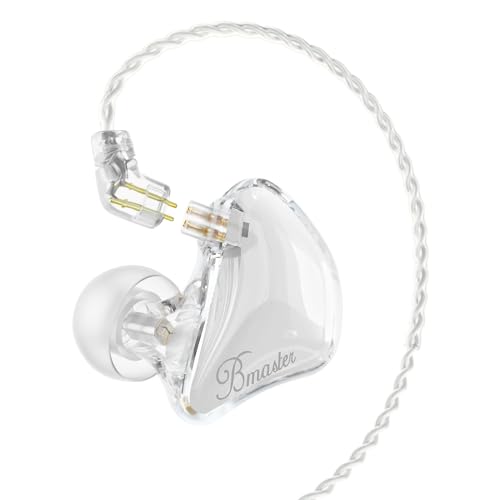
Best for: Live performers who need strong isolation and balanced sound in noisy venues, with a secure fit during active performances.
Why selected: The device emphasizes sound isolation and a balanced full‑range response, making it easier to hear subtle cues on stage. The ergonomic design helps keep the monitors in place during movement.
Caution: In‑ear monitors rely on a good seal; ensure proper isolation fit for best results. Comfort can vary by ear shape and sized tips.
LEKATO MS‑1 Wireless In Ear Monitor System
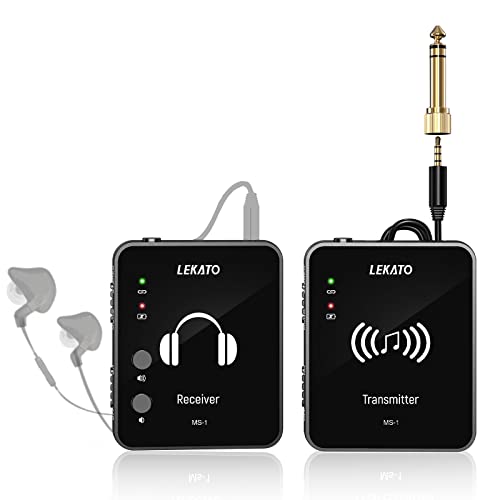
Best for: Small to medium stage gigs and church performances needing multi‑receiver support and easy pairing.
Why selected: It supports up to six receivers from a single transmitter, enabling a simple, scalable in‑ear setup. Auto‑pairing reduces on‑stage setup time.
Caution: While auto‑pairing is convenient, verify channel assignments to prevent accidental cross‑talk in dense wireless environments.
Xvive U45 Wireless In‑Ear Monitor System

Best for: Performers and studios needing robust 5.8 GHz wireless connectivity with channel scan to find the clearest channel.
Why selected: The system offers a true diversity design with a wide usable range and a user‑friendly channel‑scanning feature that helps avoid interference.
Caution: Wireless performance can still be influenced by crowded RF spectra; plan a backup channel for critical performances.
Donner Wireless In Ear Monitor System

Best for: Budget‑conscious performers who still need reliable stereo monitoring during live sessions.
Why selected: Donner CV‑3 emphasizes low latency and a high‑quality signal with stereo or mono options, making it adaptable to different vocal and instrument monitoring needs.
Caution: While latency is advertised as low, real‑world latency can vary by environment and channel selection. Test during rehearsals to confirm acceptable performance level.
Buying Guide: Key Considerations For Selecting Live‑Performance Headphones And IEMs
- Latency and stability: Choose systems with low latency and reliable connections, especially for vocalists and dynamic instruments.
- Isolation vs. bleed: Assess how much external noise the system blocks and whether you need ambient awareness for stage cues.
- Number of channels: If you work with a band or choir, systems that support multiple receivers without interference are advantageous.
- Auto‑pairing and ease of use: Quick setup matters on busy gig days; auto‑pairing reduces fiddling with controls.
- Channel management: Look for features like channel scanning, color displays, or simple mono/stereo switching to simplify monitoring.
- Battery life and charging: Long‑lasting power and convenient recharging help prevent mid‑set dropouts.
- Fit and comfort: Ergonomic design and secure tips prevent slips during energetic performances.
- Compatibility: Confirm that the system plays well with your existing gear, including mixers and stage monitors.
- Price vs. value: Balance your budget with features like isolation, latency, and number of simultaneous receivers.
Buying Guide: Practical Comparison At A Glance
- Best for auto‑pairing: JCANOL and LEKATO both emphasize automatic pairing to streamline setup.
- Best isolation: BASN’s design prioritizes isolation for quiet listening in loud venues.
- Best multi‑receiver support: LEKATO stands out with “one TX to many RXs” for group monitoring.
- Best for channel scanning: Xvive offers a channel scan feature to locate clean frequencies quickly.
- Best budget option: Donner provides stereo/mono flexibility with low latency at a lower price point.
FAQ
- What is the main advantage of wireless in‑ear monitors for live performance?
They provide on‑stage isolation, reduce stage bleed, and let performers hear precisely what they need at the mix level.
- How many receivers can typically pair with a single transmitter?
Many systems support multiple receivers; some models listed allow up to six or more, enabling band members to monitor simultaneously.
- Is auto‑pairing reliable for quick setup on gig days?
Auto‑pairing is designed for simplicity, but it’s good practice to test channels during soundcheck to avoid surprises.
- Should I prioritize wired or wireless for stage reliability?
Wireless IEMs offer mobility and reduced stage clutter, but wired systems can provide maximum reliability in RF‑crowded venues.
- How important is channel scanning in a live setting?
Channel scanning helps locate the least congested frequencies, reducing interference during performances.