Best Headphones for Making Beats: Clear Sound for Studio-Ready Mixing
If you’re crafting beats, you need headphones that deliver accurate, detailed, and balanced sound. This guide highlights five headphones ideal for tracking, mixing, and monitoring in home or project studios. Each pick targets different workflows: critical mixing, budget-conscious monitoring, long-session comfort, and portability. The top selections are chosen for their clarity, bass response, comfort, and durability, helping producers hear every kick, snare, and vocal nuance. The summary table below compares the five options on key traits for beat-making tasks.
| Product | Best For | Key Strength |
|---|---|---|
| Sony MDR7506 | Precise monitoring, professional sessions | Detailed high-end, rugged build |
| Audio-Technica ATH-M20x | Budget studio tracking | Solid build, clear mid/low balance |
| PHILIPS Over-Ear Studio Headphones | Long sessions, versatile devices | Comfort, noise isolation, adapters |
| FIFINE H8 | Mid-range monitoring, beat production | Wide frequency range, comfortable fit |
| OneOdio A71D | DJing and studio work | Single-sided monitoring, foldable design |
Sony MDR7506 Professional Large Diaphragm Headphone

The Sony MDR7506 is favored for detailed, neutral sound with strong high-frequency clarity. Its closed-back design helps isolate stage noise during tracking, making it suitable for critical beat-making sessions where loud subs and crisp hi-hats must be heard without leakage. Best for professional studios or home setups that require dependable reference headphones. Caution: the coiled 9.8-foot cord is not detachable, which can limit mobility in smaller spaces.
Audio-Technica ATH-M20x Professional Studio Monitor Headphones

The Audio-Technica ATH-M20x offers solid build quality with drivers tuned for studio tracking and mixing. These headphones emphasize a balanced response and dependable low-frequency performance, making them a good choice for beat makers who need clarity across kick and bass without heavy coloration. Best for entry-to-mid-level studios needing reliable reference sound. Limitation: they may not isolate as much as premium, closed-back models in noisy environments.
PHILIPS Over-Ear Wired Studio Headphones for Podcasts and Recording
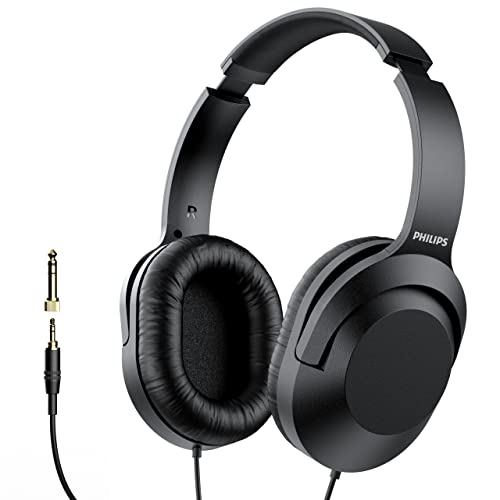
The Philips over-ear design provides comfortable long-session wear and good passive noise isolation. They are versatile for home studios, podcasts, and simple mobile-to-studio workflows, especially with both 3.5mm and 1/4″ adapters included. Choose this if you value comfort and compatibility across multiple devices for monitoring. Caution: bass response is more restrained compared to dedicated monitoring headphones, which may affect low-end precision in some beats.
FIFINE Studio Monitor Headphones H8

The FIFINE H8 is designed for recording and monitoring with a large 50mm driver that delivers dynamic bass and clear mids. Its closed-back, comfortable fit supports longer sessions, making it suitable for beat producers focusing on bass-heavy tracks. Best for those who want wide, immersive sound without swapping gear. Limitation: the included cables and detachable options may require careful cable management during mobile setups.
OneOdio A71D Wired Studio Monitor Headphones

The OneOdio A71D provides studio-grade sound with 40mm drivers and a single-sided monitoring design. The adjustable headband and soft ear cushions support long sessions, and the foldable design adds portability for producers who move between rooms or on-the-go setups. Best for DJs and beat-makers who need comfort and easy transport. Caution: single-sided monitoring configuration may not suit users who require strict binaural awareness during critical mixing.
Buying Guide: Key Purchase Considerations
What type of monitoring do you need?
- Closed-back headphones reduce bleed and external noise, ideal for recording and noisy environments.
- Open-back models offer wider soundstage, useful for mixing but less isolation.
How important is accuracy vs. bass emphasis?
- Neutral, flat responses help with precise beats and balance across frequencies.
- Enhanced bass can help you hear low-end impact, but may color the mix; use in conjunction with reference tracks.
Comfort and durability matter for long sessions.
- Look for memory foam cushions, adjustable headbands, and lightweight designs.
- Detachable cables and durable build reduce wear during daily use.
Connectivity and compatibility should align with your gear.
- 3.5mm and 1/4″ adapters ensure compatibility with mixers, audio interfaces, and portable devices.
- Detachable cables and replaceable parts extend the lifespan of your headphones.
Budget and future-proofing
- Consider how much you’ll expand your setup and whether you’ll need additional monitoring options later.
- Balanced choices between price, build quality, and sonic accuracy tend to yield the best long-term value.
FAQ
- What headphones are best for beat-making?
- Headphones with accurate lows and clear mids are preferred for beat-making, aiding precise bass and instrument separation. Look for models with flat or gently balanced frequency responses for mixing clarity.
- Do I need closed-back for recording beats?
- Closed-back headphones reduce bleed into microphones and isolate you from room noise, which is helpful when recording vocals or programming beats in a shared space.
- Are detachable cables important?
- Detachable cables reduce wear on the connector and simplify replacement if a cable fails.
- How important is comfort for long sessions?
- Very important. Soft cushions, light weight, and an adjustable headband help sustain extended mixing and monitoring without fatigue.
- Can I use consumer headphones for professional mixing?
- Yes, but choose models with flat or neutral responses and avoid heavily colored sound unless you compensate with reference tracks and multiple monitoring sources.