
Best Headphones for Recording Guitar: Studio Monitor Picks for Home Studios
For guitar recording, choose headphones that deliver accurate detail, comfortable wear, and reliable isolation. This guide highlights five headsets ideal for tracking, mixing, and monitoring guitar parts. Best for home studios, project setups, and mobile rigs, these picks balance clarity, comfort, and value.
| Product | Best For | Key Benefit |
|---|---|---|
| OneOdio A71 Hi-Res Studio | Home studios, long sessions | Precise monitoring with wide compatibility |
| syndesmons Wired Headphones | DJ, studio monitoring | Large 50mm drivers for detailed bass |
| OneOdio A71D Studio Monitor | Tracking & mixing | Single-sided monitoring, foldable design |
| New Bee Studio Headphones | Budget-conscious producers | Ultra-lightweight with single-side monitoring |
| JOYO JMH-02 Studio Headphones | Accurate mixing | Flat response for true monitoring |
OneOdio A71 Hi-Res Studio – Wired Over Ear

40mm drivers deliver clear, detailed sound with strong mids and highs, making them suitable for monitoring, mixing, and guitar tracking. The 3.5mm and 6.35mm jacks plus a long coiled cord simplify connections to audio interfaces, amps, or keyboards. The soft cushions and adjustable headband provide extended comfort for long sessions. Best for home studios and DIY projects where reliable, neutral audio helps capture guitar nuances.
Best for: Home studios needing versatile, wired monitoring with broad device compatibility.
Limitation: May lack modern closed-back isolation for especially loud environments; consider isolation needs if recording in noisy spaces.
syndesmons Wired Headphones – 50mm Drivers

50mm drivers deliver punchy, balanced sound across the full frequency range, aiding precise guitar tracking and monitoring. Weighing about 260g, these headphones emphasize comfort with protein leather and memory foam. The 90° swiveling earcups facilitate single-ear monitoring, a practical feature during on-the-fly guitar setups. Best for: artists and engineers who need accurate tone with comfortable wear for extended sessions.
Limitation: Information notes a wide frequency claim; ensure your workflow benefits from the emphasized bass presence during guitar mixing.
OneOdio A71D Wired Over-Ear – Studio Monitor

40mm drivers deliver deep bass with clear mids and highs, suitable for DJing, recording, and monitoring guitar tracks. The 90° swiveling ear cups enable convenient single-ear monitoring, helpful during live-recording scenarios or when guitar parts are panned to one side. Foldable design enhances portability for mobile studios. Best for: tracking and mixing in compact spaces where portability matters.
Limitation: Do not rely on them for critical low-end measurements if your mix depends on bass accuracy; pair with a reference monitor for bass checks.
OneOdio Studio Over-Ear – 50mm Neodymium

Large 50mm drivers with neodymium magnets deliver strong bass and clear highs, supporting balanced monitoring for guitar recording and podcast work. Comfort comes from soft pads and an adjustable headband, with a foldable design for on-the-go use. Best for: users who want bold, noticeable bass with reliable overall clarity for studio work.
Limitation: The bass-forward tendency may require EQ adjustments when mixing delicate guitar tones; consider reference headphones when precise midrange is critical.
JOYO JMH-02 Studio Monitor Headphones

50mm drivers provide a flat, accurate response across 20Hz-20kHz, suitable for monitoring guitar tracks without hyped bass. Passive isolation helps minimize bleed into microphones during recording. The 3m cable and 6.35mm adapter keep you connected to amps, interfaces, and gear. Best for: precise mixing and tracking where a natural, unaltered mix is essential.
Limitation: Passive design means no active noise cancellation; in noisy spaces, consider additional isolation solutions.
EKSA Wired Over Ear – Studio Monitor
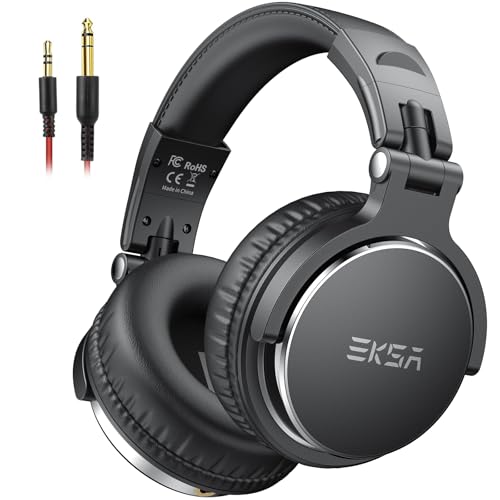
50mm drivers with neodymium magnets yield powerful bass and clear highs for studio monitoring, tracking, and guitar work. The 90° swiveling cups enable single-ear monitoring, and the soft headband design supports long sessions. Best for: budget-conscious studios needing solid, reliable monitoring for guitar and music production.
Limitation: Comfort and isolation are solid, but space-saving features may trade off some isolation in especially loud rooms.
Buying Guide: Key Purchase Considerations
- Sound accuracy: Look for flat or gently elevated mids and highs to avoid masking guitar details. Prefer headphones with large drivers (50mm) for extended frequency response.
- Comfort: Choose models with soft cushions and an adjustable headband for long recording sessions. Consider weight if you plan to wear them for hours.
- Monitoring style: Single-ear monitoring can help when tracking guitar parts; dual-ear is better for balanced mixing and reference listening.
- Connectivity: Ensure the included adapters (3.5mm and 1/4″) fit your guitar amp, audio interface, or PC. A long or coiled cord reduces movement limits in a studio.
- Isolation: Passive isolation helps reduce bleed into mics; active noise cancellation is less common in studio monitors and may color sound.
- Durability and portability: Foldable designs and sturdy housings support transport between studio spaces or gigs.
FAQ
- Q: What features matter most for guitar recording headphones?
A: Accurate frequency response, comfortable fit for long sessions, and reliable isolation to prevent microphone bleed. - Q: Should I choose single-ear or double-ear monitoring for tracking guitar?
A: Single-ear monitoring helps keep one side open for listening to the room or click, while double-ear offers balanced monitoring during playback. - Q: Do I need active noise cancellation for studio work?
A: Not typically. Passive isolation is usually sufficient and avoids colorizing the sound during monitoring. - Q: Are heavier headphones a problem for long sessions?
A: Heavier models may cause fatigue; prioritize lightweight designs with soft padding for extended use. - Q: Can I use any headphones for guitar recording?
A: You can, but you’ll get better results with models designed for studio monitoring and accurate reproduction of mids and highs. - Q: How important is the 1/4 inch adapter?
A: Very important for connecting to guitar amps, audio interfaces, and mixers without adapters that degrade signal.