
Best Bluetooth Earmuff Headphones for Quiet, Safe Work Environments
Answering the question, these headphones look like earmuffs and combine hearing protection with wireless or wired audio. They’re ideal for DIYers, landscapers, workshop workers, and anyone who needs ear protection without sacrificing situational awareness. Top picks emphasize comfort, noise reduction, long battery life, and easy control with gloves. The following selections help buyers compare options for different work settings and preferences.
| Product | Best For | Key Benefit |
|---|---|---|
| Kalence Bluetooth 6.0 Hearing Protection | All-day wearers in loud workshops | Very long runtime with Bluetooth 6.0 stability |
| ProCase SNR 33dB | High-noise environments like shooting ranges | Strong passive attenuation plus foldable design |
| ToolFun Gel Ear Pad Headphones | Comfort-focused wearers | Gel cushions for reduced pressure |
| iMangoo 5.4 ANC Headphones | All-day work with active noise cancellation | ANC for louder environments while keeping music |
| Walker’s Razor Slim Electronic Muff | Those who need amplified ambient awareness | Low-profile muffs with sound amplification |
Kalence Bluetooth 6.0 Hearing Protection
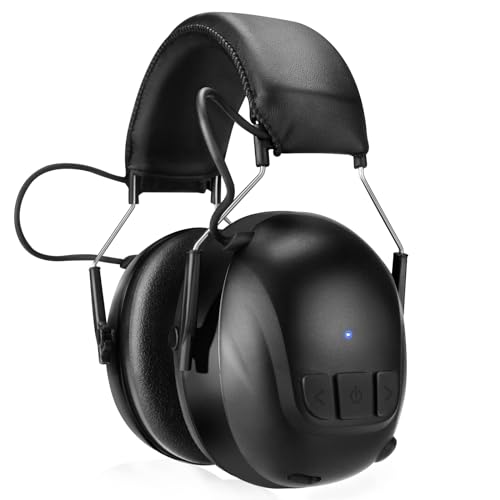
Best for: Long shifts in mowing, workshops, and construction where Bluetooth reliability matters. This model uses Bluetooth 6.0 for a stable connection, smoother music streaming, and hands-free calls. It also features a 1200mAh battery with up to 120 hours of playtime, supporting wired mode via 3.5 mm AUX for uninterrupted use if the battery runs down. The large controls can be operated with gloves, and the built-in mic supports hands-free calls. Choose this if you prioritize battery life and seamless Bluetooth performance in active work settings. Caution: wired mode requires a compatible AUX cable not included in some listings.
ProCase SNR 33dB Hearing Protection Ear Muffs

Best for: Environments with very high ambient noise, such as shooting ranges or machining areas. These muffs are tested to NVLAP standards with SNR 33dB and are considered equivalent to US ANSI S3.19 for noise reduction. They feature an adjustable metal headband for durable, all-day comfort and a foldable design for easy transport. Helpful for users who want strong passive protection and a compact profile. Limitation: passive attenuation may not fully replace active noise control in extremely loud settings.
ToolFun Gel Ear Pad Bluetooth Headphones

Best for: Wearers who prioritize comfort during long sessions. ToolFun uses ultra-soft gel ear cushions combining silicone gel, memory foam, and a thin polyurethane skin to reduce pressure. It uses Bluetooth 5.4 for reliable connections and supports a wide device range, including phones and laptops. With SNR 30dB, it still offers meaningful protection while delivering solid audio. Caution: Bluetooth performance can vary with environment and device compatibility.
Qozybuds Bluetooth 6.0 Hearing Protection Headphones

Best for: Lawn mowing and workshop use where long battery life and easy operation matter. This model combines Bluetooth 6.0 with a 1200mAh battery offering up to 120 hours of playback and quick 2-hour charging. It supports wired mode via a 3.5 mm jack and provides 30dB SNR for noise attenuation. It’s a good pick for users who want extended unplugged operation and stable wireless performance. Limitation: Bluetooth can’t fully cancel all noise in very loud environments without ANC.
Walker’s Razor Slim Electronic Muff

Best for: Users needing ambient sound awareness while protecting hearing. Walker’s Razor Slim muffs feature an ultra-low profile with two hi-gain microphones that amplify safe sounds, helping you stay aware of surroundings. The design includes a rugged, dampening housing and a padded metal headband for durability and comfort. Choose this if you value situational awareness along with amplification and a lightweight feel. Caution: amplification may introduce ambient noise; adjust settings for quiet environments.
Buying Guide
What matters most when choosing earmuff-style hearing protection with audio capabilities? Consider the following criteria:
- Noise reduction and amplification: Decide between passive attenuation (dB rating) and active noise cancellation (if available). For loud sites, a higher SNR/NRR helps protect hearing; for awareness, consider models with ambient sound amplification.
- Connectivity and battery life: Bluetooth versions (6.0 vs 5.x) influence stability and range. Battery life up to 120 hours is advantageous for long projects; wired mode provides a backup when the battery is low.
- Comfort and fit: Look for oversized buttons or glove-friendly controls, adjustable headbands, and cushioned ear cups. Gel cushions or memory foam can reduce pressure and heat buildup during extended wear.
- Durability and design: A foldable or compact design improves portability. Metal or reinforced bands increase longevity in tough work environments.
- Versatility: Some models offer speech assist integration, voice assistant compatibility, and phone call handling. Consider whether you need hands-free calling or music playback in your routine.
FAQ
- What is the difference between SNR and NRR?
SNR and NRR measure noise reduction; SNR is typically used in EU/ANSI contexts and can differ by testing standards. Higher values indicate greater attenuation, but real-world performance varies with fit and frequency.
- Is ANC available on earmuff-style hearing protectors?
Yes, some models include active noise cancellation (ANC) or ambient sound amplification. ANC reduces external noise; ambient amplification helps you hear surroundings without removing protection.
- Can these earmuffs work with a smartphone?
Most listed models support Bluetooth connections to smartphones for calls and audio streaming. Always verify compatibility with your device and operating system.
- How long do the batteries last?
Most options offer long playback times, often up to 120 hours depending on usage and Bluetooth activity. Wired mode provides a non-battery option when needed.
- Are these suitable for professional use?
Yes, several models meet standard noise reduction guidelines and are designed for construction, landscaping, and heavy-duty environments. Always match the product’s attenuation level to your work setting.