Best Bone-Conduction Headphones for Open-Ear Listening
Bone-conduction headphones provide open-ear listening that keeps your ears free and your surroundings audible. This guide highlights five top options ideal for runners, cyclists, commuters, and gym-goers. Each pick emphasizes comfort, battery life, and audio clarity, with notes on best uses and potential limitations.
Overview of recommended models at a glance. The table helps compare open-ear fit, water resistance, and playtime to fit different activity profiles.
| Product | Best For | Key Benefit | Battery Life (approx.) |
|---|---|---|---|
| CPTEA Bone Conduction Headphones | Running, cycling, gym | Ultra-light, open-ear fit with stable Bluetooth | Up to 8 hours |
| Raycon Bone Conduction Headphones | Outdoor workouts, commuting | Balanced sound with open-ear safety | Up to 13 hours |
| PSIER Bone Conduction Headphones | Outdoor sports, gym | 6.0 Bluetooth with open-ear design and sealing | Up to 10 hours |
| MRYTKY Bone Conduction Headphones | Running, cycling, outdoor use | Lightweight with secure wraparound frame | Up to 10 hours |
| SHOKZ New OpenRun Pro 2 | High-intensity training, running | Dual drivers for enhanced highs and bass | Up to 12 hours |
CPTEA Bone Conduction Headphones

Open-ear comfort and ultra-light design weigh just 27g for a secure, pressure-free fit during runs, rides, or daily wear. The 16mm drivers deliver clear highs and mids, while the open-ear layout helps you stay aware of traffic and surroundings. Bluetooth offers quick pairing and a stable connection within about 33 feet for music and calls.
Best for: Runners and cyclists who prioritize awareness and minimal weight. Why selected: Combines a lightweight frame with reliable connectivity and open-ear safety. Caution: Open-ear sound may be lower in noisy environments; consider ear protection in very loud settings.
Raycon Bone Conduction Headphones
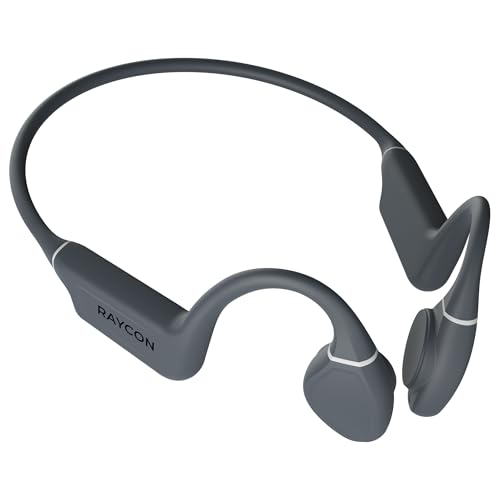
These open-ear headphones emphasize safe, open listening with balanced sound through bone conduction. They are designed for outdoor activities and daily use, with IP68 weather resistance and a long battery life. The open-ear design keeps you alert to surroundings while delivering reliable audio during workouts or commutes.
Best for: Outdoor athletes and commuters who need durable, all-weather performance. Why selected: Strong safety-focused design with long playtime. Caution: Audio may leak more in very quiet environments; seal-aware users may notice companions hearing your music.
PSIER Bone Conduction Headphones

PSIER uses upgraded Bluetooth 6.0 for instant pairing and a secure connection with a 33-foot range. Its 10-hour playtime and 23-gram weight offer a comfortable fit for long workouts. Large 13mm bone-conduction drivers deliver rich, balanced sound with less ear fatigue due to the open-ear design.
Best for: Fitness enthusiasts who want quick连接 and long operation without ear fatigue. Why selected: Advanced Bluetooth 6.0 and improved sealing reduce leakage while maintaining awareness. Caution: Fully enclosed cavities may still require careful fit for best bass response.
MRYTKY Bone Conduction Headphones

Open-ear comfort designed to prevent ear fatigue even after long wear. The 16mm drivers deliver clear, rich audio through the cheekbones, and a wraparound titanium frame provides a secure, flexible fit during outdoor sports. The built-in microphone supports calls with decent voice pickup in active environments.
Best for: Endurance athletes who need a secure, lightweight design for extended sessions. Why selected: Wraparound stability and comfortable open-ear listening. Caution: Some users may prefer stronger bass for music-centric workouts.
SHOKZ OpenRun Pro 2

SHOKZ OpenRun Pro 2 offers premium bone-conduction performance with dual drivers that blend bone conduction clarity and air conduction bass. The open-ear design maintains situational awareness, while a secure, lightweight frame with memory wire and ear hooks reduces slippage during workouts. The model emphasizes consistent, leak-free listening and long battery life for extended sessions.
Best for: High-intensity training and runs where motivation and awareness matter. Why selected: Enhanced driver setup and secure fit for active use. Caution: Higher price point may be a consideration for budget shoppers.
Buying Guide
Key considerations when choosing bone-conduction headphones:
- Open-ear comfort and weight: Lighter models reduce fatigue during long sessions; check weight (grams) and frame design.
- Driver size and sound quality: Larger drivers often deliver better highs and mids, but open-ear design can still limit bass compared to in-ear models.
- Bluetooth version and latency: Higher versions (like Bluetooth 6.0) offer faster pairing and more stable connections; consider latency if you watch videos.
- Water and sweat resistance: For workouts, IP ratings and water resistance ensure durability in rain or sweat.
- Battery life: Plan for longest sessions; note stated playtime and charging time.
- Surroundings awareness: Open-ear design helps safety in outdoor settings but may leak more audio in quiet environments.
- Build stability: Wraparound frames and secure ear hooks prevent slipping during running or cycling.
Frequently Asked Questions
- What is bone conduction, and how does it work?
- Are bone-conduction headphones good for running?
- Do they stay secure during intense workouts?
- Can I take calls with these headphones?
- Is bass weaker with bone conduction?
- Do bone-conduction headphones leak sound?
Bone conduction transmits sound vibrations through the cheekbones to the inner ear, leaving the ear canal open for ambient sounds.
Yes, they are favored for open-ear awareness, comfortable wear during long runs, and reduced ear fatigue.
Many models include wraps, memory-wire frames, and ear hooks to minimize movement during activity.
Most models include built-in mics for calls, but mic quality varies by model and environment.
Bone conduction typically emphasizes highs and mids; some models include design features to improve bass perception.
Because the ears remain open, there can be more ambient sound leakage in quiet environments.