
Best Headset or Headphones and Mic for Clear Calls and Rich Audio
Answering the need for reliable voice and audio quality, these headsets and headphones with built-in mics cover work calls, online classes, gaming chats, and casual listening. This guide highlights five solid options across USB, USB-C, and 3.5 mm connections. Best for office workers, students, gamers, and anyone who wants clear speaking and listening quality.
Buyer note: The top picks include USB wired headsets for plug-and-play simplicity, a compact on-ear model for smaller heads, and gaming headsets with enhanced sound signatures. The following table summarizes who each product is best for, plus key strengths.
| Product | Best For | Best Strength |
|---|---|---|
| Logitech H390 | Office calls, meetings | Rotating noise-canceling mic, inline controls |
| Logitech H391 | USB-C devices, frequent commuters | Compact, comfortable, versatile mic |
| Amazon Basics On-Ear | Budget calls, student use | Foldable, 3.5 mm or USB-A |
| JBL Quantum 100M2 | Gaming with clear chat | Detachable mic, immersive sound |
| Cyber Acoustics AC-5002 | Classroom or home learning | Durable braided cable, noise-canceling mic |
Logitech H390 Wired Headset PC/Laptop

Product highlights: Digital stereo sound with fine-tuned drivers for music, calls, and meetings. Rotating noise-canceling mic minimizes background noise and can be tucked away when not in use. Inline controls on the headset cable let you adjust volume or mute calls without disruption.
Best for: Professionals and students who need a reliable USB-A headset for frequent calls, video conferences, and online learning. The mic’s rotating boom and in-line controls provide practical convenience in busy work-from-home or classroom environments.
Limitation to consider: USB-A connectivity may limit compatibility with some newer devices that favor USB-C without adapters. If your setup is USB-C only, you may prefer a USB-C model or an adapter solution.
Logitech H391 Wired Headset PC/Laptop USB-C

Product highlights: Digital stereo sound with fine-tuned drivers. Rotating noise-canceling mic reduces background noise, and the rotating boom arm can be tucked away when not in use. Inline controls on the headset cable enable quick volume adjustments and mute functionality.
Best for: Users on USB-C devices who want a straightforward, reliable headset for calls, meetings, or media consumption on laptops, tablets, or desktops with USB-C ports.
Limitation to consider: The USB-C version may require a USB-C port with audio support; some adapters or dongles could be needed for older devices with standard USB-C hubs.
Amazon Basics On Ear Wired Computer Headset

Product highlights: On-ear, foldable headset with 3.5 mm or USB-A port options. Adjustable boom mic and unidirectional mic for clearer conversations. Compact design suits small to medium head sizes and helps with long school or work sessions once comfortable fit is achieved.
Best for: Budget-conscious buyers, students, or anyone seeking a versatile, travel-friendly headset with multiple connection options for computers and mobile devices.
Limitation to consider: On-ear style may feel snug for extended wear; comfort improves over time as ear cups conform to the face.
JBL Quantum 100M2 Wired Gaming Headset

Product highlights: JBL QuantumSound Signature delivers immersive audio with precise footsteps and explosions. Detachable microphone with voice-focus directionality and mute option, plus memory foam comfort for long sessions.
Best for: Gamers who require clear team communication and an immersive audio experience during play. The detachable mic adds flexibility for solo use or travel.
Limitation to consider: Gaming-oriented sound design may emphasize game audio over pure voice clarity in some listening modes; adjust mic if background noise is a concern in quiet environments.
Cyber Acoustics AC-5002 3.5mm Headset

Product highlights: Stereo headset with a unidirectional noise-canceling microphone and a braided TuffCord cable for durability. Adjustable headband and flexible boom mic, suitable for classroom, home office, or daily use with both 3.5 mm and USB-A connections via compatible devices.
Best for: Classroom or home learning environments where robust construction and reliable noise reduction are prioritized, along with flexible mic placement.
Limitation to consider: Pure 3.5 mm or USB-A compatibility may limit use with newer devices lacking those ports without adapters.
Logitech H111 Stereo Headset

Product highlights: Noise-cancelling microphone reduces room noise for clearer voice calls. Full stereo sound for media and games. Rotating boom mic can be worn on either side for comfort and flexibility.
Best for: Users who need a simple, cost-effective headset for calls, online classes, and casual media consumption. The flexible boom offers convenience for left- or right-side wearers.
Limitation to consider: The headset focuses on affordability; high-end features like advanced noise cancellation or immersive surround audio are not included.
EKSA E1000 USB PC Gaming Headset

Product highlights: USB PC gaming headset with 7.1 surround sound, built-in USB audio sound chip, and 50 mm neodymium drivers for a vivid surrounding sound field. 120° adjustable noise-canceling microphone for clear communication.
Best for: PC gamers who want plug-and-play 7.1 audio and a stable mic setup without extra software. The built-in sound chip simplifies setup on compatible systems.
Limitation to consider: Not compatible with game controllers; intended for PC-based use may limit compatibility with some consoles without adapters.
JIAMQISHI USB Headset With Microphone
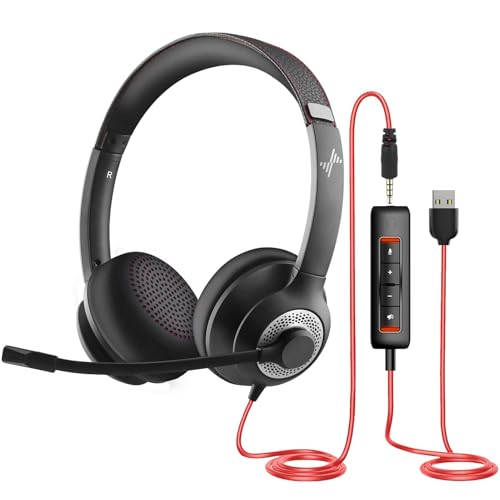
Product highlights: Noise-canceling unidirectional microphone with 270° boom for flexible positioning. On-ear comfort with adjustable headband and breathable memory foam ear pads. 40 mm drivers for clear sound across voices, music, and calls.
Best for: Home office and online classes where you need reliable mic isolation and all-day comfort for extended sessions. The USB and 3.5 mm combo provide broad device compatibility.
Limitation to consider: On-ear design may become warm on longer sessions; ensure proper fit to maximize comfort.
Buying Guide
What connection type should you choose?
- USB-A or USB-C wired headsets are usually easiest for desktops, laptops, and many tablets. They often include digital audio and a built-in mic with inline controls.
- 3.5 mm jacks provide broad device compatibility but may require separate mic sensitivity adjustments on some devices.
- USB headsets with 7.1 surround or specialized audio signatures can improve gaming or media experiences, but may be less essential for calls.
What features matter most for your use case?
- Microphone quality and noise reduction are crucial for calls and classes. Look for unidirectional mics and rotating booms that keep the mic away from voice-capture noise.
- Comfort matters for long sessions. Consider ear cup size, headband adjustability, and padding materials like memory foam.
- Durability and cable design are important in shared spaces or classrooms. Braided or tuff cords reduce tangling and wear.
How to compare sound quality?
- For calls and voice clarity, prioritize a clean, natural mic response and clear baseline audio.
- For music and multimedia, consider drivers, enclosure design, and any built-in enhancements. A balanced profile typically suits most users.
Choosing by environment
- Office or remote work: Look for a comfortable, reliable mic and easy inline controls (Logitech H390/H391).
- Education: A durable headset with a clear mic and comfortable fit (Amazon Basics On-Ear, Cyber Acoustics AC-5002).
- Gaming: Prioritize immersive sound and a detachable mic for solo use (JBL Quantum 100M2, EKSA E1000).
FAQ
What is the main difference between USB and 3.5 mm headsets?
USB headsets typically include a built-in sound card and may offer digital features and easier setup. 3.5 mm headsets work with more devices but may require manual mic adjustments.
Is a detachable microphone better for gaming?
Detachable mics offer flexibility for solo use and travel, but performance depends on mic quality; many wired mics provide strong voice capture even when attached.
Can I use these headsets with a smartphone?
Some headsets with 3.5 mm or USB-C connections can work with smartphones, though compatibility depends on the device’s port and headset design.
Are memory foam ear pads worth it for long sessions?
Yes. Memory foam offers comfort during extended wear and helps with seal and passive noise reduction, improving perceived sound clarity.
What should I look for in a classroom headset?
Durability, a noise-canceling mic, comfortable fit, and reliable cable design are key. Braided cables and adjustable mics help with daily use.
Do these headsets support both calls and gaming?
Yes. Most listings indicate suitability for calls, online learning, and games. Where gaming-specific features exist, they’re noted in the product highlights.