Best Hi End Bookshelf Speaker Options for Home Audio Enthusiasts
Looking For High-Performance Bookshelf Speakers? This guide compares top bookshelf and compact speakers that deliver detailed sound, strong bass extension, and refined imaging for home audio and small home theater systems. Below is a quick summary table of the selected products to help you scan features at a glance.
| Product | Type | Key Feature |
|---|---|---|
| Sony SS-CS5M2 | Passive 3-way Pair | 3-driver 3-way design with 5.12″ woofer |
| Klipsch R-51M | Passive Pair | 1″ LTS Tweeter + Dual 5.25″ Woofers, Tractrix Horns |
| Polk Signature Elite ES15 | Passive Pair | Hi-Res Certified, Power Port Technology |
| Polk Monitor XT15 | Passive Pair | 1″ Terylene Tweeter & Dynamically Balanced Woofer |
| Edifier R1280T | Powered Active Pair | Built-in amplifier, dual AUX inputs, wooden enclosure |
Sony SS-CS5M2 3-Way 3-Driver Hi-res Bookshelf Speakers (Pair)

The Sony SS-CS5M2 is a compact 3-way, 3-driver bookshelf system designed to extend low-end response beyond what many two-way compact speakers produce. The listed 5.12″ woofer supports enhanced bass while a dedicated midrange driver helps clarity for vocals and instruments. This format can offer improved phase coherence and separation across frequencies compared with simpler two-driver designs. Ideal for listeners who want detailed midrange and fuller low end from a small footprint.
Klipsch R-51M Bookshelf Speaker (Pair), Black

Klipsch R-51M speakers use 1″ Aluminum LTS tweeters mated to 90×90 Square Tractrix Horns for directivity control and high sensitivity. Dual 5.25″ spun-copper IMG woofers deliver stronger bass output for a bookshelf cabinet. The horn-loaded tweeter design typically gives an efficient, dynamic presentation that pairs well with lower-power amplifiers and AV receivers, making the R-51M a common choice for lively, room-filling sound in nearfield and small-room setups.
Polk Signature Elite ES15 Bookshelf Speaker (Pair, Contemporary Walnut)

The Polk Signature Elite ES15 is Hi-Res Audio certified and designed for compact home theater and stereo applications. Features include a 1″ Terylene tweeter, a 5.25″ woofer, and Polk’s Power Port technology to increase low-frequency output with reduced turbulence. The ES15 emphasizes a balanced, spacious soundstage and broad compatibility with modern AV receivers for Dolby Atmos and DTS:X setups, making it a flexible bookshelf option for both music and movies.
Polk Monitor XT15 Pair Of Bookshelf Or Surround Speakers (Pair, Midnight Black)

Polk’s Monitor XT15 offers a 1″ tweeter and 5.25″ Dynamically Balanced woofer in a compact cabinet. The Monitor XT line updates Polk’s classic Monitor series with improved materials and crossover design for clarity and open midrange. Stated compatibility with 4- and 8-ohm systems allows flexibility with a variety of amplifiers and receivers, and their voicing aims for natural tonal balance suitable for both two-channel and surround applications.
Edifier R1280T Powered Bookshelf Speakers – 2.0 Active Near Field Studio Monitor
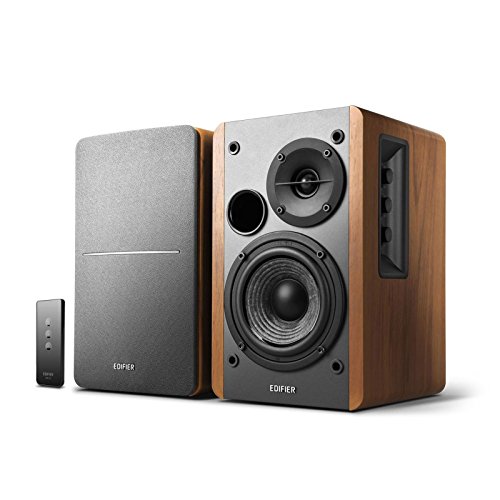
The Edifier R1280T is a powered bookshelf speaker pair that integrates the amplifier inside the main cabinet, removing the need for an external receiver. It includes dual AUX inputs for two simultaneous sources, onboard bass and treble controls on the powered unit, and a classic MDF wood enclosure. This active design is convenient for small desks, nearfield listening, or anyone who wants a plug-and-play system without separate amplification.
Buying Guide: How To Choose The Right Hi-End Bookshelf Speaker
Selecting bookshelf speakers involves matching technical specs to room size, sources, and listening goals. Below are critical considerations and comparison perspectives to guide a buying decision.
1. Powered vs Passive
- Powered (Active): Built-in amplification simplifies setup and suits desktops or casual listeners. Look for inputs and tone controls if you need flexibility.
- Passive: Require an external amp/receiver but often provide more upgrade paths and choice of amplification to tailor sound.
2. Driver Configuration And Frequency Balance
- Two-way vs Three-way: Two-way designs (tweeter + woofer) are common and efficient. Three-way speakers add a dedicated midrange driver for improved clarity and separation at the cost of increased cabinet complexity and potential crossover tuning differences.
- Tweeter Type: Materials (aluminum, terylene, silk) affect treble character—metal tweeters can be more detailed, fabric/tweeters often sound smoother.
3. Bass Performance And Room Size
- Woofer Size: Larger woofers and ported cabinets generally produce deeper bass but need room to breathe. Use stands, toe-in, or a subwoofer to augment low end in small rooms.
- Port Design: Technologies like Polk’s Power Port aim to increase bass output with less turbulence; listen for low-frequency control at higher volumes.
4. Sensitivity And Amplifier Matching
- High Sensitivity (e.g., Klipsch horn-loaded models) pairs well with low-watt tube amps or lower-power receivers.
- Low Sensitivity speakers benefit from more powerful solid-state amplification for headroom and dynamic range.
5. Imaging, Dispersion And Room Interaction
- Horn-loaded tweeters (Klipsch) are directional and efficient, producing lively imaging but interact with room acoustics differently than wide-dispersion tweeters.
- Wide dispersion designs (Polk, Sony) can produce a broader sweet spot and more uniform room coverage for listeners off-axis.
6. Build, Finish, And Placement Flexibility
- Cabinet Material: MDF or wood veneer improves resonance control. Compact cabinets are easier to place on stands or shelves.
- Wall-Mountable Options: Some bookshelf models accept wall mounting or fit as surrounds for multi-channel systems.
7. Compatibility With Formats And Sources
- Hi-Res Certification: If you stream lossless or high-resolution audio, look for Hi-Res certified models for wider frequency accuracy.
- AV Compatibility: For home theater, ensure speakers work with your AVR’s impedance and power ratings and support Atmos/DTS:X roles if used as front or height channels.
8. Listening Goals And Genre Considerations
- Critical Music Listening: Favor flat, extended response and low distortion; consider three-way or hi-res oriented designs.
- Home Theater/Gaming: Look for impactful bass and clear dialogue reproduction; consider pairing with a subwoofer and choosing speakers with balanced mids and dynamic transients.
9. Practical Tips For A Purchase
- Check sensitivity and impedance to match your amplifier or receiver.
- Measure placement space and consider speaker stands, toe-in, or isolation pads.
- Read measurements for frequency response and impedance curves when available; rely on objective reviews for tonal accuracy.