
Summary: This guide highlights top hi‑fi speaker cabinets and complementary components suitable for DIY builds, bookshelf systems, and portable PA setups. Below is a quick comparison table of the selected products to help you scan options at a glance.
| Product | Type | Key Feature |
|---|---|---|
| Sound Town 1 x 12″ Empty Guitar Speaker Cabinet | Empty Cabinet | Birch plywood, Black Tolex, Wheat Cloth Grill |
| Sanyun SW206 4” HiFi Bookshelf Speakers | Active Bookshelf | HiFi/Studio modes, 80W, Carbon Fiber Driver |
| Facmogu 3″ Full Range Woofer (Pair) | Driver | Full‑range 3″ drivers, 4Ω, 88dB sensitivity |
| uxcell Speaker Sound‑Absorbing Cotton | Cabinet Damping | Acoustic insulation to reduce standing waves |
| Silicone Speaker Isolation Feet (4‑Pack) | Accessories | Anti‑vibration pads, Durometer 20 |
Sound Town 1 x 12″ Empty Guitar Speaker Cabinet

This empty 1×12 cabinet is built from birch plywood and finished with black tolex and a wheat cloth grill. It is compatible with common drivers from Celestion and Eminence, making it a practical platform for custom speaker builds or replacing a worn cabinet.
- Cabinet Material: Robust birch plywood improves rigidity and reduces cabinet flex.
- Compatibility: Works with standard 12″ guitar/PA drivers—ideal for custom voicings.
- Finish: Black tolex and wheat grill for a traditional aesthetic with stage durability.
Sanyun SW206 4″ HiFi Bookshelf Speakers
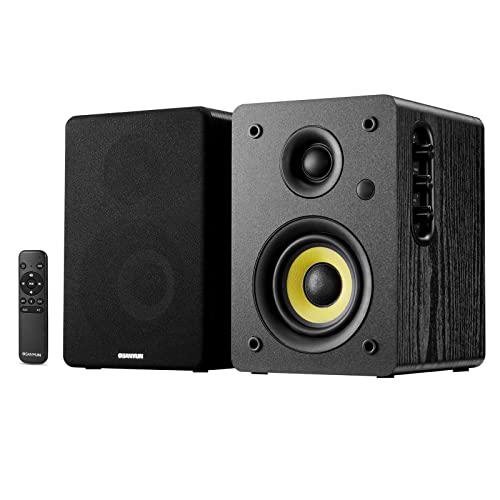
The Sanyun SW206 is an active bookshelf system tuned for both listening and studio work. It features a 4″ carbon fiber woofer, a 25mm silk dome tweeter, and selectable HiFi or monitor modes for different listening contexts.
- Modes: HiFi warms tonal balance; Monitor gives neutral, accurate response.
- Connectivity: Bluetooth 5.4, optical, coaxial, TRS, aux, and USB with 24‑bit DAC.
- Use Cases: Desktop audio, small studio, TV or turntable systems with easy plug‑and‑play setup.
Facmogu 3″ Tweeter Speakers HiFi Full Range Woofer (Pair)

These compact 3″ full‑range drivers are intended for small bookshelf or satellite channels in 2.0/2.1 systems or DIY speaker builds. With a sensitivity around 88dB and a frequency range stated from ~108Hz to 18kHz, they suit low‑power amplification and tight enclosures.
- Impedance & Power: 4Ω nominal, recommended 5–15W amplifier range.
- Application: Satellites for small systems, PC audio, or as mid/high elements in multi‑driver cabinets.
- Sound Character: Designed for clear voice and midrange presence; pairing with a subwoofer improves low end.
uxcell Speaker Sound-Absorbing Cotton Polyester Fiber Interior Insulation

Cabinet damping materials like this polyester fiber absorb standing waves and reduce internal reflections. Installing proper insulation helps tighten bass response and increases perceived cabinet volume without changing external dimensions.
- Purpose: Absorbs low‑frequency standing waves to reduce boominess.
- Coverage: Large sheet size suitable for multiple cabinets or custom trims.
- Installation: Cut and glue inside rear/side panels, avoiding blocking ports unless using tuned designs.
Silicone Speaker Isolation Feet (4-Pack, 1″)

Isolation feet reduce mechanical coupling between speakers or gear and their supporting surface. These silicone pads are formulated to damp sub and supersonic micro‑vibrations and can clarify low‑frequency reproduction in small systems.
- Damping: Up to ~95% vibration absorption claimed; durometer 20 provides soft, energy‑absorbing support.
- Load Capacity: Each pad supports approximately 5–18 lbs depending on placement.
- Use Cases: Suitable for bookshelf speakers, subwoofers, turntables, and studio monitors to reduce cabinet rattles and desk coupling.
Buying Guide: Choosing The Right Hi Fi Speaker Cabinet Components
When selecting speaker cabinets and components, match choices to your listening goals, room size, and technical skills. Below are key considerations and comparison perspectives to guide decisions.
Cabinet Type And Material
- Solid Wood Vs Plywood: High‑quality birch plywood offers good stiffness and damping at reasonable cost. Solid MDF can be cheaper but heavier; hardwoods are visually pleasing but may color sound.
- Enclosure Style: Sealed cabinets provide tight tight bass and transient accuracy; ported/vented designs extend bass but require precise tuning and larger volume.
Driver Selection And Compatibility
- Driver Size: Larger woofers produce deeper bass but require larger enclosures. Small full‑range drivers excel in compact designs and satellites.
- Impedance & Power Handling: Match driver impedance to your amplifier. Low‑impedance drivers (4Ω) provide more power draw but require amp compatibility.
- Frequency Response: Use a combination of drivers (woofer + tweeter or full‑range + sub) to cover the audio band smoothly.
Cabinet Damping & Internal Treatment
- Absorptive Materials: Polyester fiber or acoustic wool reduce standing waves—important for clean bass in smaller enclosures.
- Bracing: Internal bracing reduces panel vibration and improves clarity; heavier bracing can reduce internal volume and must be accounted for in design.
Isolation And Placement
- Feet And Spikes: Isolation pads decouple speakers from furniture to reduce transfer of vibration and cabinet coloration.
- Room Interaction: Placement relative to walls and corners affects bass — near corner placement increases bass output; distance from walls improves imaging.
Amplification And Active Options
- Active Vs Passive: Active speakers like bookshelf monitors include built‑in amplification and DSP tuning for convenient, accurate response.
- Matching Amp Power: Choose an amplifier that delivers clean power across expected listening levels without clipping.
DIY Considerations
- Cabinet Build Skill: Empty cabinets give flexibility but require driver selection, crossover design (if multi‑way), and finishing skills.
- Testing & Tuning: Use measurement tools or listening tests to adjust stuffing, port length, and crossover slopes for balanced response.
Comparison Perspectives
- Performance Focus: For neutral accuracy, choose tight sealed enclosures with high‑quality drivers and minimal coloration.
- Practical/Portable: Ported cabinets and PA‑style enclosures provide loudness and punch for events; active bookshelf speakers give convenience for home use.
- Cost vs Customization: Empty cabinets plus selected drivers allow tailored sound but require more time and expertise than off‑the‑shelf active speakers.